Trump’s Next Move
Angry voters may soon hand Democrats a check on Trump, and Europe should ask where he turns for wins abroad.

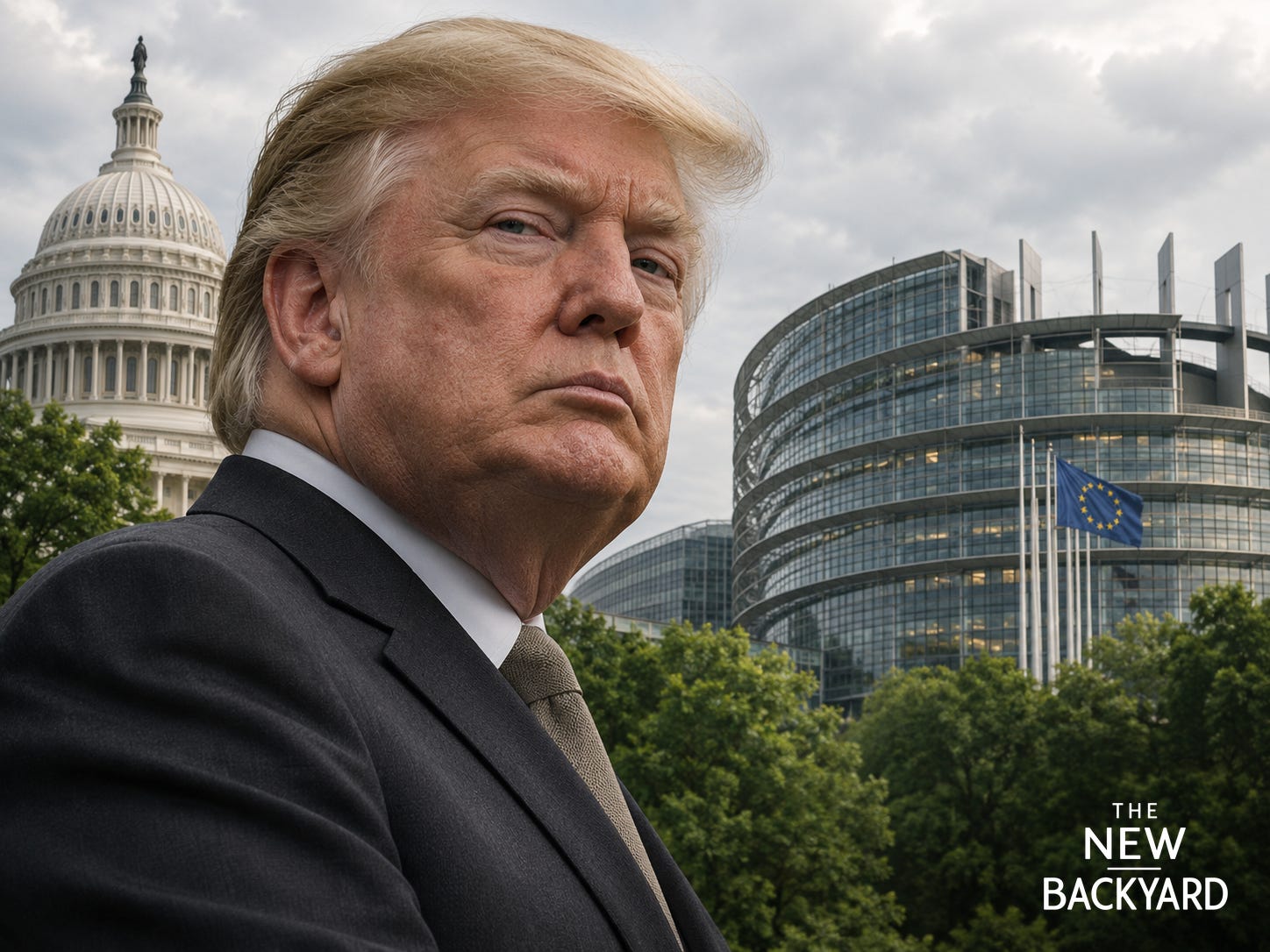
“I guess I’ll become Mr. Veto.”
In an interview excerpt published by the New York Post on November 1, President Donald Trump previewed life under a Democratic Congress. He would block legislation, keep blocking it, and expect his opponents eventually to negotiate.
The sequence is familiar: apply pressure, then offer a deal.
Across the Atlantic, governments should pay attention to what he might bring to the bargaining table.
The backlash has numbers
Republicans have reason for concern ahead of the November 3 midterms. According to the NBC News poll released November 1, Democrats lead 52% to 45% among registered voters, based on interviews from October 28–30. AtlasIntel, surveying likely voters from October 28 to November 1, puts the Democratic lead larger, at 55.5% to 41.4%. Samples and methods differ, but both point to a favorable environment for a Democratic House.
NBC’s findings also show what kind of backlash this is. 51% are dissatisfied with their own finances, while only 29% view the Democratic Party positively. This is an opportunity built on anger and disappointment, not enthusiasm. A victorious opposition would face immediate pressure to improve American living standards, and European leaders should not read such a mandate as appetite for underwriting security abroad.
The Senate is the harder prize. Democrats need four net gains. YouGov’s state surveys, published November 1 with interviews from October 26–29, show both the opening and its fragility. Democrats lead 55–44 in North Carolina and 52–47 in Maine, but only 50–48 in Ohio and 50–49 in Kansas. Those four Republican-held seats offer a route to control if Democrats also hold their own. The narrow leads could vanish together if the polls misjudge turnout.
Where the brakes would bite
There are four possible outcomes, and each changes the pressure on Trump differently.
If the House turns blue while the Senate stays red, Trump would face investigations, document demands and tougher spending talks. Republicans could still confirm his nominees and stop Democratic bills in the Senate, so the confrontation would center on accountability and money.
If Democrats win both chambers, the institutional restraint is strongest. They could scrutinize the administration across both chambers, block appointments and make funding conditional on agreement. His threatened vetoes would become central, since the new majorities could obstruct his agenda while struggling to enact their own.
The reverse split, a Republican House and a Democratic Senate, would give Democrats control over confirmations while Republicans could block their legislative program. That would constrain the people carrying out policy more than the policy itself.
If Republicans keep both chambers, Trump could claim vindication, colleagues would have less incentive to challenge him, and scrutiny would stay in friendly hands.
These outcomes decide how much resistance presidential decisions meet, which documents become public and who must answer for them. They also change where Trump has an incentive to act.
The pressure could move across the Atlantic
Preparations are already reported. Reuters wrote on November 1, citing a White House official and two people familiar with the plans, that officials have prepared executive measures since April. The options include tariffs on wind turbines and critical minerals. These are proposals, not adopted measures, but their relevance to Nordic and European industry is concrete.
A president facing legislative resistance could seek visible successes through trade pressure and talks abroad, using powers already available under law. Courts, funding limits and congressional scrutiny would still constrain him. Even so, a domestic defeat could redirect his energy toward relationships where foreign governments need something he controls.
For Europe, the most consequential dependence is Ukraine. Under NATO’s Prioritised Ukraine Requirements List, European allies and other partners finance American weapons for Ukrainian forces. According to NATO’s own description, the program covers equipment the United States can supply in greater volumes than European allies and Canada. European money helps sustain Ukrainian resistance, yet critical decisions and capabilities remain on the American side.
If Trump tied those supplies to concessions in a settlement with Russia, European governments would face pressure that more spending alone might not overcome. That is a risk inherent in the dependency, not an announced decision.
The European choice comes after the American vote
A stronger congressional check would give European governments more chances to defend predictable cooperation and expose damaging bargains. They should use them, and they should examine their own decisions too.
Every procurement agreement either deepens dependence or builds the capacity to withstand political pressure. Shared Nordic and European orders, reliable production, enforceable delivery schedules and public scrutiny of costs would give governments more room to defend a common position. That position should protect Ukraine’s sovereignty and its people’s right to shape a negotiated peace. Accepting territorial conquest under pressure would weaken the principles on which smaller European states depend.
The danger is that each capital seeks a private assurance from Washington, leaving the others to bargain from weakness. A common European response would make security, industrial interests and democratic accountability harder to trade away separately.
Trump has already described how he expects pressure to produce agreement. European leaders now need to establish what would let them withstand it.
For a Ukrainian air-defense crew awaiting American interceptors bought with European funds, the practical test will be whether the shipment arrives in time.
Discussion about this post