Trump shares attack on Pillay’s Nobel Peace Prize
Donald Trump shared an attack on Nobel Peace Prize winner Navi Pillay. The same day, Washington sanctioned the court where she once served, drawing protests from allies.

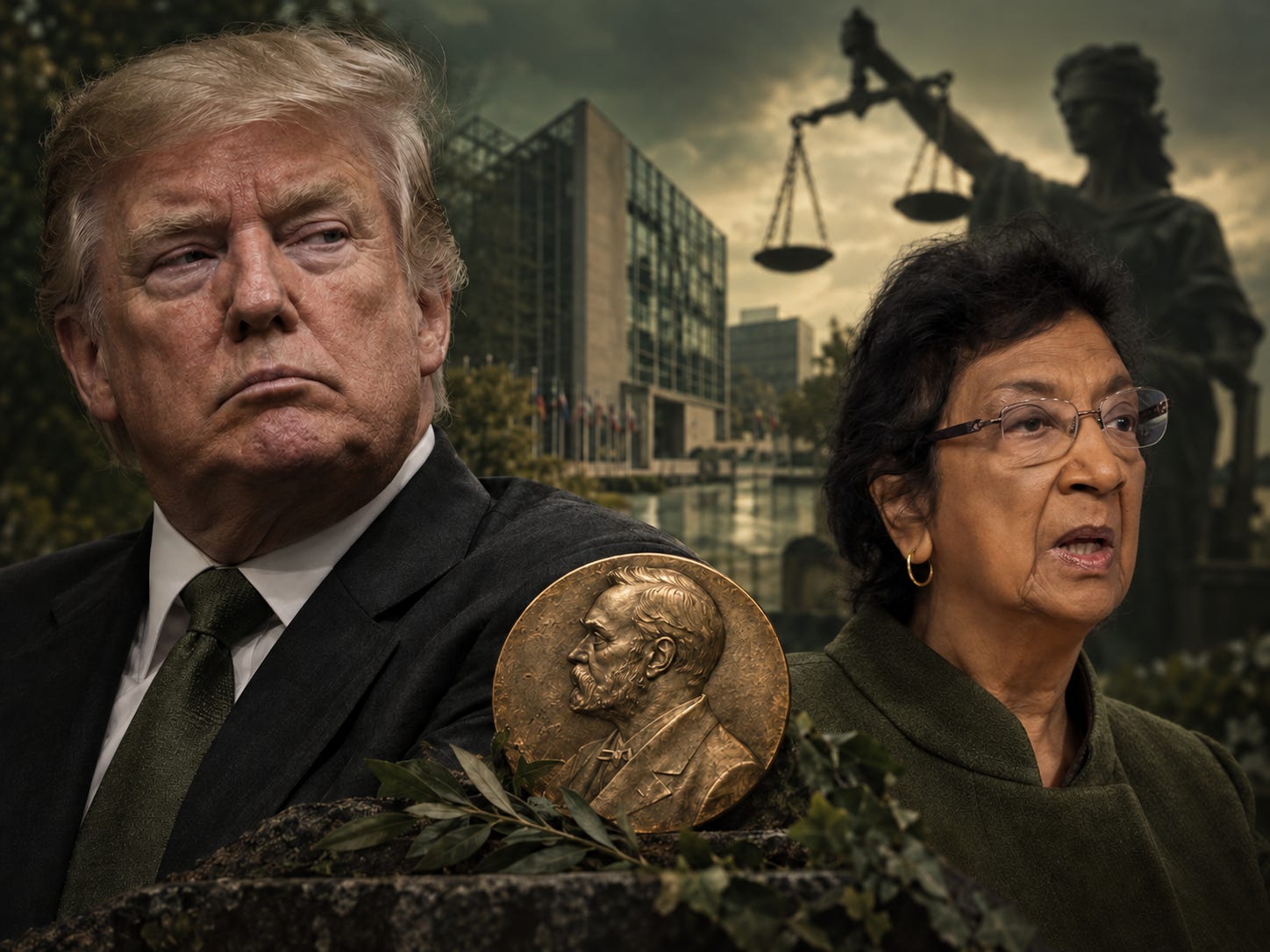
WASHINGTON/OSLO — US President Donald Trump reposted a message attacking Navi Pillay and the Norwegian Nobel Committee on Friday, October 9. The post originated from the account Schoenlaw and was recorded as shared by Trump in the Trump’s Truth archive.
“The Nobel Committee has irreparably disgraced itself and dishonoured the once-great Nobel Peace Prize,” the post said.
The message accused Pillay of hostility towards the United States and Israel, praising terrorists and rewarding Hamas. It described the investigation she led into Israel’s conduct in Gaza as fraudulent. It also cited the Abraham Accords and Trump’s work on hostages and Ukraine as reasons why the president deserved recognition.
The Nobel Committee awarded the South African jurist the prize for her contribution to peace and international legal principles. It highlighted her work to hold those responsible for war crimes, crimes against humanity and genocide accountable.
Pillay’s commission also investigated Hamas
The UN Independent International Commission of Inquiry on the Occupied Palestinian Territory and Israel, which Pillay chaired, also levelled serious accusations against Hamas. In its report of June 12, 2024, it concluded that Hamas’s military wing and six other Palestinian armed groups had committed war crimes during the October 7, 2023, attack on Israel. These included killing civilians, torture and hostage-taking, including the abduction of children.
“Hamas and Palestinian armed groups must immediately cease rocket attacks and release all hostages. Taking hostages constitutes a war crime,” Pillay said when the report was released.
The investigation drew on witness interviews, satellite imagery and publicly available material verified through forensic methods. The commission called for impartial investigations and prosecutions of crimes committed by Palestinian armed groups. It also investigated the actions of Israeli forces in Gaza.
Commission concluded that Israel committed genocide in Gaza
The Truth Social post attacked the commission’s conclusion that genocide had been committed in Gaza. Pillay chaired the commission from 2021 to 2025.
On September 16, 2025, the commission concluded that Israel had committed genocide against Palestinians in Gaza. It found that four of the five categories of acts defined in the Genocide Convention had been carried out with the intent to destroy the group, in whole or in part. Its analysis drew on both the pattern of conduct and statements by Israeli leaders.
Israel rejected the findings. Its UN mission in Geneva accused the commission of political bias, unreliable sourcing and exceeding its mandate. The mission said the war’s objective was to defeat Hamas and that Israel sought to limit civilian harm.
The commission’s report is a legal analysis of Israel’s responsibility as a state, rather than a court judgment. Its recommendations included halting arms transfers that could contribute to acts of genocide and cooperating with investigations by the International Criminal Court, known as the ICC.
Washington added the ICC to its sanctions list
On the day the peace prize was announced, US authorities added the ICC to their sanctions list. The designation was published on October 9 by OFAC, the US Treasury Department’s sanctions office, and applies to the court as an institution.
The sanctions framework rests on an executive order Trump signed on February 6, 2025. In it, he accused the court of conducting baseless investigations into Americans and criticised its arrest warrants for Israeli Prime Minister Benjamin Netanyahu and former defence minister Yoav Gallant.
Pillay herself served as an ICC judge. She has also been the UN High Commissioner for Human Rights and serves as an ad hoc judge at the International Court of Justice, or ICJ, in the genocide case against Myanmar. The ICC prosecutes individuals; the ICJ adjudicates legal disputes between states.
OFAC simultaneously authorised payments necessary to maintain or wind down the court’s operations until April 7, 2027. The authorisation covers member-state contributions, salaries, health insurance, rent and routine services.
In its explanation of the peace prize, the Nobel Committee warned against sanctions targeting judges and attacks on international legal institutions. It described Pillay’s work as helping establish legal principles as a foundation for lasting peace.
“Peace requires justice,” the committee wrote.
Court asks member states to safeguard its operations
ICC President Tomoko Akane responded on Friday that the court would continue its work independently and impartially, guided by the law and the evidence. The court described the sanctions as an attempt to obstruct justice and urged member states to ensure it retained the resources needed to fulfil its mandate.
Denmark joined Canada, Germany, France, Italy, Japan, the Netherlands and the United Kingdom in a joint protest that day. Their foreign ministers expressed strong disagreement with the US sanctions and pledged continued support for the court’s work. They warned of consequences for its staff and their families.
The ICC’s Trust Fund for Victims also warned of the consequences. It said the sanctions could disrupt payment channels, services and partnerships essential to providing reparations and assistance to victims. That could affect medical treatment, psychological support and rehabilitation for survivors of torture and sexual violence.
Discussion about this post