Trump Pressures Ukraine After Oslo
Peace talks in Norway have exposed competing priorities as Washington presses Kyiv, Moscow seeks economic gains and Ukraine demands protection against another invasion.

Analysis
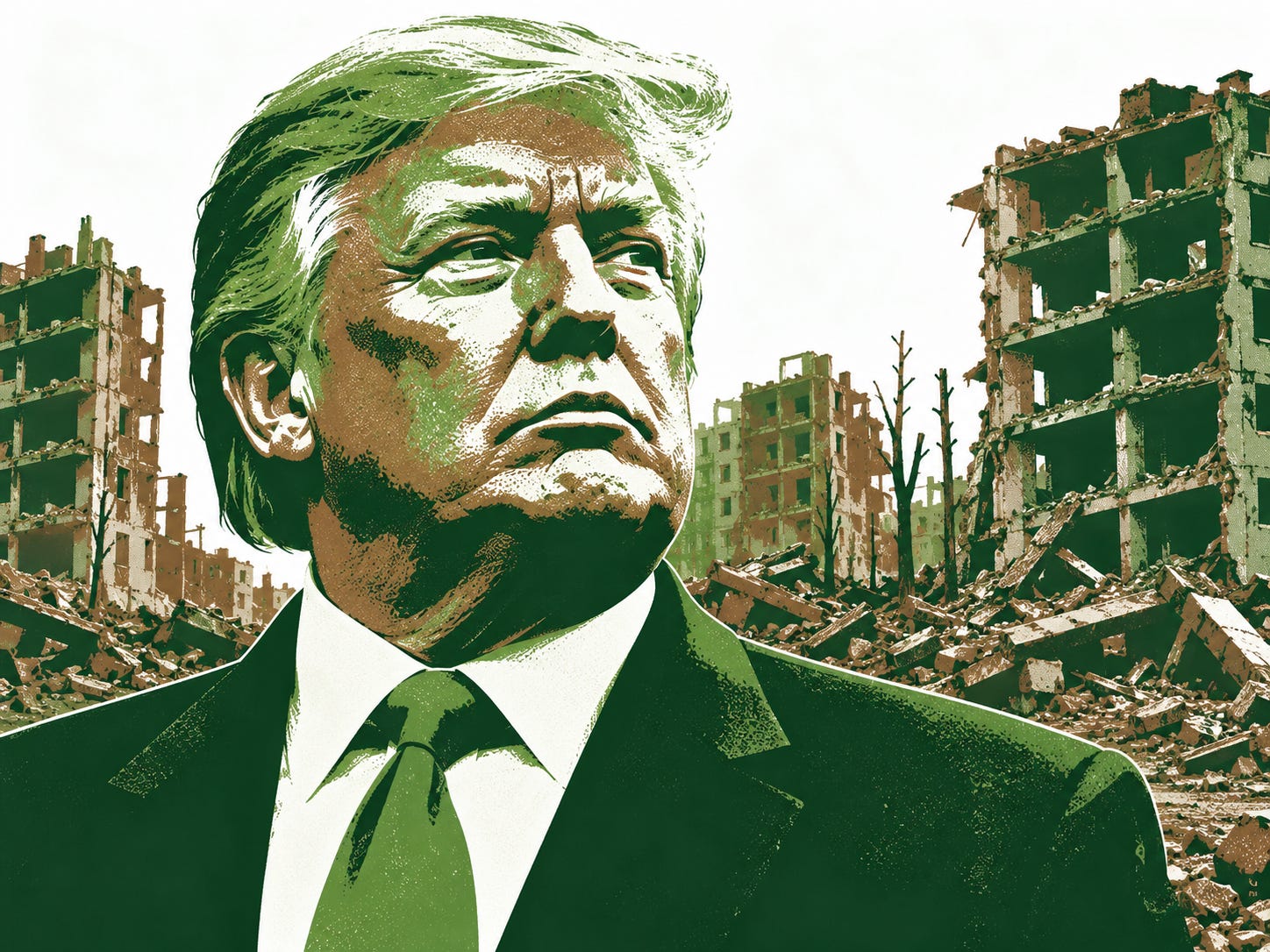
U.S. President Donald Trump followed the October 20 peace talks in Oslo with another demand for Ukraine to reach a settlement. Speaking to reporters at the White House on Tuesday evening, he portrayed Russia as willing to conclude an agreement and pointed to its military strength as a reason for Kyiv to act.
“Ukraine has to want to settle this war,” he said.
His remarks followed a more hopeful assessment from Norwegian Prime Minister Jonas Gahr Støre, Finnish President Alexander Stubb and Ukrainian President Volodymyr Zelenskyy. They described progress on proposals that American envoy Steve Witkoff would take to Russian leaders in St. Petersburg on October 21. Ukraine’s security guarantees remained central to those discussions.
The sequence reveals a central tension in the diplomacy. Ukraine needs an agreement that protects its survival. Trump’s public argument places increasing emphasis on the costs of continuing the war. His claim that Europe is growing weary of financing Ukraine adds another layer of pressure: Kyiv is being told that time could weaken its support. That is Trump’s portrayal of Europe’s position.
Domestic politics helps explain the urgency. Americans vote in congressional elections on November 3, with fuel prices weighing on household budgets, farmers and transport companies. Trump has presented his agreement to restore Russian diesel supplies as a way to lower those costs. Ukrainian attacks on Russian refineries therefore collide with one of his immediate political objectives. Energy analysts question how much the proposed shipments could reduce prices before election day.
The negotiations also reach beyond a ceasefire. An American official has described two parallel tracks: securing Ukraine’s future through guarantees, European integration and reconstruction, while exploring a broader settlement involving European security arrangements and economic cooperation with Russia. This gives Washington several potential incentives to offer Moscow. It also raises the question of what Russia would provide in return.
Russian Foreign Minister Sergei Lavrov supplied a revealing answer on Tuesday. Speaking to newly recruited diplomats, he said Moscow would examine proposals from Witkoff and fellow American negotiator Jared Kushner if they offered financial and economic benefits. He rejected political concessions as the price of accepting them. His statement establishes a hard bargaining position ahead of the American visit: Russia wants access to economic opportunities while preserving its political demands.
Earlier Tuesday, Kremlin spokesman Dmitry Peskov also responded to Trump’s suggestion that somebody else should negotiate for Ukraine. Moscow, he said, wanted a representative it regarded as legitimate and capable of deciding to end the war. The effect is to place Ukraine’s leadership itself under scrutiny alongside the substance of a settlement.
Another possible consideration lies in the Middle East. Fiona Hill, Trump’s former Russia adviser, has suggested that accommodating Moscow could reflect concern about greater Russian assistance to Iran. Trump himself said Sunday that keeping Russian support for Iran limited was a priority. That establishes a connection in his thinking; the existence of a specific bargain linking Iran and Ukraine remains an open question.
Commercial interests add a further dimension. Reporting published on October 3 described discussions over the international assets of Russian oil company Lukoil, involving potential buyers with business connections to Kushner or Witkoff’s family. Those reported negotiations warrant scrutiny of who could benefit from sanctions relief. Their influence on Trump’s decisions remains unproven.
For Ukraine, the immediate stakes are measured in air-defense missiles and warnings of incoming attacks. Zelenskyy has alleged that delayed American support is increasing pressure on his country. U.S. Secretary of State Marco Rubio acknowledged a possible delay in an interceptor shipment while rejecting a political explanation. Establishing responsibility for those delays remains essential to understanding how American pressure operates.
Pressure from abroad may also strengthen Zelenskyy’s position at home. A survey published Tuesday by the Kyiv International Institute of Sociology recorded trust in the president at 43 percent among respondents interviewed October 8–9 and 57 percent among those interviewed October 10–16. The institute considers a rally around the president a likely explanation, while acknowledging methodological uncertainty. As Washington presses for concessions, Ukraine’s leader may face a public increasingly determined to defend the terms on which peace is made.
Discussion about this post