Trump opens door to Russian diesel
His son holds a stake in a refinery funded by a buyer of Russian crude, and well-connected traders may gain.

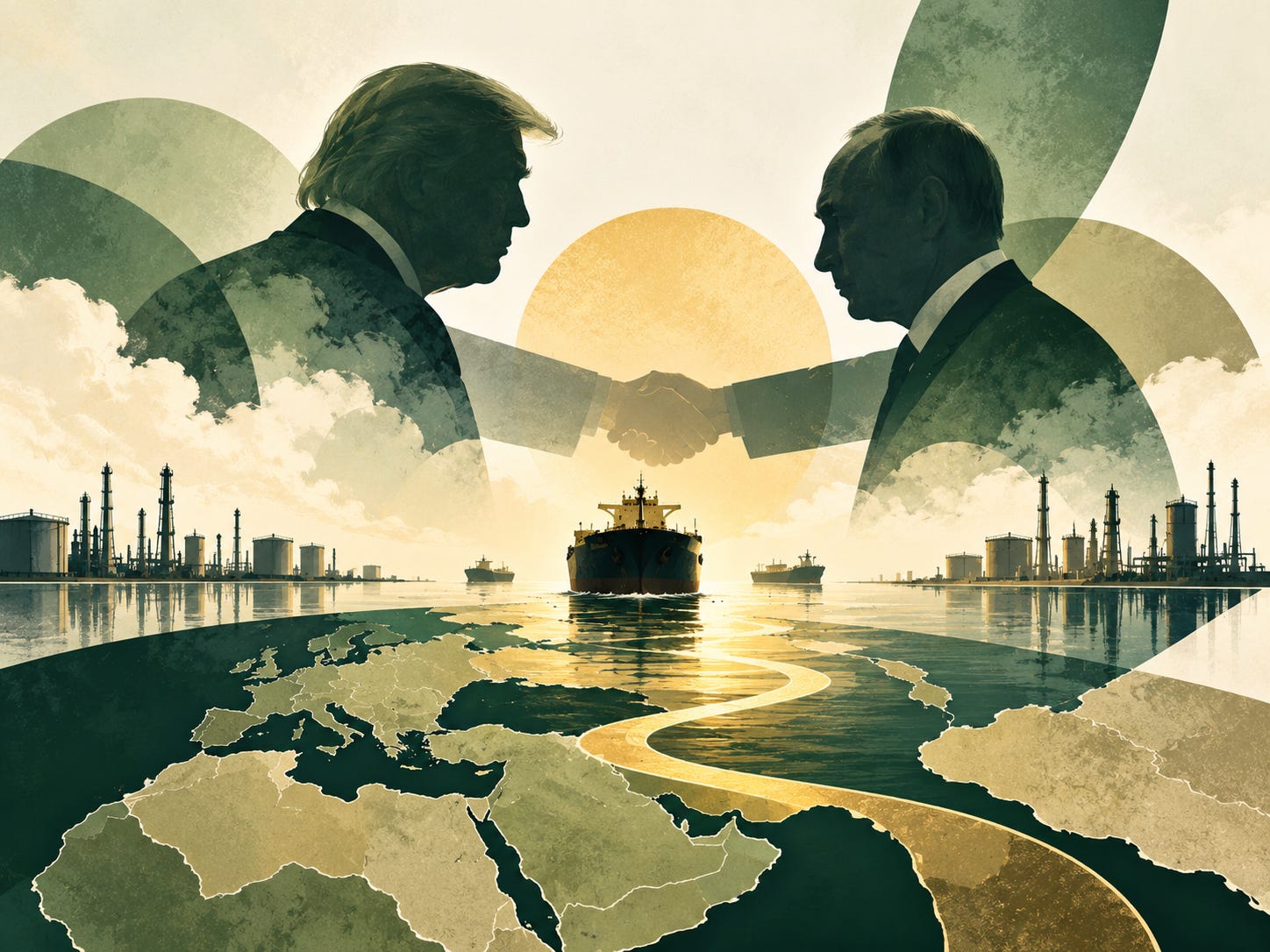
WASHINGTON, Oct. 18, 2026 – President Donald Trump on Oct. 9 allowed imports of Russian diesel to ease fuel prices that have soared during the war with Iran. The US Treasury’s General License 135 runs until April 7, 2027. It names no buyers or middlemen, so who will import and resell the fuel is unknown.
The International Energy Agency estimated on Oct. 14 that diesel lost from the Middle East and Russia in September equaled about 1.3 million barrels a day. Reuters reported the shortage could last well into 2027.
Industry backers took the hit
Iranian missiles struck Ras Laffan in Qatar on March 18 and 19, badly damaging two gas liquefaction facilities. ExxonMobil owns 34 and 30 percent of the units. QatarEnergy said repairs would take three to five years. Shell said a damaged train at Pearl GTL would need about a year.
ExxonMobil, Chevron and ConocoPhillips were among oil donors who gave more than $19 million to Trump’s 2025 inauguration, according to Global Witness. The losses in Qatar show the industry was hurt. They do not show a total loss across all companies, or any link to the diesel trade.
Vitol: loss on the war, deals with Trump
The money is closer among commodity traders. The Wall Street Journal reported on Oct. 17 that Vitol trader Yaoyao Liu is leaving after a failed bet on oil and diesel at the start of the war. His group lost several hundred million dollars on paper. Part was later recovered, and Vitol reportedly stayed profitable for the year.
Vitol’s senior trader John Addison gave about $6 million to political committees backing Trump. In January 2026, shortly after Addison met the president at the White House, Vitol won a Venezuelan crude deal worth about $250 million. The Financial Times documented the sequence. Vitol says Addison gave as a private individual.
Vitol, Trafigura and Mercuria also borrowed oil from the Strategic Petroleum Reserve during the war, to be repaid in kind. Public Citizen says they could profit if prices fall back. Consultant Hal Connolly estimated $101 million for Vitol and $453 million for Trafigura. Those are conditional figures for separate transactions, not the diesel deal. Nothing in the license shows any of the three will take part.
The family link runs through India
Reliance Industries, controlled by billionaire Mukesh Ambani, runs the Jamnagar refinery and has long bought Russian crude. Reuters reported in April that refining and petrochemical profit fell 3.7 percent as Russian, Venezuelan and Brazilian oil replaced Middle East supply.
ProPublica revealed in June that Donald Trump Jr. holds a stake in America First Refining, which says it received at least $100 million from Reliance. Trump announced the investment himself in March. Reliance denies any link to favorable government decisions. Trump Jr. calls himself a passive minority shareholder.
The Centre for Research on Energy and Clean Air reported on Oct. 16 that Russia supplied 32 percent of Jamnagar’s crude from July to September. The refinery sent €122 million in products to the US in September. The data show Russian crude in the supply chain. They do not show the origin of each cargo, or that Reliance is buying diesel under the new arrangement.
Sanctions pressure eased
On Oct. 16, Trump suspended key new sanctions and tariff provisions against Russia just before they took effect. The Associated Press reported on Oct. 18 that senators from both parties sharply criticized the move. It lowers risk for buyers such as Reliance, but who earns what depends on prices and contract terms. The ties to the Trump familywarrant scrutiny for conflicts of interest. They show no agreement trading favors for investments.
Ukraine at the table
Vladimir Putin gains a chance to sell more fuel while the war in Ukraine goes on. Trump has announced up to 4.8 million tonnes. Russia says it is willing to deliver, but volumes and contracts are unsettled. Analysts told the Financial Times the amounts will probably not end the shortage.
A Reuters investigation on Oct. 12, based on three people who knew of the Miami meeting, said envoys Steve Witkoff and Jared Kushner told Ukrainians the deal was meant to bring Putin back to talks. They also repeated their demand that Ukraine stop hitting Russian refineries.
The Ukrainians signaled willingness to discuss a mutual halt to energy strikes, according to Reuters, but left without a deal. Russian strikes on Ukrainian energy infrastructure continued after Trump’s announcement.
Discussion about this post