Trump deals with Putin and puts Ukraine at stake
Trump opens the door to Russian diesel revenues and pressures Ukraine, while Nordic governments and the EU want to tighten sanctions on Putin’s war machine further.

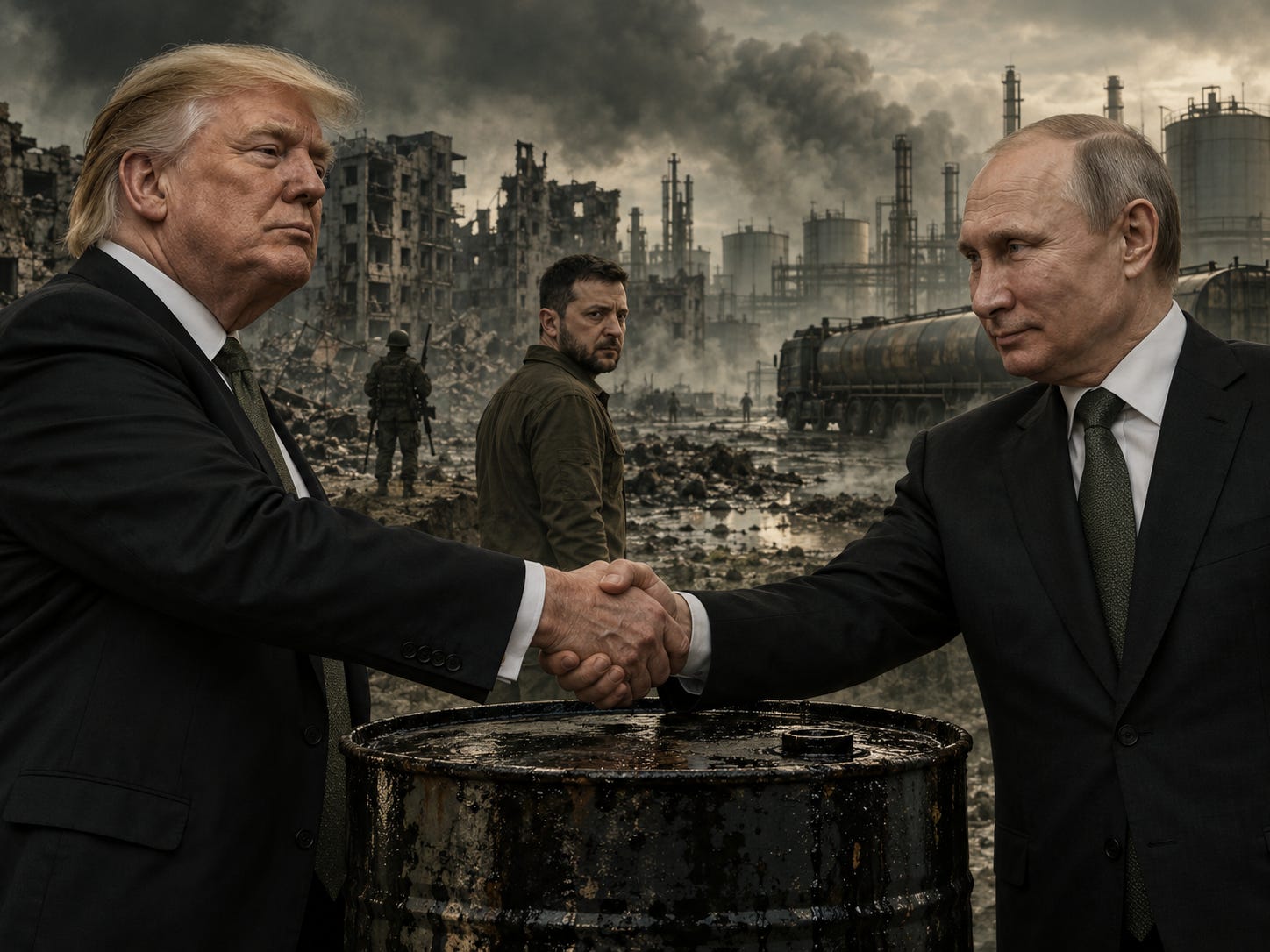
OSLO/BRUSSELS, October 10, 2026 – Donald Trump has opened for imports of Russian diesel while American envoys negotiate with Ukraine on ending the war. Norway and three other Nordic countries criticize the deal. The EUis announcing new sanctions against the Russian war machine.
Trump shows himself to be a cynical businessman and not a head of state in the world’s largest military power. He could have ended this war if only he had the ability and the will.
Now he is putting an attacked country at stake – a country that alone holds Russia in check and prevents it from conquering its neighbors.
Russian diesel gains access to the US
The deal with Vladimir Putin was announced on Friday, October 9. The same day, the US Treasury Departmentissued a sanctions exemption permitting the sale, delivery and import of Russian diesel until April 7, 2027. The permission also covers the American market.
Thus the economic opening has been given a concrete legal basis. In the license, the permission is granted until a fixed end date. A Russian commitment to a ceasefire or to halting the attacks on Ukraine remains to be documented.
Trump first announced more than 300,000 tonnes of diesel, then 500,000 in November and one million shortly after. A further three million were to be delivered depending on the condition of Russian refineries. The figures describe announced deliveries. Implementation remains to be documented.
The president justified the deal with lower prices for American farmers, ranchers and truck drivers. When journalists asked about Ukraine’s criticism, he replied that the world needs diesel and that he was very pleased with the deal. He thanked Putin publicly.
Ukraine’s refinery strikes meet American pressure
The deal follows a public demand from Trump that Ukraine spare Russian diesel facilities. As early as September 13, he said Zelensky had to stop such attacks because they contributed to fuel shortages. He asked Ukraine to choose other targets.
For Ukraine, the strikes on oil facilities are a means of hitting the revenues and production that underpin Russian warfighting. When Washington both opens for exports and demands that the facilities be spared, the president weakens the pressure on Russia from two sides.
The Financial Times reported on Saturday that Trump’s envoys Steve Witkoff and Jared Kushner had warned the Ukrainian delegation that American intelligence sharing could be withheld if the refinery strikes continued. The information is based on the newspaper’s sources and lacks public confirmation.
AP reported the same day that Trump had said Ukraine should get a new president who could make a deal. The statement has so far been relayed only through the news agency. An original recording or official transcript remains to be verified.
Both reports point to pressure that could have direct consequences for Ukraine’s defense and political freedom of action. The documented demand to spare Russian diesel facilities already shows how American fuel interests interfere in Ukraine’s warfighting.
Volodymyr Zelensky reacted on Friday while his delegation was in Florida for talks with the Americans. He described the permission for Russian diesel exports as an investment in continued war and said the Ukrainian delegation was being used as a smokescreen. This is his assessment of parallel negotiations that give Russia economic relief.
The Nordics want to increase pressure on Russia
The reactions from Nordic governments show how far the deal moves Washington away from their course. Norway’s foreign minister Espen Barth Eide tells NTB that “the US decision goes in the opposite direction.” Norway is working for stronger economic pressure that will make war less attractive and negotiations more attractive to Russia.
Eide ties the sanctions directly to Norwegian security. They reduce Russia’s ability to finance the war machine and thus also its ability to threaten Norway. With this, he lifts the dispute over diesel from a question of fuel prices to a question of European security.
Sweden’s prime minister Ulf Kristersson regrets the deal because energy revenues finance Russia’s war of aggression. In a post on X, he demands stronger pressure on Russia and more support for Ukraine. He also wants more countries to do more against the Russian shadow fleet.
Finland’s prime minister Petteri Orpo calls the deal “a big disappointment” in an interview with Yle. He believes it adds money to Putin’s war chest. At the same time, he questions how much diesel Russia can actually deliver, and how significant the deal will be for the market. He points to the Iran war as the most important driver behind fuel prices.
Denmark’s foreign minister Lars Løkke Rasmussen tells DR, as relayed by Ritzau, that extra Russian revenues could finance the war. Denmark stands firm on the sanctions and on support for Ukraine. He warns against undermining Europe’s work to reduce dependence on Russian energy.
The EU prepares new sanctions
The EU responds by announcing further pressure. Foreign policy chief Kaja Kallas says on Saturday that sanctions relief on Russian diesel gives Moscow more money for warfare. She states that Europe will maintain the pressure.
On Monday, October 12, the EU’s foreign ministers aim to approve the largest set of new sanctions listings against the Russian war machine since the beginning of the war, according to Kallas. Kristersson cites around 1,600 listingstargeting the Russian military-industrial complex. Formal adoption remains pending.
The measures were in preparation before the diesel deal. EU diplomats had approved the new listings on October 7, according to Reuters. They include, among others, companies in the production chain for Russian ballistic missiles.
The American change of course also comes shortly after a joint pledge from the G7. In the declaration of October 2, the group promised to maintain the Russia sanctions while energy reserves were to be released to ease price pressure. One week later, Trump opened for Russian diesel exports.
Kyiv seeks stronger air defense
For Ukraine, this dispute is unfolding while Russian attacks continue. Zelensky spoke on Saturday with France’s president Emmanuel Macron during a Russian ballistic attack on Kyiv. According to the Ukrainian presidential office, they discussed both the sanctions relief and the need for more air defense. Zelensky warned of particularly high danger of new missile attacks in the coming days.
The same day, he raised the new Russian export revenues with Finland’s president Alexander Stubb. The presidential office says Ukraine and its partners are coordinating measures and preparing meetings. Zelensky also announced ammunition for Ukrainian F-16s within the next few days, for use against Russian drones.
Discussion about this post