The King opened Parliament: “Most serious situation since the war”
King Haakon VIII opened his first Storting on Friday. But behind the procession and the ceremonial words lay a sense of unease: Norway is looking for more friends it can rely on.

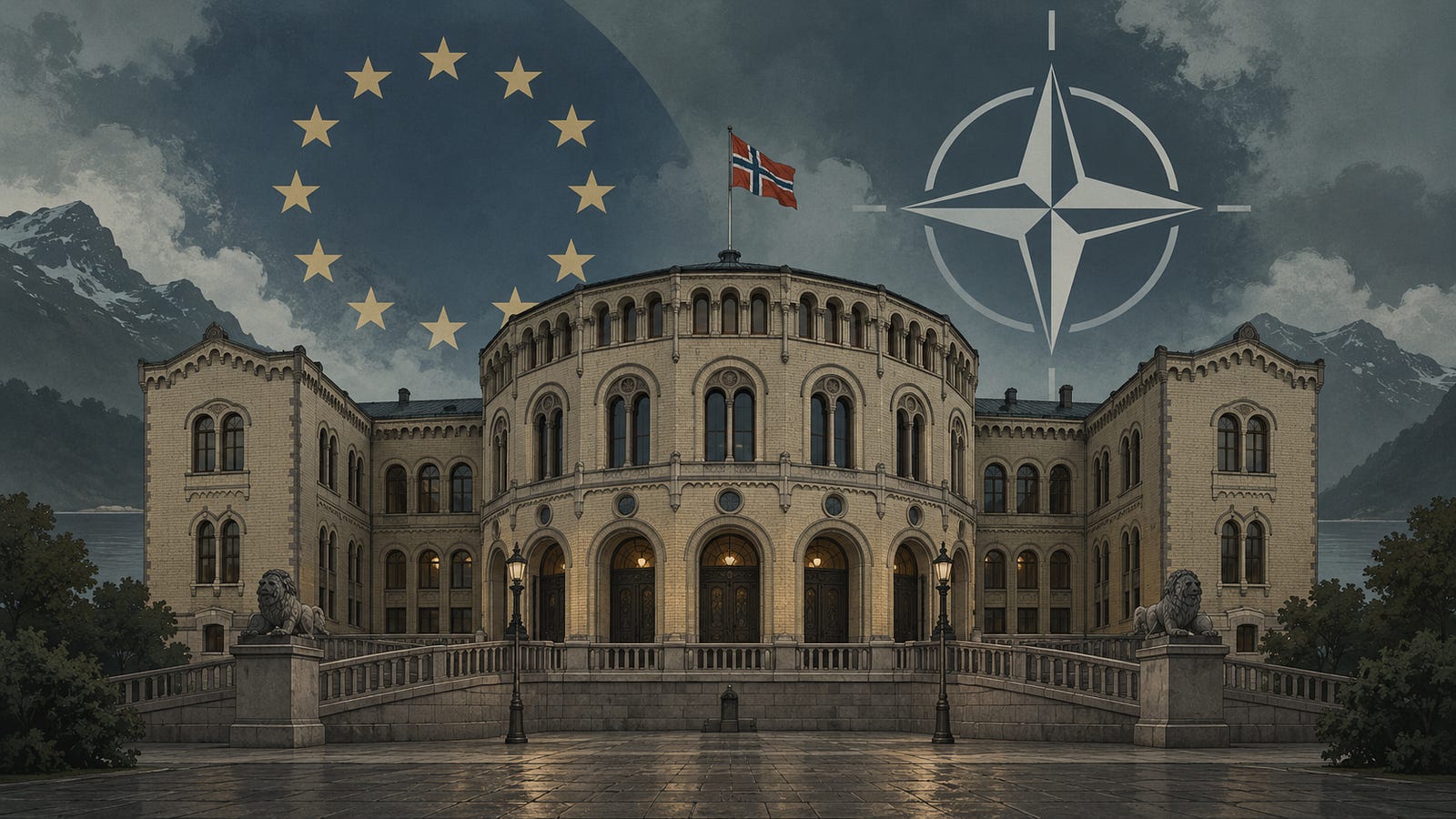
Everyone was waiting for the King when the doors to the Storting chamber swung open on Friday, October 2. For the first time, he opened Parliament as monarch.
Queen Mette-Marit was supposed to be at his side but had to cancel due to illness. Instead, the King brought Crown Princess Ingrid Alexandra, the daughter who will one day take over the throne. It gave the ceremony a clear feeling of generational change.
Prime Minister Jonas Gahr Støre handed over the speech written by the government. It was about a world that has become far less safe since Norway last got a new king.
“We are in the most serious security situation since the Second World War,” the King read.
Russia continues its war against Ukraine, and the rules between nations are under pressure. Then came a sentence that would have been almost unthinkable in a Norwegian throne speech just a few years ago: Developments in American politics are creating unpredictability for Europe.
Uncertainty about the US
For a long time, things were fairly simple for Norway. Russia is a big and powerful neighbor, and the US has been our strongest friend. Through NATO, the Americans have been committed to defending Norway and the rest of Europe.
NATO is still the foundation, the government stresses. But more walls are now being built around it.
In a short time, Norway has gained closer defense cooperation with the UK, Germany, France and Poland. The British are becoming key to the new frigate program, and the Germans to the submarine partnership. Cooperation among the Nordic countries has taken on a whole new weight since Finland and Sweden joined NATO.
In its report on the state of the realm, the government uses a word that says a lot: hedging strategy.
Put simply: Norway will still rely on the US, but doesn’t want to be entirely dependent on the Americans showing up the way they always have. When the government at the same time calls American politics a source of unpredictability, it’s hard to see the push for European allies as anything other than a hedge.
This isn’t just about who happens to be in the White House right now, either. For several years the US has been turning its attention toward China and the Pacific, and Europeans are being told to pay more for their own defense. That makes the British, Germans, French, Poles and Nordic neighbors more important to Norway than they have been in a long time.
What about the EU?
One question isn’t in the speech but lies just beneath the surface: Where should Norway stand if Europe increasingly has to look after itself?
The government devotes a lot of space to the relationship with Europe. The EEA Agreement is meant to secure Norwegian businesses access to the European market in an age of more protectionism and trade conflicts. Norway will continue to supply energy. The defense industry is being tied more closely to Europe, and our security increasingly depends on what European governments agree on.
But Norway is still not in the EU.
The speech doesn’t mention EU membership, and the government is signaling no new EU debate. Still, it’s getting harder to keep the question entirely out of defense policy when Europe is set to take over more of what the US used to do. Norway is part of the economic cooperation through the EEA and the military cooperation through NATO, but doesn’t sit at the table when EU countries set the direction.
That doesn’t mean we’re automatically heading in. Norway can still build much of its security through NATO, the Nordic region and its own agreements. But the EU discussion is no longer just about tariffs, agriculture, fisheries and sovereignty. Now defense and security are part of it too.
The war came closer
Much of the urgency stems from the war in Ukraine.
When Russia launched its full-scale invasion, the idea that major war between European countries belonged in the history books vanished. For Norway the distance is especially short: Russia is attacking Ukraine, and it is also the country we share a border with in Finnmark and meet in the sea areas to the north.
The map around us has changed too. Finland and Sweden are now NATO members, and Norwegian, Swedish, Finnish and Danish forces can plan together. The defense of Finnmark is linked to Finland, the North Atlantic to the UK and Iceland, and the Baltic Sea to Sweden, Denmark, Poland and the Baltic states.
That is why the large-scale support for Ukraine continues. The government has set the framework for the Nansen Programme at 85 billion kroner in 2026. But the help goes both ways: After more than four years of war, the Ukrainians have learned a great deal about drones, electronic warfare and modern air defense, and Norway wants to learn from that.
In short: The war far to the southeast of Europe has become part of Norwegian defense planning.
“It was April 9, 1940”
The most concrete sign of how seriously the authorities take the situation didn’t come from the King. It came from Speaker of the Storting Masud Gharahkhani.
He said that this autumn, Parliament has practiced meeting somewhere else should it become necessary. The exercise was held in Drammen in September, with representatives training to keep their work going without the Storting building in Oslo.
Then he recalled the last time Parliament had to flee.
That was April 9, 1940.
No one on Løvebakken is saying Norway faces a new April 9. But the preparedness being built up is about more than soldiers, aircraft and vessels. The government is also announcing the first long-term plan for civil preparedness. Power, mobile networks and transport are to keep working through serious crises, and in the worst case, in war.
This is total defense in practice: Hospitals must function. Goods must get through. The mobile network must hold. And the government and Parliament must still be able to govern the country.
The King also read out an old Norwegian line of defense:
“For a country like Norway, international law is our first line of defense.”
It suits a small country with a great power as its neighbor. Norway can build up its military and gain stronger allies, but we will never be the biggest. Then we depend on borders being respected, agreements being kept, and big countries not being allowed to dictate to smaller ones by force.
On Friday, much was as it has always been: the uniforms, the procession, the throne and the rituals. But the text the new King was handed told a different story. It was about a Russia that has brought war back to Europe, a US that has become harder to predict, and a Norway seeking closer ties with its European neighbors while preparing to withstand more on its own.
Discussion about this post