Sweden Can Strike Back Deep Into Russia
Swedish Gripen jets armed with Taurus missiles can hit targets more than 500 kilometres away. The air force chief makes it clear: Attacking Sweden should come at a cost.

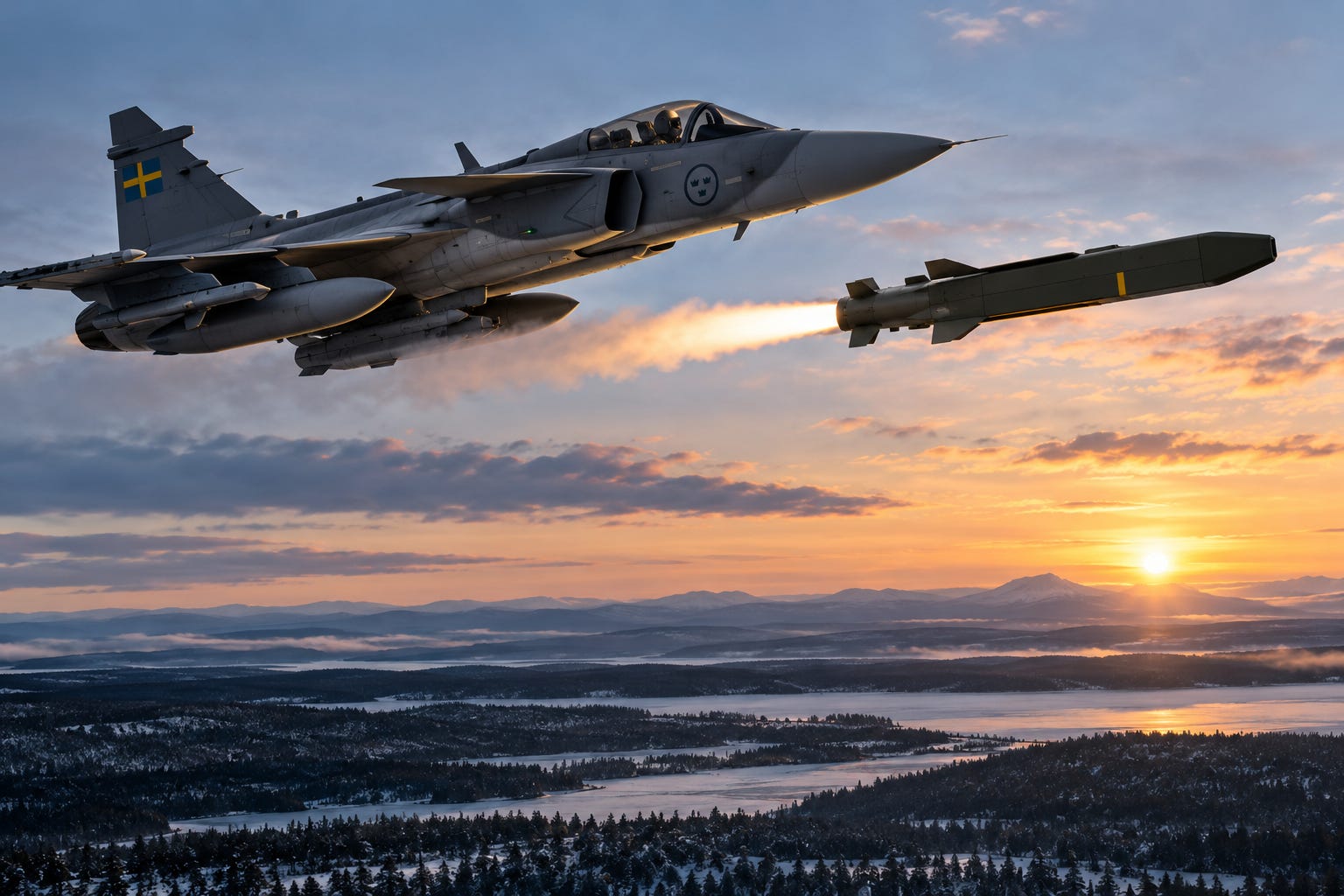
Sweden is preparing to answer a Russian attack with more than just defence. Its air force is to be able to hit targets deep inside Russia.
On 21 August, a Taurus KEPD 350 missile was fired from a Swedish JAS 39C Gripen for the first time. The test took place over the Vidsel range in northern Sweden, and it marks a shift in what the Swedish fighter fleet is expected to do if Sweden or another NATO country is attacked.
“It should cost something to launch an attack,” Colonel Carl Bergqvist, head of the Swedish Air Combat School, told Aftonbladet.
From defence to counterattack
Swedish air defence has long been about detecting, intercepting and stopping an enemy heading for Sweden. Now the fight is also meant to be carried further away. The aim is to hit the threat before it reaches Swedish or allied territory.
Bergqvist described the same development on Swedish Radio’s programme Gräns in July. He believes the war in Ukraine has shown how important it is to disperse aircraft and air defences, keep them operating under attack, and still be able to strike back at long range. He calls the change a major one.
And the weapons are on their way. Sweden’s 2025–2030 defence plan says fighter units are to gain long-range capability against ground targets, including through the purchase of cruise missiles for the Gripen.
In other words, this is not just idle talk about a future war. Sweden is already building the ability to carry out such strikes.
A range of more than 500 kilometres
The Taurus KEPD 350 is an air-launched cruise missile used for precision strikes against ground targets. Its stated range is more than 500 kilometres.
That means the Gripen can fire the missile far from its target and stay clear of enemy air defences. The aircraft has long been used both as a fighter and for ground attack, but with Taurus it can hit targets that were previously out of reach.
Lessons from Ukraine
The change is rooted in experience from the war in Ukraine. When Russia invaded on 24 February 2022, it quickly went after Ukraine’s air force, air defences, radars and military leadership. Even so, the Ukrainians managed to keep much of their air defence running by dispersing, moving and protecting their equipment.
Since then, the war has shown that long-range precision weapons are decisive for both sides. For Sweden, then, it is about more than shooting down aircraft, drones and missiles already on their way. The aim is also to influence the attack itself at long range.
This fits with Sweden’s new role as a NATO member. Swedish air units are being planned as part of a larger Nordic and allied air defence, where operations may cover a far wider area than Sweden alone.
A clear signal to Moscow
Bergqvist’s statement on 29 September puts words to Swedish deterrence: A Russian attack could bring military consequences inside Russia as well.
Which targets might be hit, when and how, would only be decided if a real war situation arose. But the direction is clear, and the capability is coming.
When the Taurus missile left the Swedish Gripen over Vidsel in August, the new strategy became visible in practice: Sweden is building an air force that can meet an attack, and take the fight back to the aggressor’s own territory.
Discussion about this post