Sanctioned Tankers Carry Russian Diesel Toward US
Three tankers carrying Russian diesel are heading toward the United States under a Trump administration sanctions exemption, setting up a legal fight in Washington.

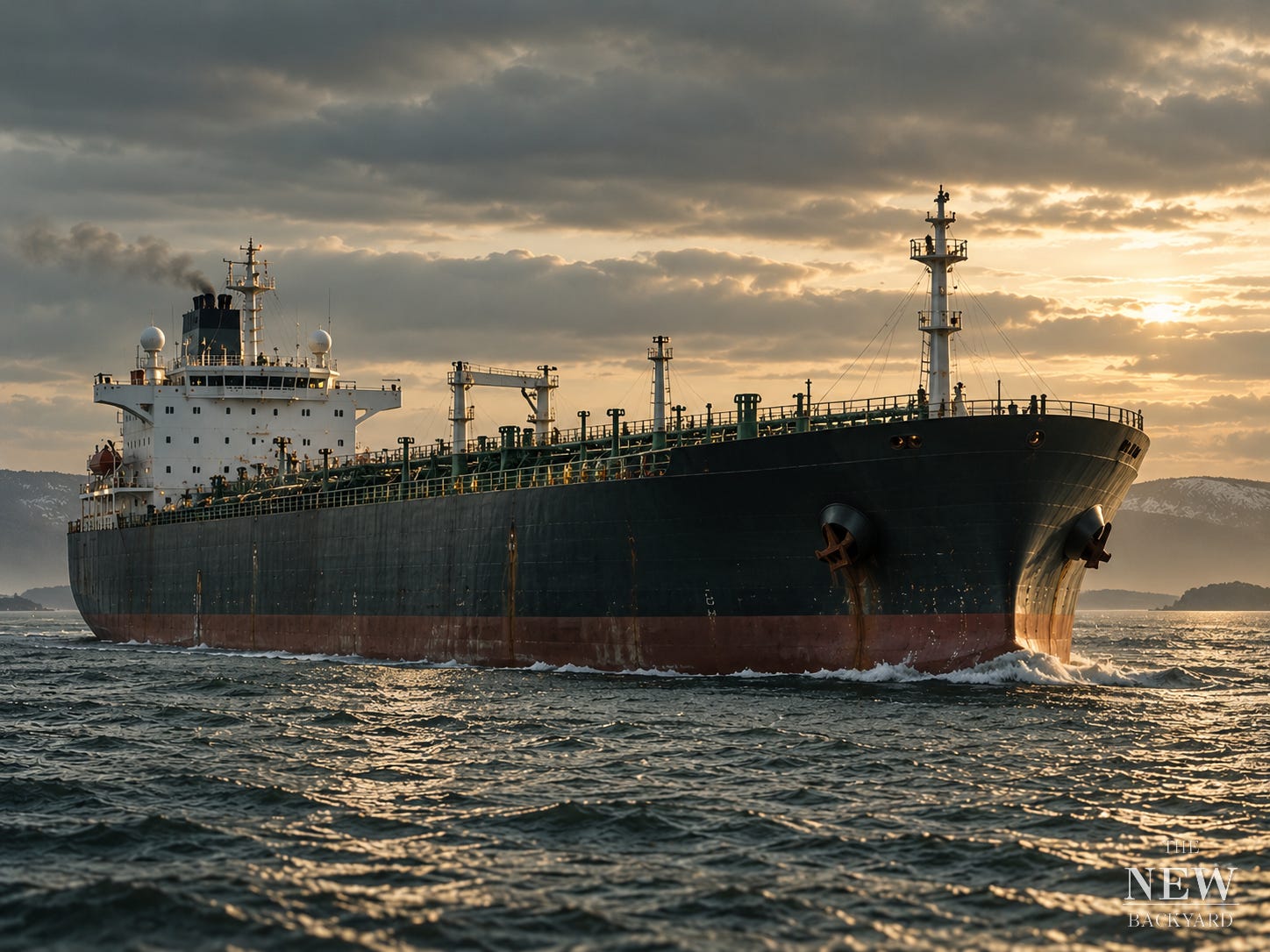
Three tankers carrying about 140,000 metric tons of Russian diesel are crossing the Atlantic toward the United States after Washington temporarily reopened the door to Russian fuel imports.
Two of the vessels are under international sanctions.
Their voyages have triggered opposition in Congress, where lawmakers are questioning whether President Donald Trump’s administration can authorize imports that were prohibited by federal law after Russia’s full-scale invasion of Ukraine.
Russian Deputy Prime Minister Alexander Novak said on October 27 that three tankers were already underway and that a fourth was expected to leave Russia on October 28.
Shipping intelligence company Kpler identified the vessels as Agioi Fanendes, Talisman and Leruo, carrying a combined 924,000 barrels of diesel.
They are expected to reach the US East Coast between November 7 and 11.
Russian Diesel Heads Back to the US
The first identified shipment left the Russian Baltic port of Primorsk on October 22.
The Malta-flagged Agioi Fanendes, operated by Greek shipping company Eastern Mediterranean Maritime, loaded about 40,000 metric tons of diesel.
Tracking data initially listed New York as its destination, although the operator later said the final discharge port had not been confirmed.
The tanker Talisman is subject to US and European Union sanctions. Leruo is sanctioned by the European Union and Britain.
Their voyages follow a decision by the Trump administration to temporarily authorize transactions involving Russian-origin diesel.
On October 9, the US Treasury Department’s Office of Foreign Assets Control issued General License 135, allowing specified sales, deliveries, unloading and imports of Russian diesel that would otherwise be restricted.
The authorization remains valid until April 7, 2027.
Russia is already preparing to expand exports. Novak has identified state-controlled oil producer Rosneft as one potential major supplier.
Congress Questions Legality
The imports are now facing a legal challenge from Capitol Hill.
Democratic Senator Richard Blumenthal, a member of the Senate Armed Services Committee, demanded on October 27 that shipping companies turn vessels carrying Russian diesel away from US ports.
His letters referred to Agioi Fanendes and another tanker, PVT Azura, which had reportedly left St. Petersburg carrying about 109,000 barrels of diesel toward Norfolk, Virginia.
Blumenthal argues that the administration’s authorization conflicts with the Ending Importation of Russian Oil Act, adopted by Congress in 2022.
That law prohibited imports of Russian petroleum products after the invasion of Ukraine and established conditions for lifting the ban.
The dispute now centers on whether a temporary Treasury license can legally permit imports still covered by the congressional prohibition.
Former Treasury sanctions official Jeremy Paner has argued that the administration has authority to issue temporary exemptions without repealing the underlying law.
Blumenthal has asked companies involved in purchasing, transporting, insuring and distributing the diesel to provide information by October 31.
Russian Refineries Recover
The shipments come as Russian refinery output begins recovering from months of Ukrainian drone attacks.
Three industry sources told Reuters on October 27 that Russian refineries had increased crude processing by about 25 percent during the second half of October, reaching roughly five million barrels per day.
Diesel production was estimated at about 225,000 metric tons per day, with around 80,000 tons potentially available for export.
Earlier Ukrainian attacks had disrupted refining capacity and contributed to fuel shortages inside Russia.
The recovery gives Moscow more fuel to sell abroad just as Washington has created a new route into the American market.
A New Revenue Opening for Moscow
The dispute exposes a growing contradiction in US policy.
Washington says additional diesel supplies could help reduce fuel prices for American consumers and businesses.
At the same time, the sanctions imposed after Russia’s invasion of Ukraine were designed to restrict Moscow’s energy revenues and reduce its ability to finance the war.
Ukrainian President Volodymyr Zelenskyy has criticized the easing of economic pressure on Russia.
For Moscow, the shipments offer something more concrete: renewed access to one of the world’s largest fuel markets and another source of export revenue.
The first tankers are expected to reach US waters in early November, turning the legal dispute over Russian diesel into a test of how far the Trump administration is prepared to roll back economic pressure on Moscow.
Discussion about this post