Russian Media Amplify Europe’s Rift
Russian coverage of a Nordic call to Vladimir Putin highlights European divisions, while Kremlin officials praise the contact and question the callers’ influence.

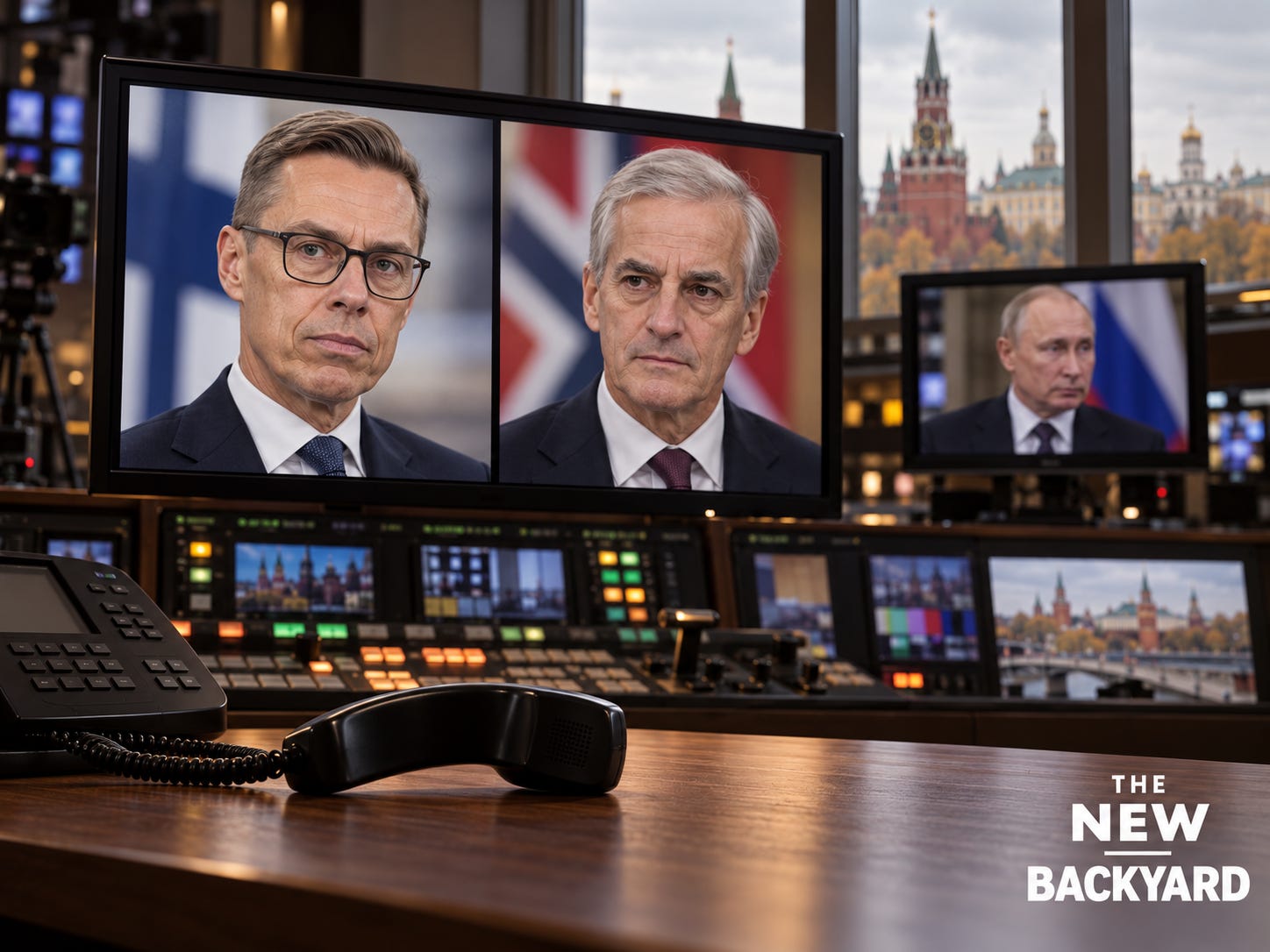
Finland’s President Alexander Stubb and Norway’s Prime Minister Jonas Gahr Støre feature in competing Russian narratives after their telephone conversation with Russian President Vladimir Putin on 27 October. Several outlets portray their initiative as evidence of European division. Kremlin statements combine approval of the contact with challenges to their diplomatic standing.
The Russian news agency Interfax reported that the Nordic leaders subsequently briefed Ukrainian President Volodymyr Zelenskyy and reaffirmed their support for Ukraine. Their conversation with Putin concerned diplomatic efforts ahead of planned negotiations in Abu Dhabi involving Russia, Ukraine and the United States.
Coverage published by Russian outlets between 27 and 30 October shows how that initiative became material for a wider argument about Europe’s influence.
Argumenty i Fakty presented the call as a move against the wishes of European “hawks”. Its article gave space to Oleg Barabanov, programme director of the Valdai Discussion Club, who welcomed renewed contacts between individual European leaders and Moscow. He explained that Russia had historically preferred bilateral dealings with European countries to negotiations through European Union institutions.
That commentary identifies a Russian interest in the form of the diplomacy itself. Contact through individual capitals offers Moscow separate relationships to cultivate, while European governments debate their collective position.
Kommersant placed the story under a headline translating as “Europe’s Split”. The newspaper juxtaposed the Nordic initiative with criticism from Denmark and European efforts to strengthen defence cooperation. Its account described Europe’s broader approach to Russia as confrontation, making the telephone conversation an exception within that framework.
URA.RU sharpened the language further on 28 October, declaring in its headline that Europe had panicked after Putin’s conversation with Finland’s president. The report drew on a British newspaper, while the Russian outlet’s headline and presentation turned disagreement among governments into a continental reaction. “Panic” was the outlet’s characterization.
Putin supplied his own political distinction. In remarks reported by Interfax on 29 October, he endorsed the initiative and described the callers as Europeans interested in constructive dialogue. He contrasted them with those seeking Russia’s strategic defeat. This placed Stubb and Støre within a category defined by the Russian president’s priorities.
Russian Foreign Minister Sergei Lavrov offered a more dismissive assessment. Speaking on 27 October, he portrayed the call as evidence that Europeans wanted to squeeze into the negotiating process. According to Interfax, he questioned what positions they could bring while acknowledging that he was still awaiting the detailed record of the conversation.
The combination gives Moscow two useful messages: Putin welcomes contact, and Russian officials assess whether European participants have anything to contribute. This is the political framing that emerges from the selected coverage.
A separate URA.RU report on 29 October used Støre’s dispute with the Financial Times to accuse British journalists of lying about the conversation. The article also reported that the newspaper stood by its account. Its headline converted a contested description of the call into a verdict against the journalists.
Europe’s eventual role remained open. On 30 October, Interfax reported that Kremlin spokesman Dmitry Peskov said European participation would become necessary at some stage. He described the forthcoming Abu Dhabi negotiations as a three-party process involving Russia, Ukraine and the United States, with concrete discussions about European participation still ahead.
Discussion about this post