Russia Rearms During Oleshky’s Rescue
Drone images reviewed by Sky News show soldiers entering homes in occupied southern Ukraine, where vulnerable residents remain after a brief humanitarian pause.

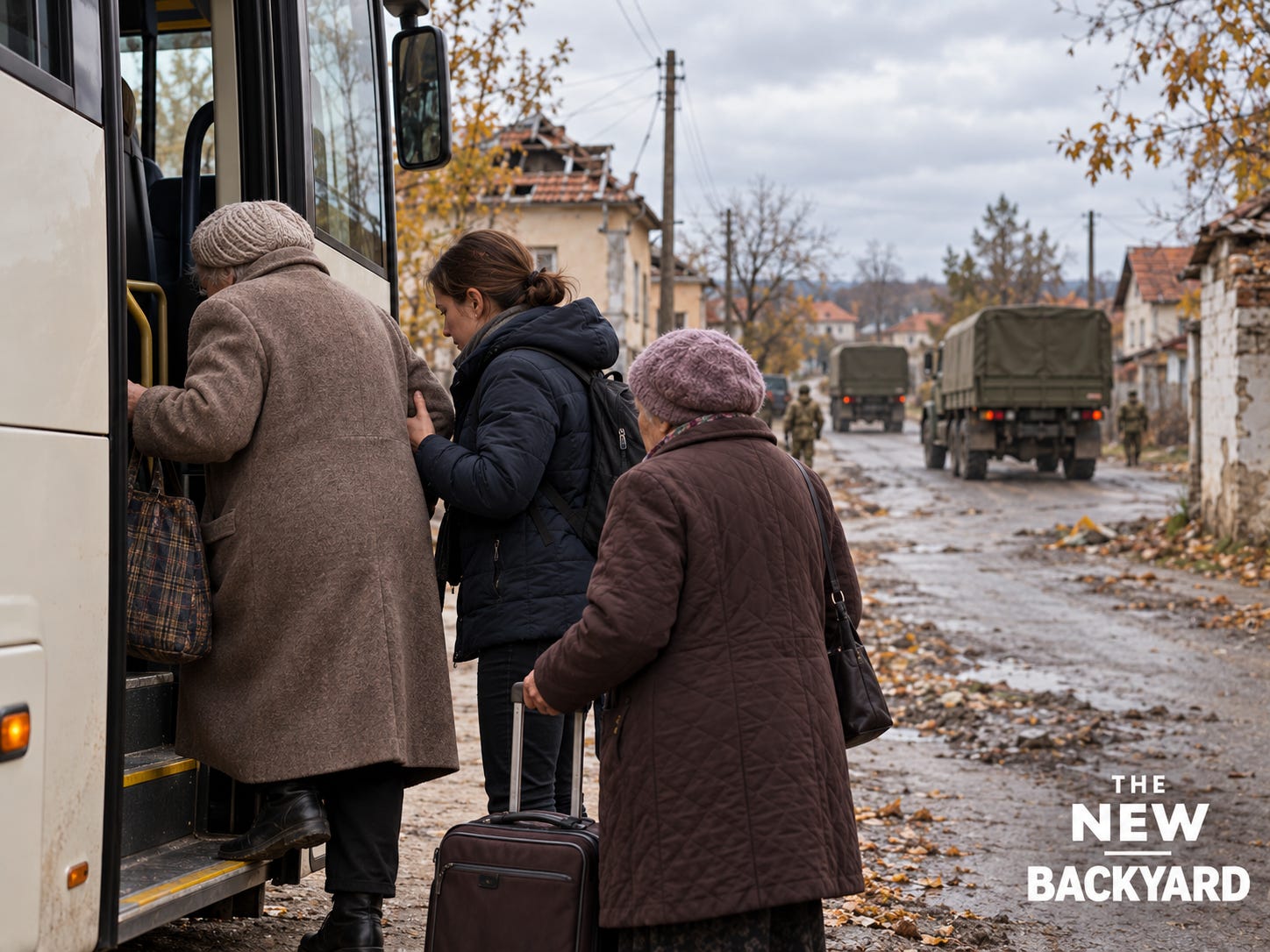
On November 2, Ukraine’s General Staff said Russian troops used the six-day ceasefire in Oleshky to rotate units, reinforce positions and bring in ammunition. The occupied town stands across the Dnipro River from Ukrainian-held Kherson.
The pause ended on November 1, after aid deliveries and an evacuation that brought hundreds of people out of the town.
Soldiers moved into houses
Sky News correspondent Stuart Ramsay watched live Ukrainian military drone feeds at the command center of the 34th Marine Brigade. The images showed Russian troops moving heavy equipment and supplies, and soldiers carrying large packs into houses and buildings with basements.
Ukrainian Lieutenant Colonel Dmytro Pulinets told the broadcaster that the pause opened roads Russian forces had previously struggled to use. The brigade reported military resupply and troop movements throughout the ceasefire.
The footage gives the reporting a basis beyond official statements, while its source remains the Ukrainian military.
Dmytro Lubinets, Ukraine’s human rights commissioner, said both sides had fulfilled their commitments under the agreement. The precise restrictions it placed on troop movements remain unclear in publicly available material.
Hundreds reached safety
US First Lady Melania Trump, whose team helped broker the operation, put the total evacuated at nearly 800. That figure covers the overall mission. The exact number who reached Ukrainian-controlled territory remained unclear, Ukrainian news outlet Hromadske reported on November 2.
Those traveling to Ukraine crossed the border in the Chernihiv region on October 31, after a journey through occupied Crimea, Russia and Belarus.
Lubinets said the arrivals were receiving medical care, social support and psychological rehabilitation. The operation also brought essential supplies into a town where residents had endured severe shortages.
Bedbound residents are still waiting
Journalist Maria Semenchenko, of the Media Initiative for Human Rights, told Ukrainska Pravda on November 2that people who wanted to leave remained in Oleshky.
They included bedbound residents and people with limited mobility, despite numerous requests for evacuation. Semenchenko, who maintains contact with residents, also said surrounding villages had been left outside the evacuation.
The military buildup raises the risk of further fighting around those who remain. Pulinets warned that Russian reinforcement could support further attacks across the river against Kherson. Renewed fighting would leave civilians in Oleshky exposed to the exchanges.
Lubinets says he and Russian human rights representative Yana Lantratova are exploring further humanitarian operations. For residents still waiting for transport, another safe journey out depends on the next agreement.
Discussion about this post