Rajon Hossain Took a Construction Job in Russia. Then Came the Front
Rajon Hossain, 21, survived a drone strike and made it home to Bangladesh. His family’s demand for compensation brought threats.

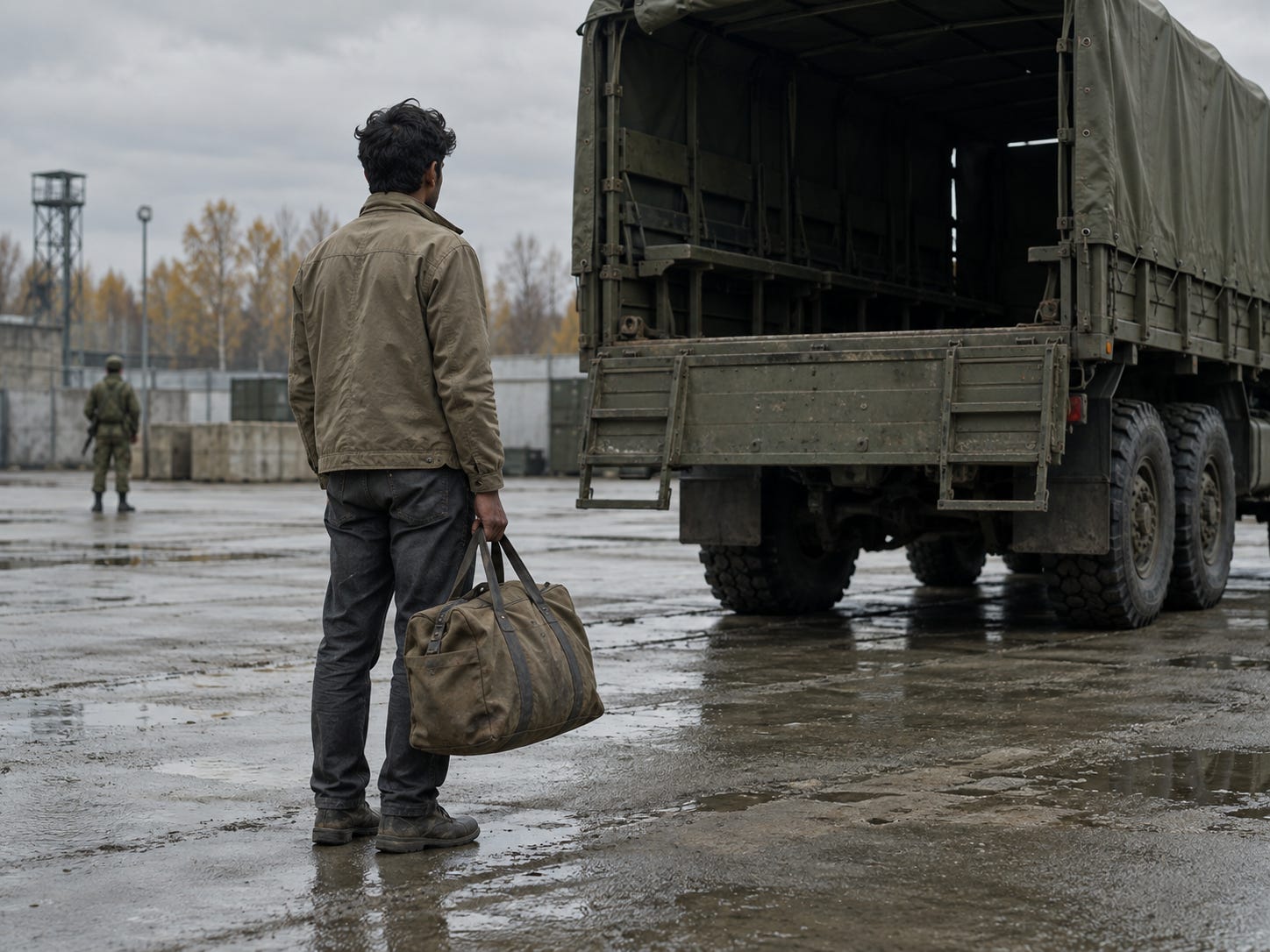
Mr. Hossain flew to Russia in May expecting to work on a building site. Instead, Bangladeshi police said, he was forced into the Russian army, given 21 days of training and sent to the front. A drone strike left him gravely wounded. He returned home in August with the help of his country’s embassy.
On Wednesday, police in Dhaka laid out a preliminary investigation into the network that arranged his trip. About 30 Bangladeshis were lured to Russia with job offers, police said. Roughly 20 are dead and six remain at the front. Two suspects are in custody.
The case is one of many. Russia’s invasion and Ukraine’s defense have created a demand for foreign fighters that governments from Latin America to Central Asia are now struggling to manage. Some who go are committed volunteers, and others are men chasing better pay. A third group was deceived or coerced. Their governments are left with death notices, missing-person files and families pleading for help.
Counting the Missing
The numbers are imprecise, but they are large. Colombia’s Foreign Ministry said on Sept. 5 that it had received 1,753requests for consular help tied to the war, 863 involving Ukraine and 890 involving Russia. It urged both countries to stop recruiting Colombians. The ministry cautioned that the figure counts requests, not individuals, and that determining which army each person served in would take further work. It has also referred 21 cases to prosecutors over suspected recruitment networks.
Peru’s government said in August that 459 Peruvians had been recruited, with 11 dead, 114 missing and three held prisoner by Ukraine. It then summoned the Russian ambassador.
Ukraine is also a destination. Its military ombudsman, Olha Reshetylova, said in August that about 16,000 foreign volunteers from at least 72 countries were serving, nearly 40 percent of them from Latin America, according to her office. Brazil’s government has warned of a rising number of Brazilian deaths abroad. It added that its embassy in Kyiv has seen citizens struggle to leave service, and that the contracts they signed can limit the help diplomats can give.
Cuba has prosecuted the recruiters. Its foreign ministry said in October 2025 that nine mercenary cases had been brought against 40 people, and that 26 had been convicted and sentenced to five to 14 years. Havana denies sending soldiers as state policy and says Cubans have fought on both sides.
Promises of Work
In Africa, the pattern is of jobs that turn out to be something else. In Ghana, Foreign Minister Samuel Okudzeto Ablakwa said in July that authorities were examining the cases of 272 recruited citizens, 55 of them reportedly dead. Many had answered advertisements for work in construction, hospitality, logistics and security. Cameroon’s foreign minister, Mbella Mbella, summoned the Russian ambassador in April after citizens who had traveled for tourism or study ended up in military operations.
Kenya has gone furthest politically. Foreign Minister Musalia Mudavadi announced in March an agreement with Moscow to halt recruitment of Kenyans. Even so, information presented to the Senate in September suggested that more than 1,000 Kenyans might have been recruited. Families described dead and missing relatives and men held by Ukraine. Lawmakers also heard allegations that recruits had their identity papers confiscated after arriving in Russia. South Africa reported a rare success in February: 17 men who had been lured to the front were released from their contracts, and 15 had come home.
In Asia, India said in October that it knew of about 259 citizens recruited into Russian forces. 139 had been discharged, and it was seeking information on 69 others. New Delhi warns that some men enter the war on their own for the money, expecting their government to rescue them later. It says that expectation is mistaken. Nepal raised the missing, its prisoners of war in Ukraine and compensation in talks with Moscow on Oct. 7.
When Residency Becomes Leverage
A report by the International Federation for Human Rights, Truth Hounds and a Kazakh rights group describes migrants in Russia being offered military contracts as an alternative to detention, prosecution or deportation. A separate study by Fortify Rights and Truth Hounds, based on interviews with recruits and families, describes Russian-language contracts that men could not read, confiscated passports, withheld pay and violence.
Consular warnings suggest the pressure is built into the system. China’s consulate in Vladivostok noted in February that certain foreign men aged 18 to 65 seeking long-term residency must document either a contract for at least a year of military service or proof of completed service or exemption. Uzbekistan warned in May that recruiters were winning trust with promises of work, legal help and quick entry permits.
Russia rejects the accusations. Its embassy in Nairobi said in February that foreigners who are legally resident can volunteer for Russian forces. The dispute turns on what happens between the job offer, the border crossing and the signature.
Names and Networks
Britain has begun naming names. On May 5 it sanctioned people and companies it says exploit migrants for Russia’swar. One is Baba Vlogs Overseas Recruitment Solutions, accused of luring Indians with promises of well-paid security work and then forcing them to the front through threats and violence. Another is Polina Alexandrovna Azarnykh, who, according to British officials, arranged travel from countries including Egypt, Nigeria, Syria and Yemen, with Russian state backing. The designations reflect Britain’s own assessment.
The networks are hard to dismantle. The Institute for Security Studies, a research group based in South Africa, cited a mapping by Code for Africa of 289 websites and social media profiles, with fake endorsements and job ads that are replaced as soon as they are exposed. The sanctions also cover recruitment into Russian weapons production through the Alabuga Start program, where the work is making drones.
North Korea is a different case. It confirmed in April 2025 that its troops had fought in Russia’s Kursk region on its leadership’s orders, under a state-to-state military partnership.
No Easy Way Out
The scale is uncertain. A Ukrainian government estimate cited in the rights groups’ report puts the total at no fewer than 27,000 foreigners from more than 130 countries recruited by Russia since February 2022. That figure covers several years and is not comparable to Ukraine’s 16,000 serving volunteers.
Ukraine channels foreign recruits through its International Legion and regular brigades. Its Defense Ministryannounced a working group in September to improve rules for foreign volunteers and their families. Under the rules Ukraine describes, foreign contract soldiers may request discharge only after six months of continuous service. Britishauthorities say Britons have been killed or captured and that their ability to help with repatriation or ending contracts is very limited.
For those caught up in Russia’s ranks, leaving can be harder still. In a reply to the United Nations on Sept. 14, Colombia described a young Colombian with autism who, according to information given to U.N. experts, was lured with work in maintenance and logistics, sent to the front and badly hurt. Bogotá treats him as a victim entitled to protection. Russia’s reply, relayed in the same document, said discharge requests are granted only exceptionally and with military needs in mind.
Amnesty International said in September that the pattern includes deceptive, coercive and exploitative recruitment, but that each person’s case has to be assessed individually. Under international law, a soldier in a warring party’s forces is generally entitled to prisoner-of-war status if captured. A prisoner of war can also be a victim of human trafficking.
For Mr. Hossain’s family, the ordeal did not end when he came home. When it demanded compensation from the recruiter, Bangladeshi police said, it was met with threats. His father filed a complaint, which became the foundation of the case police presented in Dhaka this week. Several of the men who made the same trip are still at the front.
Discussion about this post