Putin Opens the Door to Talks as Trump Looks Toward the Midterms
Ukraine’s future intertwines with energy trade and great-power diplomacy. Europe seeks influence as Russia signals further negotiations while continuing war.

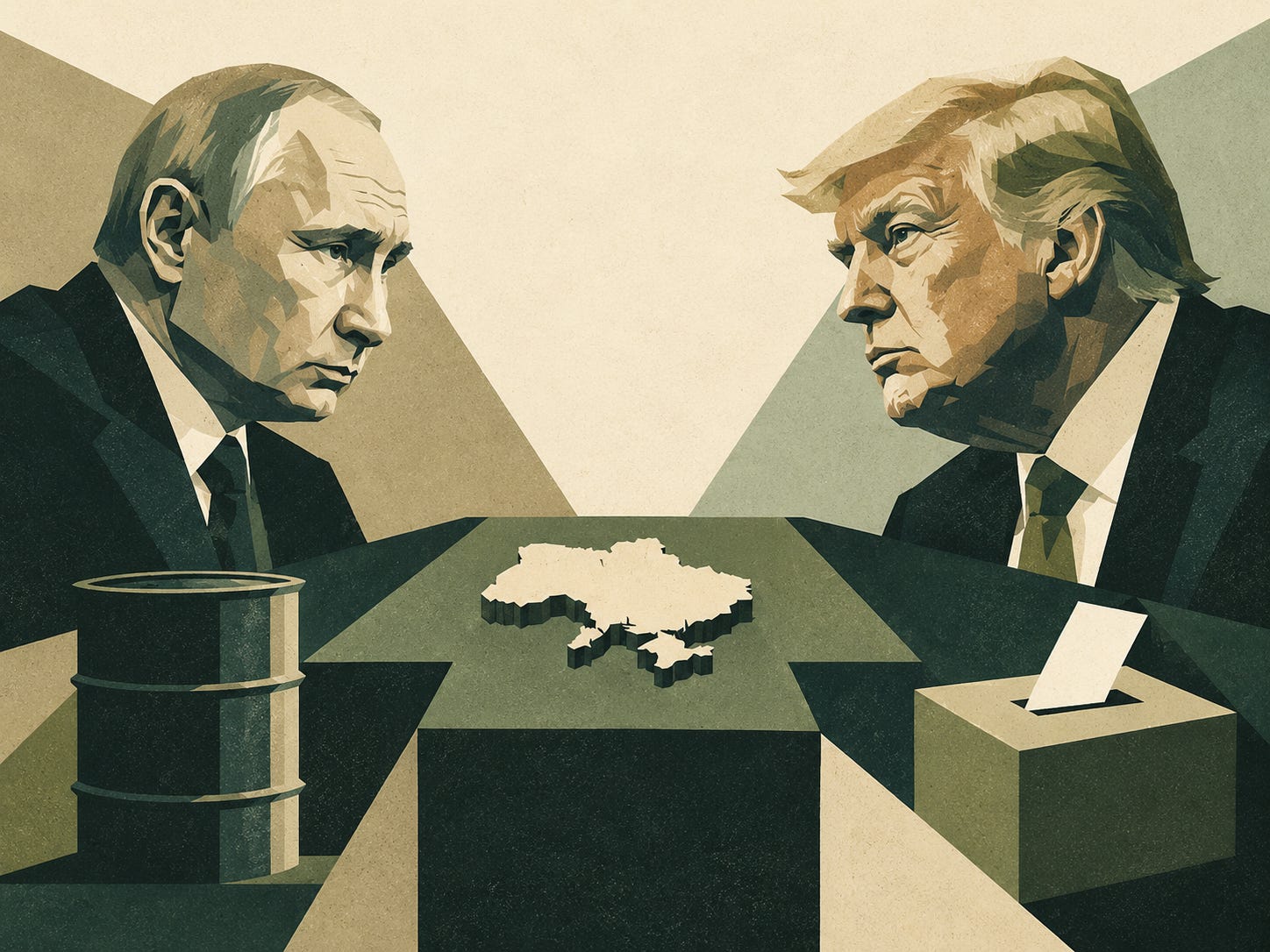
Analysis | October 22, 2026
Russian President Vladimir Putin signaled willingness to resume negotiations with Ukraine and the United States when he met US Special Envoy Steve Witkoff in St. Petersburg on October 21. Their discussions also covered Russian diesel, economic cooperation, and a possible meeting between the leaders of Russia, the United States, and China. The Kremlin’s account places Ukraine’s future within a broader discussion about relations among major powers.
The immediate outcome is an opening for further diplomacy. The Kremlin identifies around November 10 as a possible date for trilateral talks. Ukrainian President Volodymyr Zelenskyy supports an early resumption, according to Reuters. The timing, security guarantees, and conditions for ending hostilities remain unresolved.
Putin Links Peace and Business
Economic cooperation features prominently in Moscow’s account. Presidential adviser Yury Ushakov says implementation of the diesel agreement with Washington and major joint projects received extensive attention. Some projects are approaching launch, he claims. According to the same account, Putin portrayed Russian forces as militarily dominant. These battlefield claims represent Russia’s own wartime narrative.
Politically, this combination gives Putin an opportunity to pursue economic normalization while continuing the war. He meets American envoys as a central negotiating partner, with trade and future cooperation on the table. That could strengthen his position before the toughest questions concerning Ukraine are settled.
Washington Gains a Visible Result
The release of Stephen Hubbard, an American held in Russian captivity for more than four years, is a concrete outcome of the engagement. For US President Donald Trump, it provides a diplomatic achievement to present to voters.
China’s state news agency Xinhua emphasizes that the proposed November negotiations would follow the US midterm elections. That timing gives domestic politics a role in how progress is presented. It establishes a possible negotiating schedule; the parties’ underlying motives require separate assessment.
China Emerges as a Possible Host
Ushakov says the meeting addressed a possible summit involving Chinese President Xi Jinping, Trump, and Putinin Shenzhen. A final agreement and confirmation from Beijing remain to be established.
Xinhua’s coverage emphasizes diplomacy, stable fuel markets, and Russia’s offer to help address the Iran issue. Its reporting draws on Ushakov’s statements, illustrating how Chinese state media relay Moscow’s account while Beijing’s specific commitments remain unclear.
Europe Seeks to Shape the Terms
European leaders participated in the preparations. In Oslo on October 20, Norwegian Prime Minister Jonas Gahr Støre, Finnish President Alexander Stubb, Zelenskyy, and American envoys discussed security, territorial questions, and reconstruction. Representatives from other European countries, the European Union, and the North Atlantic Treaty Organization also participated.
The EU’s position, adopted on October 15–16, calls for robust security guarantees and continued pressure on Russia. The bloc explicitly regretted Washington’s easing of diesel sanctions. This exposes a concrete policy divide: Washington is opening trade opportunities while the EU seeks to restrict revenues financing Russia’s war.
For Ukraine, the Test Comes on the Ground
Russian missile attacks on Kyiv overnight into October 22 underline the distance between diplomatic signals and daily life.
For Ukrainians, an agreement’s value lies in safety at home, electricity through winter, and the possibility of returning to their communities. The substance of security guarantees will therefore be decisive: who protects the country, what resources they commit, and how they respond if Russia attacks again.
Discussion about this post