Norway’s Rail Failures Expose a National Risk
Peacetime railway failures expose weaknesses in the civilian infrastructure Norway depends on to protect its population and sustain military operations.

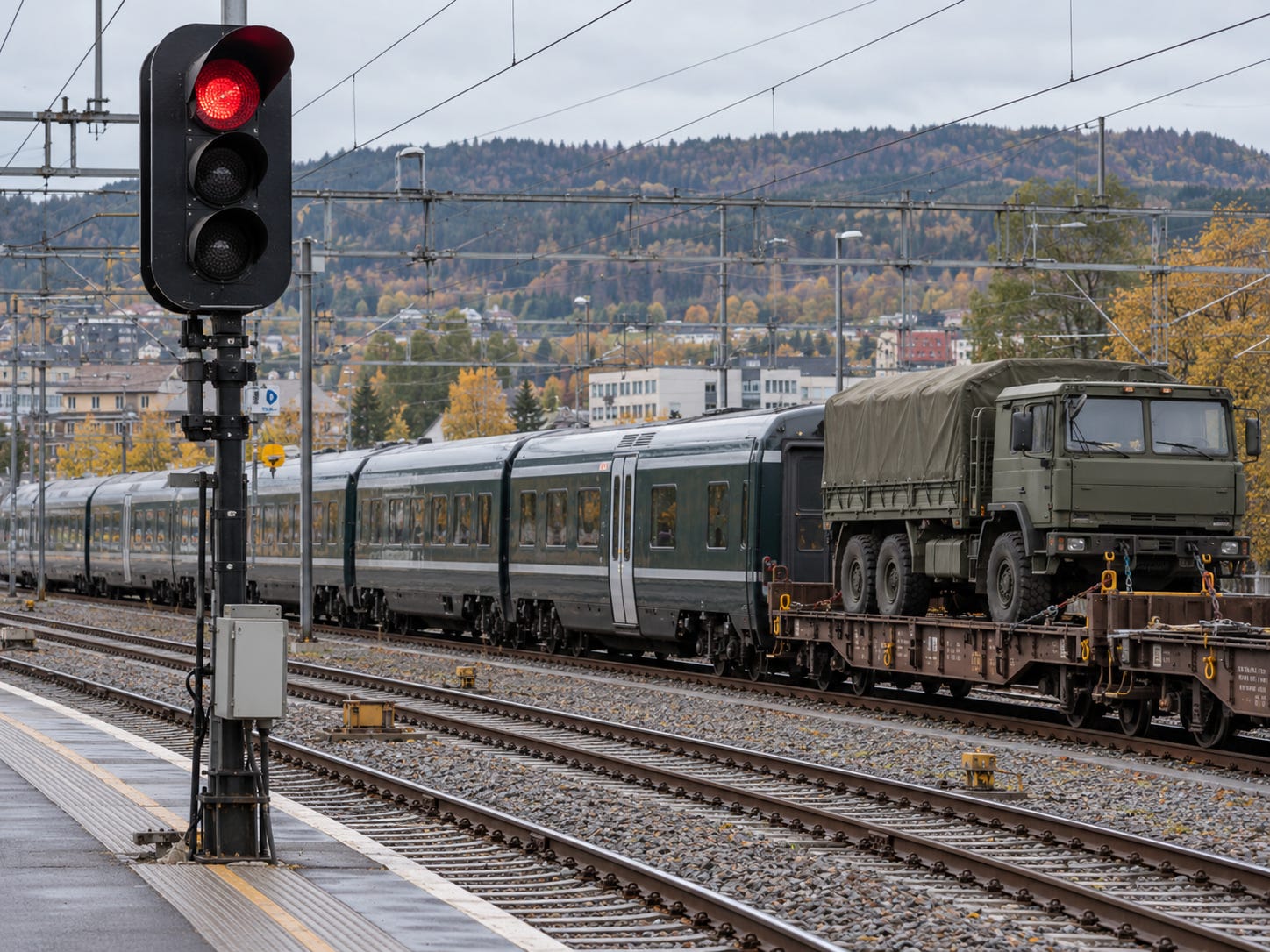
The Norwegian Railway Authority confirmed on 26 October 2026 that a planned security inspection of Bane NOR, Norway’s state-owned railway infrastructure manager, had yet to begin.
The authority’s published programme scheduled the inspection under the Security Act to start between July and September. The timetable allows changes, but the response supplied no revised starting date.
Terje Owrehagen, a communications adviser at the authority, also told The New Backyard that recommendations in an earlier inspection report had received no formal follow-up. He explained that these were recommendations rather than binding orders with deadlines.
The earlier findings reach directly into Norway’s ability to maintain essential transport during a national emergency.
The civilian foundations of defence
Norway’s total defence system combines military defence with civilian preparedness. Hospitals, transport operators, communications providers and public authorities must protect the population while supporting the armed forces.
That creates competing demands when capacity becomes scarce. The same transport network may be needed to deliver food and medicines, evacuate civilians and move military personnel and equipment.
The government’s proposed 2027 transport budget recognises the railway’s role in total defence. It also identifies limited diversion routes as a particular vulnerability for freight.
Sweden’s and Finland’s NATO membership has increased Norway’s importance as a reception and transit country for allied forces. Transport infrastructure must increasingly support movement eastwards across the Nordic region, alongside domestic needs.
The warning from Christmas Day
A communications failure caused a nationwide railway shutdown on 25 December 2024. The subsequent inspection exposed weaknesses extending beyond the original technical fault.
In its report dated 23 April 2025, the railway authority identified shortcomings in preparedness, coordination and the use of alternative communications equipment. Backup equipment existed, and some control centres used it. Other findings concerned inadequate training and confidence in operating it.
The report also established that Bane NOR had failed to contact the Armed Forces or railway operators with defence contracts to clarify critical transport requirements. That included needs which might arise if the disruption continued.
Inspectors recommended better vulnerability mapping, emergency plans and joint exercises. They found substantial room for improvement while identifying no direct breaches of the regulations examined.
Stopping trains when safe operation becomes uncertain protects passengers. National preparedness also requires a reliable way to restore essential transport and determine which movements should take priority.
This combination of dependence, recovery weaknesses and unclear coordination constitutes a national risk. Under wartime pressure, disruption could affect civilian supplies and military operations simultaneously.
Problems across the system
The Office of the Auditor General, Norway’s independent public audit institution, documented comparable weaknesses across total defence in a report published in May 2025.
Its investigation covered local and regional preparedness during 2020–2024. Civilian organisations needed clearer information about military requirements, stronger coordination of emergency plans and more effective exercises. Questions also remained about the availability and prioritisation of resources.
The auditors criticised both the Ministry of Defence and the Ministry of Justice and Public Security for inadequate action on longstanding problems.
The government has since reported further measures. In a defence proposition presented in March 2026, it said military requirements for civilian support had been mapped during 2025 and communicated to relevant sectors.
A military-led group now assesses transport infrastructure needs. The proposed transport budget also reports that a railway preparedness council was established during 2026.
Exercises and operational readiness
Bane NOR has participated in practical training. During Cold Response in March 2026, it supported a civilian–military evacuation exercise in Narvik, northern Norway, involving around 100 simulated casualties. Military medical personnel, regional health services and the municipality practised receiving and transferring patients.
Such exercises develop cooperation between services. Testing recovery from prolonged communications failures addresses a further requirement: keeping the transport system available when its normal operating arrangements break down.
The signal failure between Oslo Central Station and Skøyen on 23 October brought everyday railway reliability back into focus.
Anna Langhammer, a Bane NOR press contact, told The New Backyard that traffic had resumed that evening. Her response explained how railway signals halt trains when a fault is detected. The specific technical cause remained unstated, as did the status of relevant measures following the earlier inspection.
Discussion about this post