Norway’s Defence Chief Backs Nordic Unity
Norway’s military chief has joined a century-old civic organisation, arguing that trust between Nordic neighbours strengthens their ability to withstand crises.

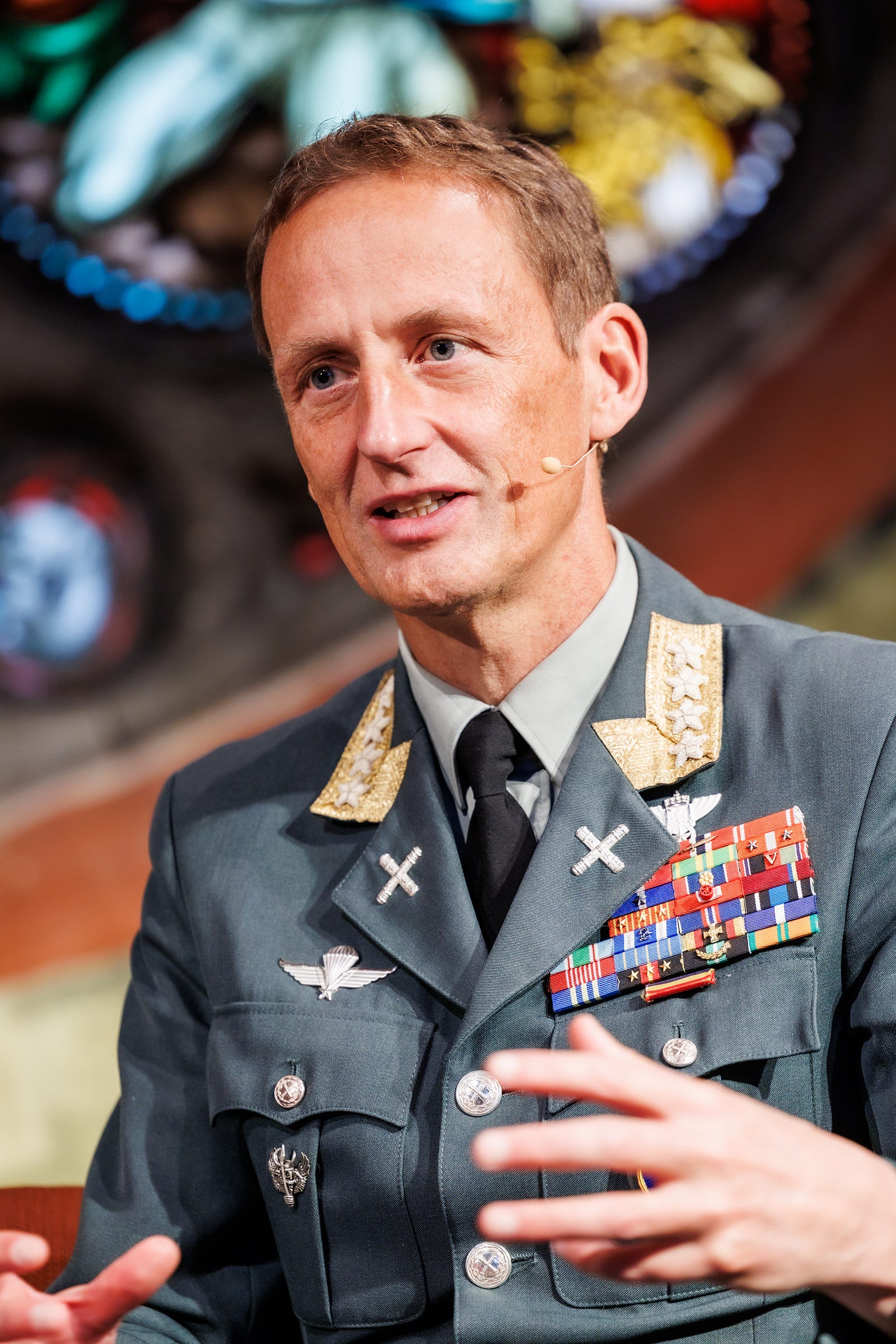
General Eirik Kristoffersen, Norway’s chief of defence, has been elected to the board of Foreningen Norden, the Norwegian Nordic Association. Ellen Horn, a former Norwegian culture minister and theatre director, becomes its chair.
The association announced the appointments on 24 October 2026, following elections at its national meeting at Voksenåsen in Oslo. In the announcement, Kristoffersen explains his decision to join by linking the organisation’s work directly to society’s ability to cope with emergencies.
“Total defence is about the whole of society’s ability to respond to crises,” he says, in a statement translated from Norwegian.
For Kristoffersen, solidarity and trust contribute to that capacity. He argues that the relationships people develop across national borders strengthen the wider Nordic community. The association provides places where people can meet, understand one another and build those relationships.
His involvement brings Norway’s senior military officer into an organisation whose work centres on culture, education, language and public participation. Kristoffersen has served as chief of defence since 2020 and previously commanded the Norwegian Army, the Home Guard and the Norwegian Special Operations Commando.
Founded in 1919, Foreningen Norden is a politically independent membership organisation that promotes closer cooperation between Nordic societies. Its members include individuals, schools, libraries, municipalities and other organisations.
The Nordic region encompasses Denmark, Finland, Iceland, Norway and Sweden, alongside Greenland, the Faroe Islands and Åland. Across this region, the Norwegian association works with sister organisations to develop contact between communities.
This civic network operates alongside the region’s official political institutions. The Nordic Council brings together parliamentarians, while the Nordic Council of Ministers provides a framework for cooperation between governments. Foreningen Norden works through public engagement, cultural and educational activities, and advocacy.
Kristoffersen’s emphasis on trust draws on a broader approach to security known in Norway as total defence. This involves cooperation between military and civilian resources to prepare for and manage security crises and war.
The practical connections extend into everyday life. Armed forces need functioning ports, airports and roads. They depend on electricity, water, healthcare and communications. Local authorities and civilian organisations help maintain these services and support military operations.
The Norwegian Armed Forces set out these dependencies in their explanation of Total Defence Year 2026, a programme conducted jointly with the Norwegian Directorate for Civil Protection. Its purpose is to improve the country’s ability to prevent and manage serious security crises and war.
The regional setting has also changed substantially. Finland joined NATO in April 2023, followed by Sweden in March 2024, after Russia’s full-scale invasion of Ukraine. Their accession placed all five Nordic countries within the same military alliance.
Cooperation between their armed forces takes place through several arrangements, including Nordic Defence Cooperation, known as NORDEFCO. Established in 2009, it connects defence ministries and military leadership across the five countries and supports NATO’s collective defence.
Norway chairs NORDEFCO in 2026. According to the Norwegian Ministry of Defence, priorities include training together and improving the ability to receive allied reinforcements and move them across Nordic territory. The ministry identifies civilian support through total defence as essential to this work.
Against this background, Kristoffersen describes closer contact between ordinary people as another contribution to regional preparedness. His stated aim in joining Foreningen Norden is to support the human relationships on which cooperation depends.
For Ellen Horn, the new chair, Nordic cooperation has been a personal commitment since her school years. She traces that interest to a seminar she attended as a young student.
“I’m addicted to cooperation,” she says in the association’s announcement.
Horn has led both Nationaltheatret, Norway’s National Theatre in Oslo, and Riksteatret, its national touring theatre. She also brings experience from years on the board of the Fund for Danish-Norwegian Cooperation.
She describes an initial feeling of surprise when asked to take the chair, followed by enthusiasm and pride. The present international situation, she says, gives particular meaning to the task of strengthening the Nordic community.
Horn succeeds Tone Trøen, who led the association for six years. Her deputy is Nina Sandberg, secretary-general of Norway’s council for universities and university colleges. Sandberg is a former Labour Party member of the Norwegian parliament and previously served as mayor of Nesodden, near Oslo.
The board also brings together experience from organised labour, business and public services. Lina Steinsbekk leads Administrasjon og ledelse, an association within the Norwegian trade union Delta, and has worked with Foreningen Norden’s local branch in Trondheim.
Kårstein Eidem Løvaas, head of business policy at Reitan Retail, is a former Conservative parliamentarian with a background in broadcasting. Truls Vasvik, a Labour parliamentarian, serves as second deputy chair of the Norwegian parliament’s health and care committee and has previously been deputy head of its delegation to the Nordic Council.
Engineer and business owner Arne Gryting completes the board. He brings experience from industry, offshore operations, local politics and voluntary organisations.
Espen Stedje, the association’s secretary-general, says the new leadership will build on its existing network and seek wider participation. He identifies people’s willingness to support one another during uncertainty as a central reason for maintaining those connections.
Foreningen Norden pursues that work through cultural and educational activities, meeting places across borders and efforts to improve understanding of neighbouring Nordic languages. Schools, libraries and local branches give people opportunities to take part in their own communities.
Discussion about this post