Norway’s Blackout Blind Spot
Norwegian households know the advice on preparing for emergencies. Far fewer know where to seek reliable information when mobile networks and internet connections go down.

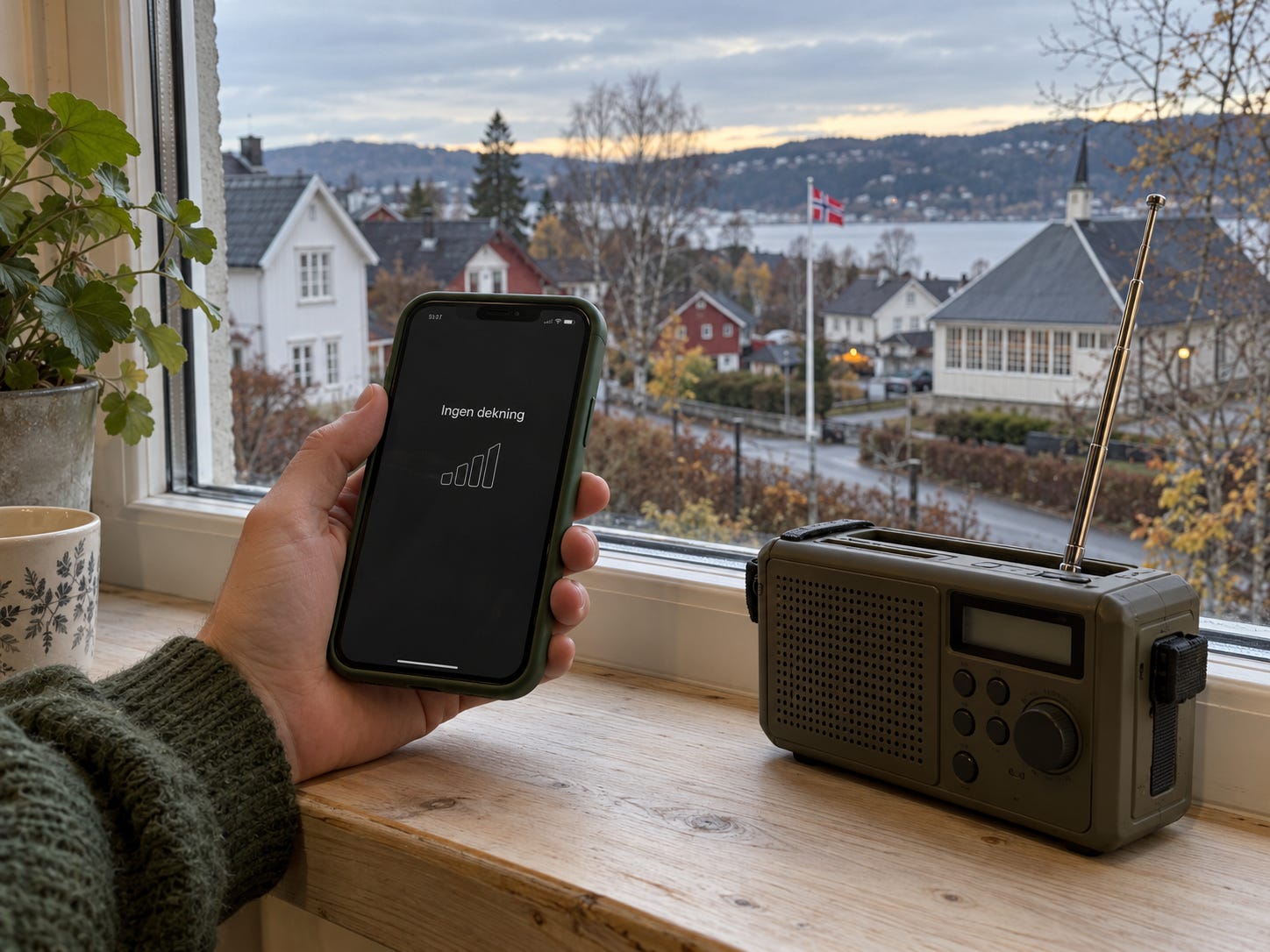
Only 29 percent of adults know where to obtain information from their municipality during a communications outage, according to Norway’s Directorate for Civil Protection (DSB).
The findings were published on October 26, as the government launched a nationwide preparedness campaign focused on prolonged failures of mobile networks and internet services.
Justice and Public Security Minister Astri Aas-Hansen is urging municipalities to establish physical information points, practise using them and make their locations familiar to residents.
A Place to Turn
These meeting points would give people access to reliable instructions and practical assistance when digital services fail.
For a highly digitalised society, the consequences extend across daily life. Power failures, technical faults, extreme weather, sabotage and military attacks can disrupt communication, electronic payments and access to public information.
The task for municipalities is concrete: identify accessible locations, prepare them for use and tell residents how to find them before an emergency.
Awareness Outpaces Readiness
The survey found that 90 percent of respondents knew the national recommendation to prepare their household to manage independently for one week.
Just 31 percent considered themselves well or very well prepared for a prolonged communications outage.
Access to backup equipment also varied. 47 percent reported having a DAB digital radio powered by batteries, solar energy or a hand crank. 54 percent had a charged portable power bank available.
John-Eivind Velure, director of the Norwegian Communications Authority (Nkom), encouraged households to arrange backup power, consider access to different mobile networks and agree on meeting places in advance.
Ukraine’s Experience Shapes the Response
Aas-Hansen pointed to Ukraine’s Points of Invincibility, where people can obtain information, electricity, warmth and practical assistance during wartime disruptions.
These centres show how a physical location can bring essential services together when communications and energy infrastructure come under attack.
The Norwegian initiative forms part of Total Defence Year 2026, which aims to strengthen cooperation among civilian authorities, emergency services, voluntary organisations and the public.
Norstat conducted the survey for DSB through an online panel of 1,056 adults during weeks 42 and 43 of 2026. DSB describes the sample as representative of Norway’s adult population. The figures reflect respondents’ reported knowledge, equipment and assessment of their preparedness.
Discussion about this post