Norway: Peace at Ukraine’s Expense
Safe in Norway, former far-left voices now back fascists and oppose military aid while Ukrainians fight for survival.

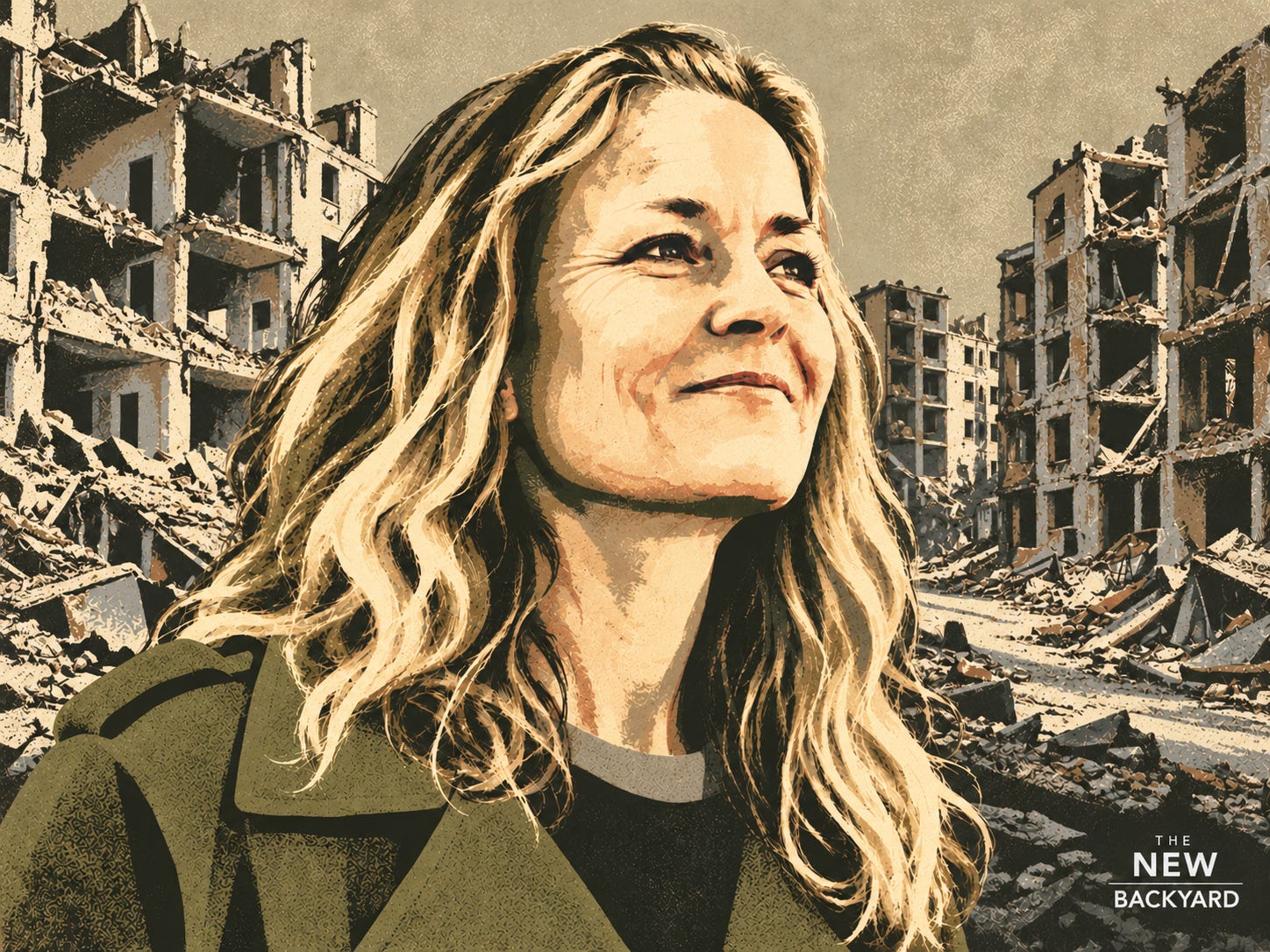
For more than four years, Ukraine has resisted Russia’s full-scale invasion. A military power has attacked its smaller neighbour. People have lost their families, their homes and the futures they had planned. Others have left civilian jobs to defend their country.
Here in Norway, figures with roots on the far left demand an end to military aid. They call this a policy for peace.
I believe that policy betrays the people under attack. It treats Ukraine’s ability to defend itself as an obstacle to peace while the Russian army continues its war.
Where solidarity falters
Marielle Leraand, leader of Norway’s Peace and Justice party (FOR), left the Socialist Left Party over Norway’s participation in the Libya war in 2011. She later became deputy leader of the Red Party, known in Norway as Rødt.
When Rødt voted to support military aid to Ukraine in 2023, she left again and helped establish FOR.
At its launch, Leraand condemned Russia’s invasion. Yet her party’s programme calls for military aid to end and argues that abandoning the goal of Ukrainian membership in the North Atlantic Treaty Organization (NATO) would bring the war to a close.
That prescription places a heavy burden on the country defending itself. Ukraine would lose support while Russian troops remained on Ukrainian soil.
Peace has to mean something for the people expected to live with it. An occupying army can impose silence. For those deprived of the right to govern their own country, that silence can mean submission.
The far right becomes a hope for peace
On October 13, Lars Birkelund, FOR’s lead parliamentary candidate in the Norwegian constituency of Oppland in 2025, described Germany’s far-right Alternative for Germany (AfD) and the left-wing Die Linke as “peace parties”.
His article appeared on Steigan.no, the website run by Pål Steigan, a former leader of Norway’s Workers’ Communist Party.
This is a revealing political choice. A far-right party becomes a source of hope because it opposes support for Ukraine. Its hostility towards immigration and multicultural society recedes into the background.
In my view, these voices have aligned themselves with the far right over Ukraine. Opposition to NATO has come to outweigh solidarity with a people fighting for the right to determine their own future.
Safety at home, danger abroad
What troubles me is the distance between the safety from which these demands are made and the risks others must bear.
We can debate military aid around a Norwegian kitchen table and carry on with our day. Ukrainians must live with the consequences. Their homes, workplaces and communities are at stake.
Anyone calling for military aid to end owes them an answer: how will they be protected if Russia continues its attacks? Faith that the Kremlin will choose peace offers little protection against the next assault.
Norway’s own security belongs in this discussion. If superior military force allows a great power to dictate its neighbour’s future, the freedom of smaller countries becomes more precarious. We, too, live in a small country bordering Russia.
The injustice inflicted on Ukrainians concerns us as well. Solidarity carries an obligation precisely when others face the danger and we have the means to help.
Discussion about this post