Norway Confronts Russia — and Carries Its Fish to Europe
Norway’s new fisheries agreement with Russia exposes the contradiction between confronting Moscow militarily and preserving economic relationships that generate Russian income.

Norway and Russia signed their fisheries agreement for 2027 in Istanbul on 23 October, bringing their delegations together physically for the first time since 2019. Norway is simultaneously helping Ukraine fight the Russian armed forces and supporting sanctions intended to weaken the economy behind that war.
The agreement puts this contradiction into immediate focus. Norway negotiates access to valuable resources with the same state whose military aggression it helps Ukraine resist.
Sanctions enter the negotiating room
Marianne Sivertsen Næss, Norway’s fisheries and ocean minister, acknowledged that sanctions against two Russian fishing companies had complicated the negotiations. Nevertheless, the parties agreed quotas, a joint research programme and a five-year extension of management rules for cod and haddock.
The minister emphasised employment, coastal communities and sustainable management. These are substantial public interests. Shared fish stocks require shared responsibility, and their future matters to workers and communities on both sides of the maritime boundary.
Yet the agreement also preserves an economic framework with Russia during a prolonged confrontation. Norway supplies Ukraine with the means to resist Russian aggression while helping maintain the arrangements under which both countries harvest a valuable export commodity.
That political choice deserves an explanation reaching beyond the annual quota figures.
Co-operation has a commercial consequence
The distinction between managing fish stocks and facilitating Russian export earnings becomes central.
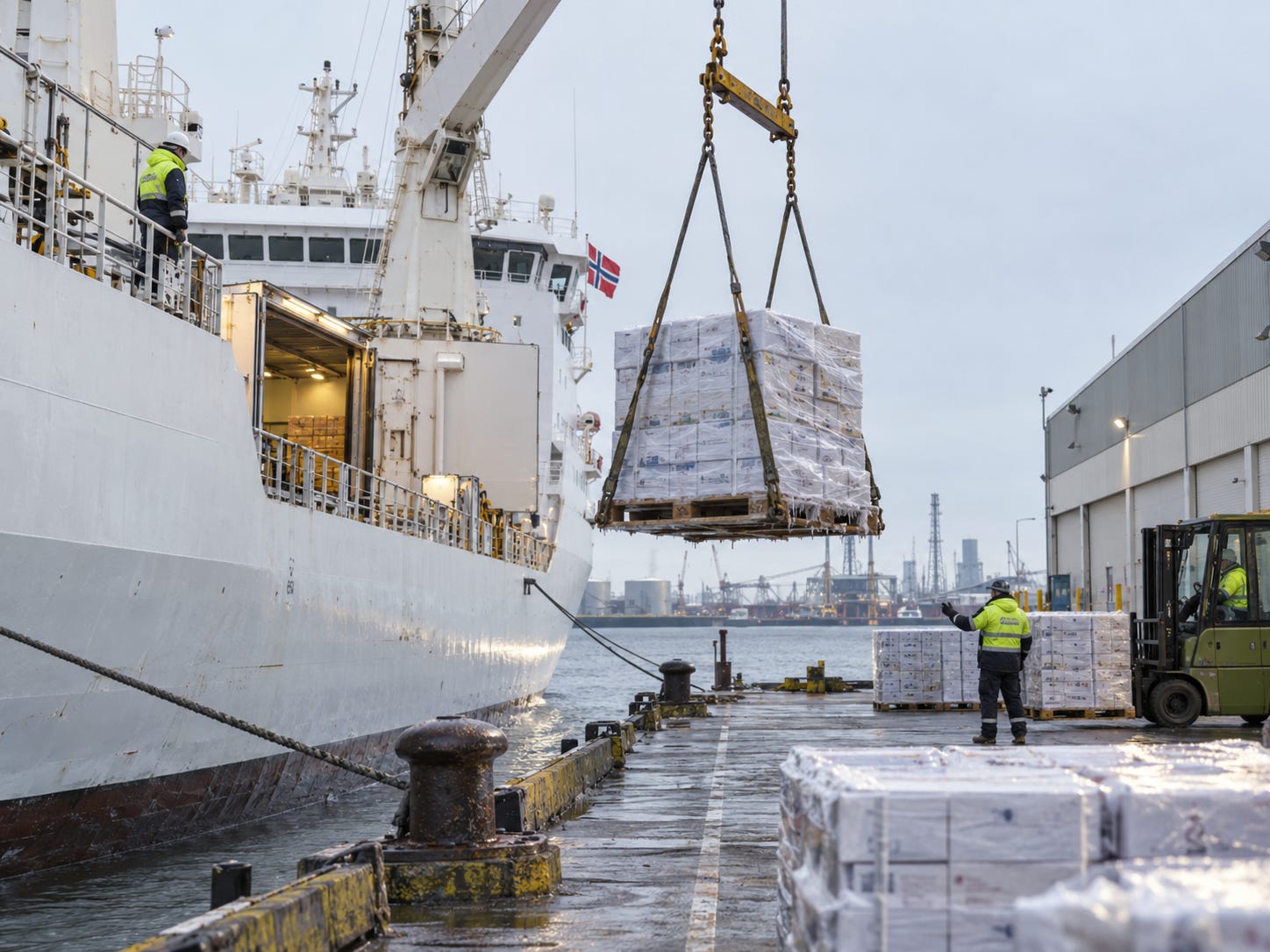
The New Backyard’s previous reporting documented Norwegian-flagged ships carrying Russian fish to the Netherlands. It also identified unresolved questions about the ultimate beneficiaries behind suppliers linked to a Russian investment fund.
Those findings form the background to yesterday’s agreement. They show how fisheries co-operation exists alongside a commercial chain involving Russian suppliers, Norwegian carriers and European importers.
Dutch Customs confirmed on 20 October that Russian fish generally remained eligible for import into the European Union. The continued trade therefore reflects the boundaries governments have drawn around sanctions.
Possible benefits to sanctioned individuals require separate investigation. The ownership questions remain open, making transparency about control and payments essential.
Which interests set the limits?
Norway and its Nordic neighbours have sought tighter European restrictions on Russian tourist visas, citing internal security. Meanwhile, the fisheries agreement demonstrates the capacity to maintain structured negotiations where governments consider the interests sufficiently important.
The issue is how those priorities are weighed. Coastal employment and sustainable resource management carry clear public value. Shipping revenues, import contracts and Russian export income involve additional interests that deserve scrutiny in their own right.
Support for Ukraine gives that scrutiny particular urgency. Public money helps Ukrainians withstand Russia’s invasion. Commercial transactions move money towards Russian businesses, sometimes through ownership structures whose final beneficiaries remain unclear.
Following the Istanbul agreement, the Norwegian government owes a fuller account of where necessary resource co-operation ends, how commercial interests influence its policy and who ultimately receives the proceeds.
Discussion about this post