News: Northern Europe’s Defence Build-Up Depends on Civilian Capacity
Government website shutdowns, Baltic coordination and Finnish fighter deliveries reveal how northern Europe’s security depends on reliable everyday public services.

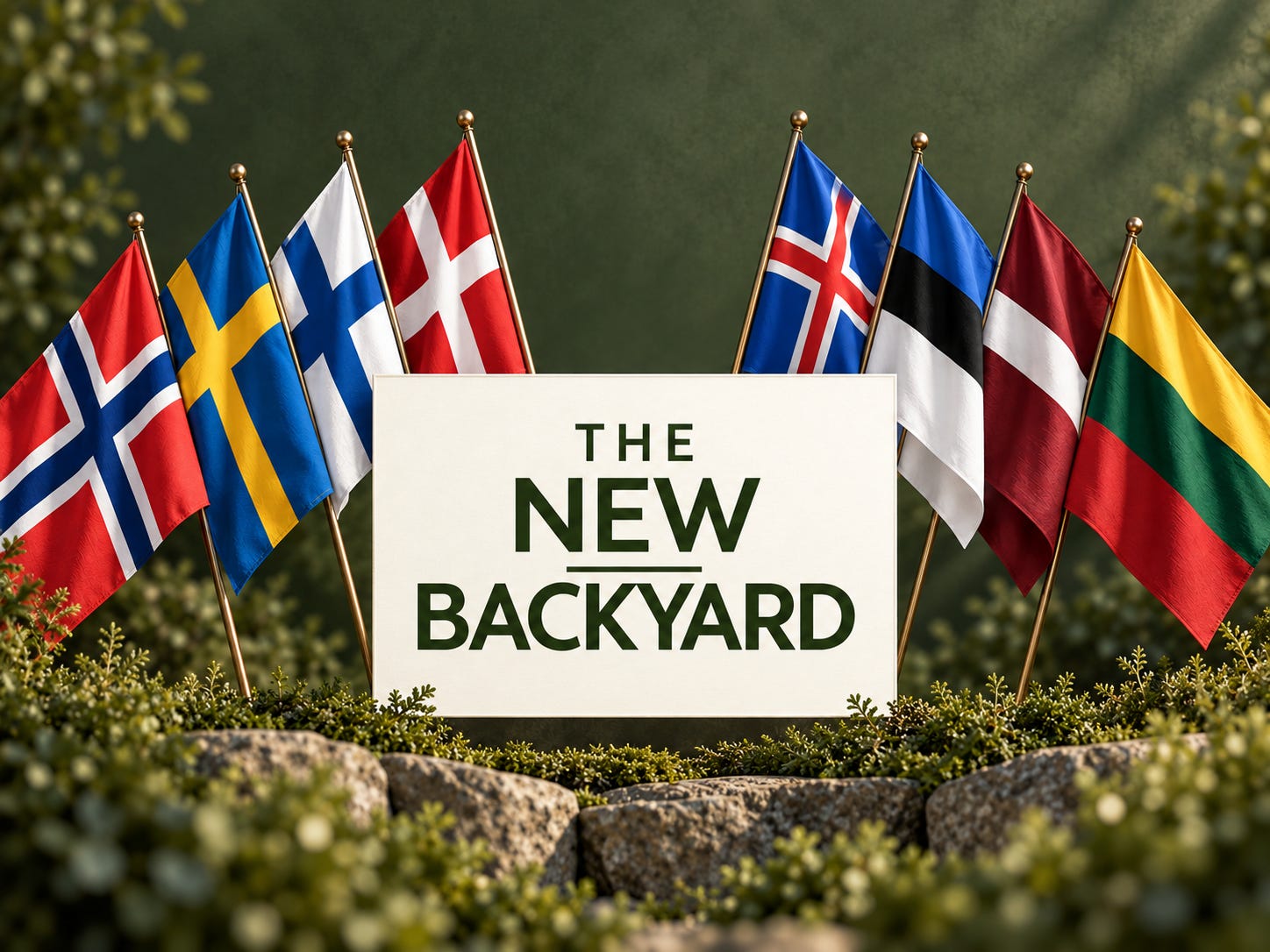
Danish authorities took government websites offline on 23 October after suspicious activity at a shared supplier. Finland received two more F-35 fighters, while Estonia and Latvia set out priorities for fortifications, drone defence and military mobility.
The announcements point towards a common challenge: military reinforcement depends on civilian systems that provide communications, transport, maintenance, healthcare and public information. Lithuania’s latest preparedness message makes that relationship explicit, placing essential services and municipal responsibilities alongside support for national and allied forces.
Denmark: A shared supplier becomes a shared vulnerability
The Danish Agency for Societal Security, known as SAMSIK, reported that several government websites were closed on Friday afternoon as a precaution following suspicious activity at their hosting provider.
The affected websites ran on the same platform. The supplier had informed the organisations concerned, and the agency said its announcement would be updated.
The immediate, documented consequence was the withdrawal of public websites from service. The identity of any responsible actor, the extent of access and the consequences for information held by the organisations remained unresolved in the published statement.
For public preparedness, the episode raises a concrete question about concentration: how many institutions depend on the same supplier, and how will they communicate with citizens when that supplier experiences a security incident?
A separate Danish Defence Command announcement on 23 October addressed another form of concentrated pressure: a major passenger ship accident in the Arctic.
Following the Cold Seas, Critical Gaps conference in the Faroe Islands, the command highlighted the difficulty of rescuing hundreds or thousands of people across large distances, then providing shelter, healthcare and transport ashore.
Ships, helicopters, harbour facilities and medical services could all face competing demands. Local communities and Indigenous peoples would be among the first to respond, making their knowledge and participation central to planning.
Norway: Northern experience moves into Army leadership
John Olav Fuglem was appointed commander of the Norwegian Army and promoted to major general on 23 October.
He comes from command of the Finnmark Brigade, established in August 2025 as part of Norway’s expansion of its land forces. His previous experience includes command of the Intelligence Battalion, operational planning and work at the Norwegian Joint Headquarters.
Defence Minister Tore O. Sandvik linked the appointment to the Army’s development and its ability to operate effectively with allies, particularly in the north. Fuglem will take up the position on a date determined by the defence ministry.
Norway also announced agreement with Russia on fisheries management for 2027, including a joint scientific programme and continued technical regulations.
The fisheries ministry said sanctions against two Russian shipping companies had shaped the negotiations. The agreement preserves a working channel over shared resources in the Barents Sea, where coastal employment and food production depend on long-term management.
Sweden: Maritime surveillance combines public command and private operation
The Swedish Armed Forces published further details on 23 October about four Saildrone vessels contributing to surveillance in the Baltic Sea.
The approximately ten-metre sailing vessels carry cameras, radar and other sensors. They have supported Sweden’s maritime picture since earlier in October.
Their operating model matters. Saildrone’s personnel manoeuvre and monitor the vessels, while the Swedish navy assigns missions and receives information around the clock. According to the navy, this increases endurance and allows crewed ships to undertake tasks requiring more extensive human judgement.
The navy says around 4,500 vessels move through the Baltic each day, creating a substantial identification and surveillance workload.
The agreement was developed through NORDEFCO, the Nordic defence cooperation framework. It also contributes to NATO’s Task Force X Baltic, an initiative supporting uncrewed surveillance and the protection of critical underwater infrastructure following cable damage in 2024 and 2025.
Finland: Fighter deliveries bring the transition to Rovaniemi
The Finnish Air Force reported that F-35A fighters JF-509 and JF-511 arrived at Rovaniemi at 17:56 local time on 23 October.
The aircraft joined the Lapland Air Wing in the second delivery of the type to Finland. The first two Finnish F-35s had arrived on 18 September.
The new arrivals represent a physical step in introducing the aircraft into Finland’s domestic defence system. Training, maintenance, infrastructure and integration determine how delivered aircraft become sustainable operational capability.
Finland’s defence ministry also announced on 23 October that Defence Ministers Antti Häkkänen and Richard Marles had agreed to deepen cooperation between Finland and Australia.
Iceland: Nordic governments seek a common approach to Russian travel
Iceland falls within the shared Nordic policy work set out after ministerial discussions in Stockholm on 22–23 October.
The joint statement says ministers will continue identifying additional measures to restrict Russian nationals’ non-essential travel to the Nordic region.
They also seek a coordinated approach to visa applications from Russian and Belarusian athletes participating in international competitions hosted by Nordic countries.
The published outcome establishes a direction for further discussions. The content, scope and implementation of additional measures remain matters for subsequent decisions.
Alongside Norway’s continued fisheries cooperation with Russia, the statement illustrates the different purposes of Nordic policy: maintaining specific channels for shared resource management while tightening security-related travel arrangements.
Estonia: Command arrangements become part of Baltic coordination
Estonian Defence Minister Martin Herem met Latvian counterpart Raivis Melnis, according to an Estonian announcement published on 23 October.
Their discussions covered the Baltic Defence Line, stronger air defence, hybrid threats, civilian crisis preparedness and continued support for Ukraine.
The Estonian ministry said the First German-Netherlands Corps had assumed tactical command of Estonian and Latvian land forces during 2026.
Herem emphasised the need for close cooperation so the corps could concentrate on readiness to act when required. The announcement connects fortifications and national capabilities with the command arrangements intended to employ them alongside allied forces.
Latvia: Counter-drone work depends on funding and delivery
Latvia leads work on countering drones within Eastern Flank Watch, a defence initiative led by Finland and Poland. Estonia leads its military mobility work.
The division of responsibilities connects two practical requirements: protecting forces and infrastructure from aerial threats, and moving personnel, equipment and supplies across national borders.
In the Estonian account of the ministerial meeting, Herem called for sufficient resources to accelerate implementation. He argued that other European countries could help share the burden carried by states along Europe’s eastern border.
Border pressure affecting Latvia and cooperation with Ukraine’s defence industry were also discussed.
Separately, the Baltic Council met in Tallinn on 23 October and adopted a statement setting cooperation priorities for the coming year. Lithuania presented plans for its 2027 chairmanship, including regional security, resilience, connectivity and continued support for Ukraine.
Lithuania: Reinforcement requires workshops, roads and functioning communities
Lithuania’s defence ministry announced a construction tender on 23 October for maintenance and storage facilities in Rukla, jointly financed with Germany.
The facilities will support artillery and logistics battalions of Lithuania’s Iron Wolf Brigade and NATO’s multinational battlegroup. A contractor is expected to be selected by the end of 2026, with construction planned for completion in 2028.
The project places maintenance and supply infrastructure at the foundation of military expansion. A later phase is intended to provide administrative and accommodation buildings for several thousand personnel.
Defence Minister Robertas Kaunas also addressed municipal preparedness on 23 October, emphasising continued essential services during electricity and communications failures, resource agreements with businesses and coordination with national institutions.
The ministry said around 45,000 people had completed its four-and-a-half-hour introductory course in civilian resistance and emergency preparedness. It identified Kaunas Airport and the Palemonas rail terminal as important assets for receiving allied personnel and supplies.
On the border enforcement side, the State Border Guard Service, known as VSAT, announced six arrests linked to suspected cigarette smuggling by balloon from Belarus. The operation took place in Kėdainiai on 22 October and was reported the following day.
VSAT said it had intercepted 181 balloon-borne consignments during 2026, compared with 635 during the whole of 2025. It had also brought down 67 smuggling drones, already exceeding the 59 recorded throughout 2025. These are interception figures; the overall volume of trafficking remains uncertain.
Discussion about this post