NATO’s New Backyard
I am travelling south along the 1,540-kilometre border Norway and Finland share with Russia, documenting NATO’s new frontier and the people who live in its shadow.

From the Barents Sea in the north to the Gulf of Finland in the south, Norway and Finland share roughly 1,540 kilometres of land border with Russia. I am going to follow it south, staying as close to the border as circumstances allow.
Follow the jurney at www.oteige.no
I have driven from Kristiansund on Norway’s northwest coast, through Sweden and Finland, and then back into Norway. I have spent several days travelling north. I could, of course, have arrived much sooner, but speed was never the point.
Grense Jakobselv.
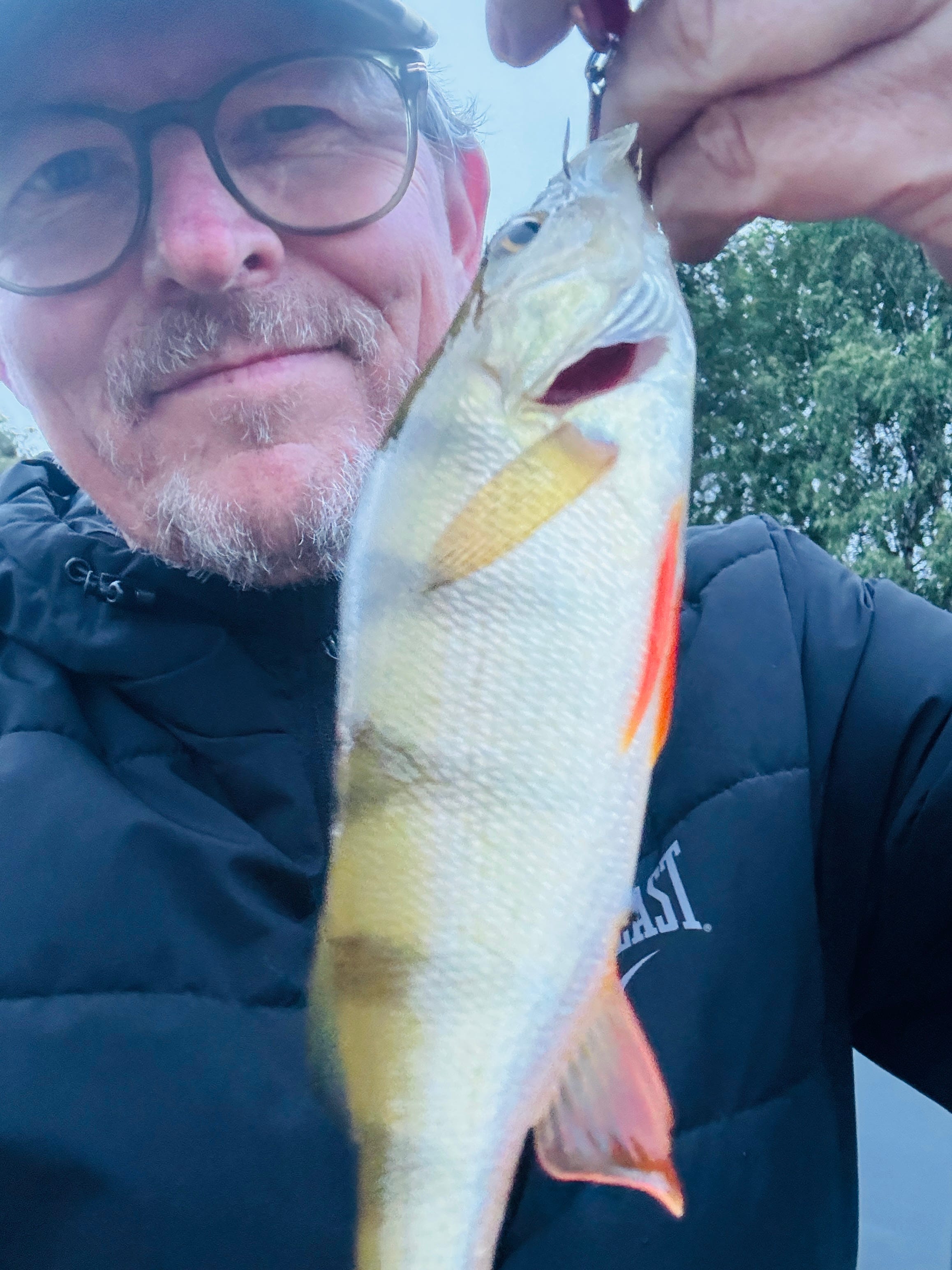
Whenever I come across a promising lake or a good river, I have to stop. That is simply what happens when a keen angler sets out on a long journey. The Kalix River in Sweden was one such stop. Lake Inari in Finland was another.
The Kalix River in Sweden.
The stops also give me a welcome break from driving. This journey should not become a race. I need time to think and to plan what lies ahead, and I often do that best while standing beside a river with a fishing rod in my hands.
Then I reached Finnmark.
About the project
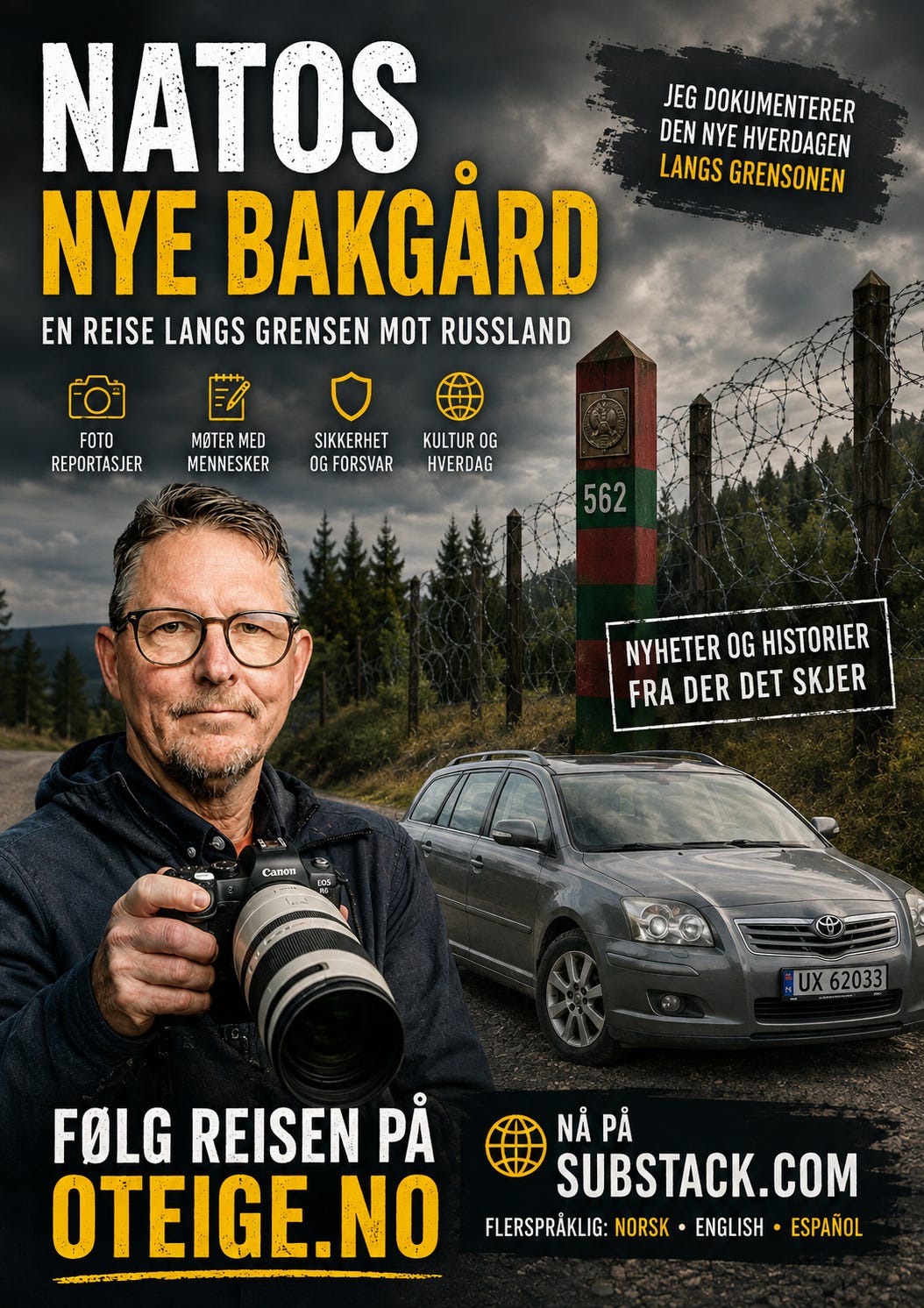
NATO’s New Backyard is primarily a photographic project following the roughly 1,540-kilometre border that Norway and Finland share with Russia, from the Barents Sea to the Gulf of Finland.
Follow the jurney at www.oteige.no
I will travel south along the border, documenting the landscape, the borderlands and the people who live close to Russia at a time when Finland has joined NATO and relations with its eastern neighbour have changed dramatically.
A Russian border marker.
Photography is at the heart of the project, but I will also use written reports, short videos and drone footage wherever flying is both legal and appropriate.
The aim is to document what the new security situation actually looks like on the ground. I have not given much thought to what the finished project might eventually become. It could develop into a lecture, a photographic exhibition or perhaps a book.
The final product is not what matters most at the moment. For now, the journey and the work itself are more important. I will see where they lead.
Where the border meets the Barents Sea
My journey along the border begins at the first border marker, where the border fence runs down towards the beach at the mouth of the Jakobselva river, around 60 kilometres from Kirkenes.
This is where the border between Norway and Russia meets the Barents Sea.
This is where my journey begins.
Ahead of me lies a sea where Norway and Russia still cooperate in managing important fish stocks. Beneath its surface, Russia’s strategic nuclear submarines patrol with nuclear missiles aimed at major cities in the United States. The submarines belong to Russia’s Northern Fleet and operate from bases on the Kola Peninsula, just east of Finnmark.
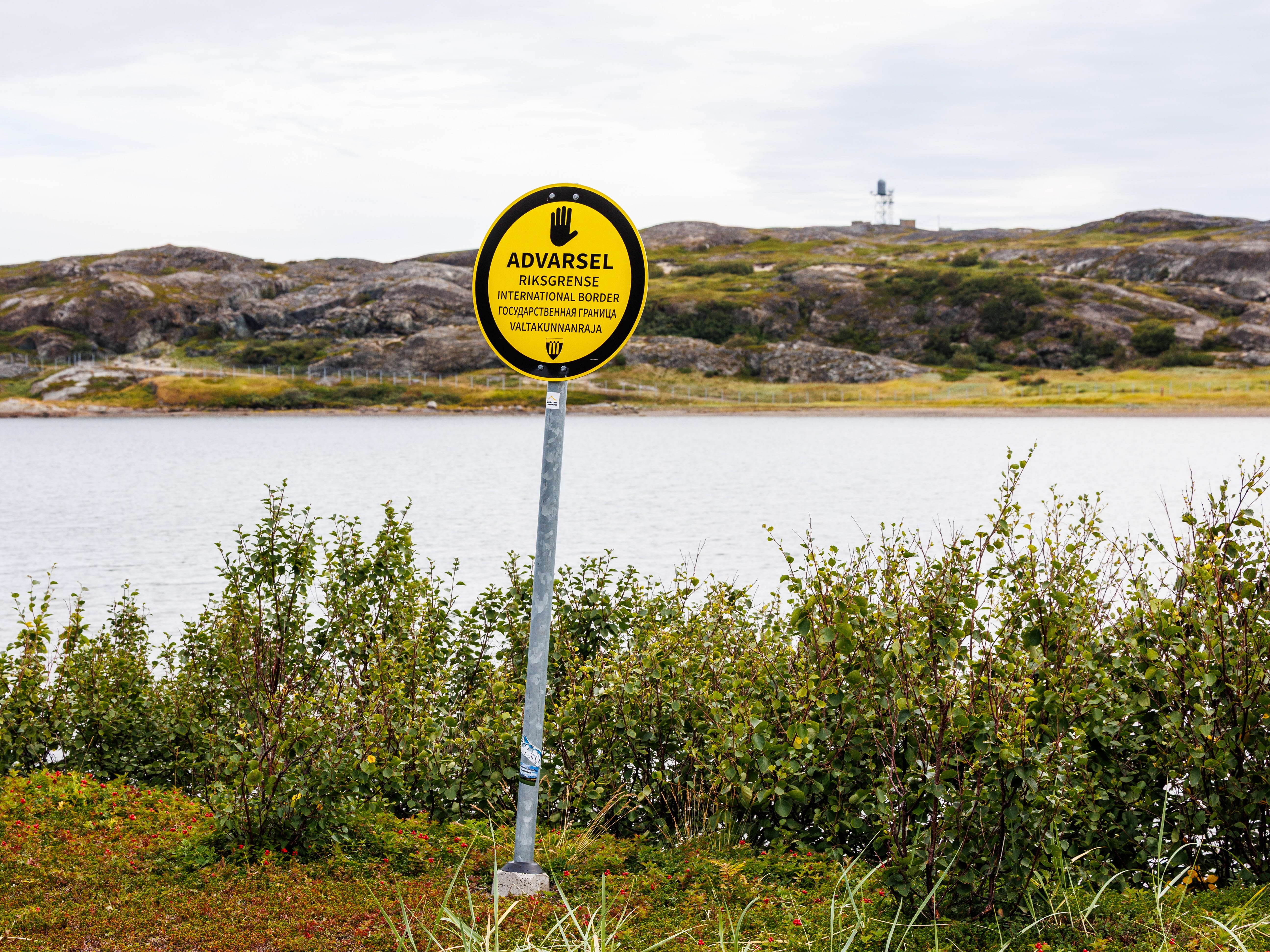
Grense Jakobselv is a sensitive military area subject to strict restrictions. Flying a drone here could have serious consequences.
I spend the night beside the breakwater built by the local boating association.
1,540 kilometres
Russia’s full-scale invasion of Ukraine in 2022 transformed the security situation across the Nordic region.
When Finland joined NATO in 2023, its approximately 1,340-kilometre border with Russia became part of NATO’s eastern frontier. Together with Norway’s border of almost 200 kilometres, the route I intend to follow stretches roughly 1,540 kilometres from the Barents Sea to the Gulf of Finland.
Along the way, I will visit the areas and communities closest to the border, photograph what I find and meet the people who live there.
Storskog
My next stop is Storskog, Norway’s only official land border crossing with Russia. From here, the E105 continues towards Murmansk, approximately 220 kilometres away.
Storskog border station.
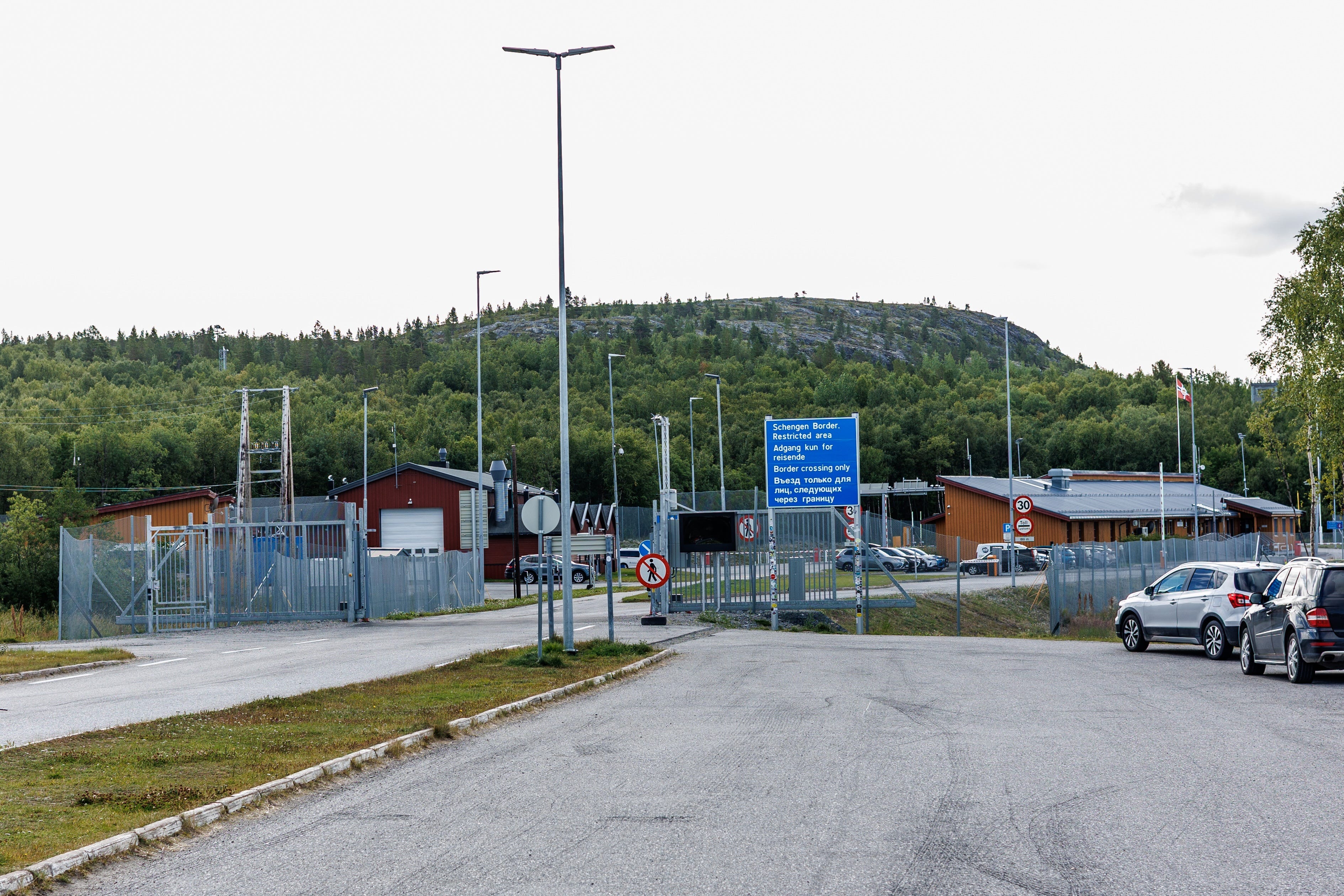
For years, Storskog served as an important link between Sør-Varanger and Russia, used by people travelling across the border for work, trade and family visits.
The Storskog border crossing near Kirkenes is not closed, but traffic is heavily restricted. Since Russia’s invasion of Ukraine, the number of people crossing has fallen sharply and the border regime has become considerably stricter.
From Storskog, my journey takes me back into Finland.
Finland’s northernmost border crossing
My first stop along the Finnish section of the border is Raja-Jooseppi, Finland’s northernmost border crossing with Russia.
The road runs east from Ivalo through a sparsely populated landscape for around 50 kilometres before reaching the border station. On the other side lies Russia and the Murmansk region.
The Raja-Jooseppi border crossing is completely closed.
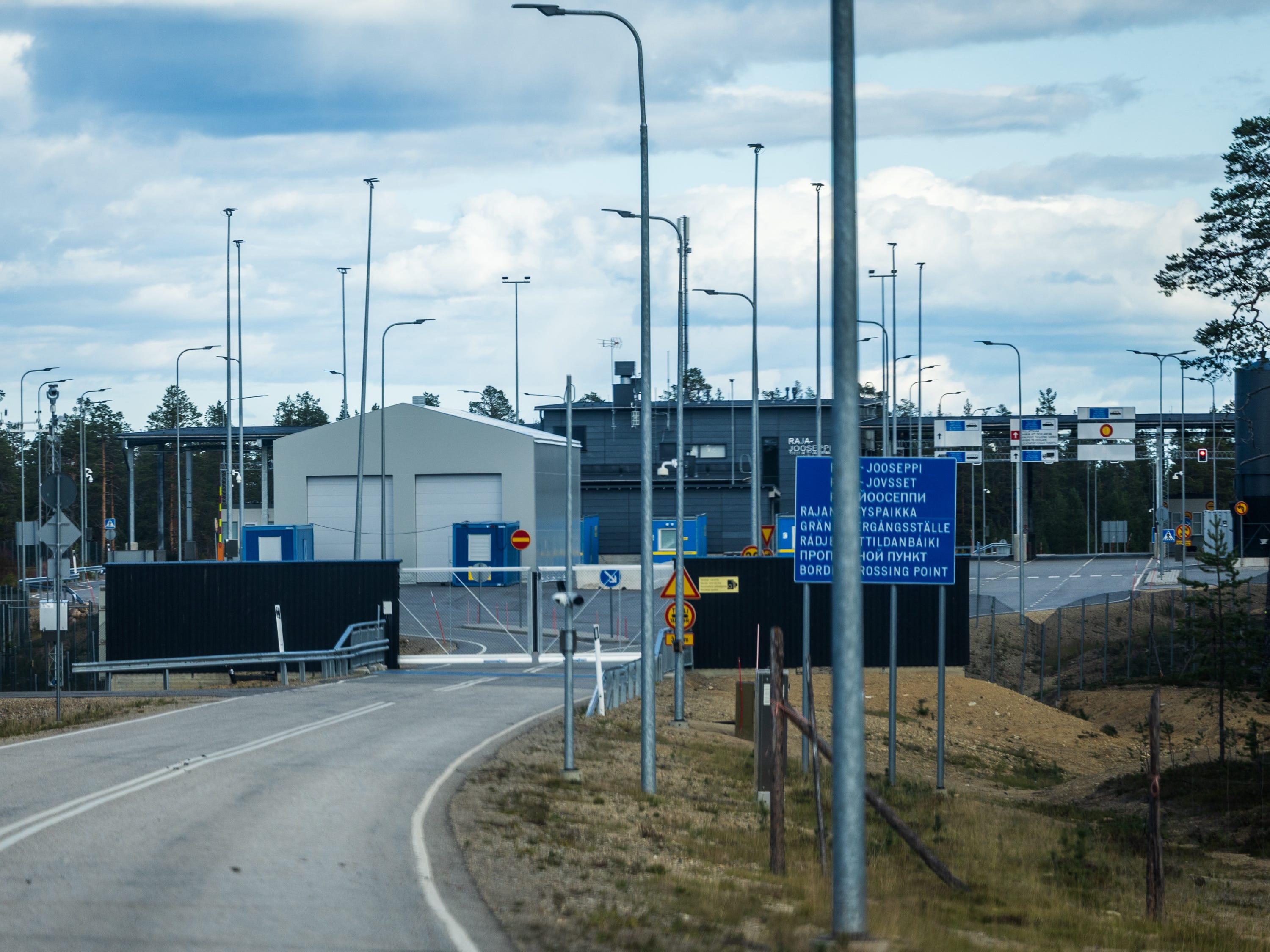
Finland closed the crossing after a sudden increase in the number of migrants and asylum seekers arriving at its eastern border. Finnish authorities believed Russia was using the migrants as a means of exerting pressure and as a form of hybrid influence.
Where people and vehicles once travelled between the two countries, the road now ends at a closed border.
Once again, decisions made by national governments have had direct consequences for people living in the far north of Finland. The country is now a member of NATO, its connections across the eastern border have been cut, and the rest of my long journey south along the Russian border still lies ahead.
Follow the jurney at www.oteige.no
Discussion about this post