Latvia Targets Trade in Stolen Ukrainian Grain
Latvia will use chemical testing to help trace grain stolen from occupied Ukraine, strengthening efforts to stop the trade through Baltic ports and railway networks.

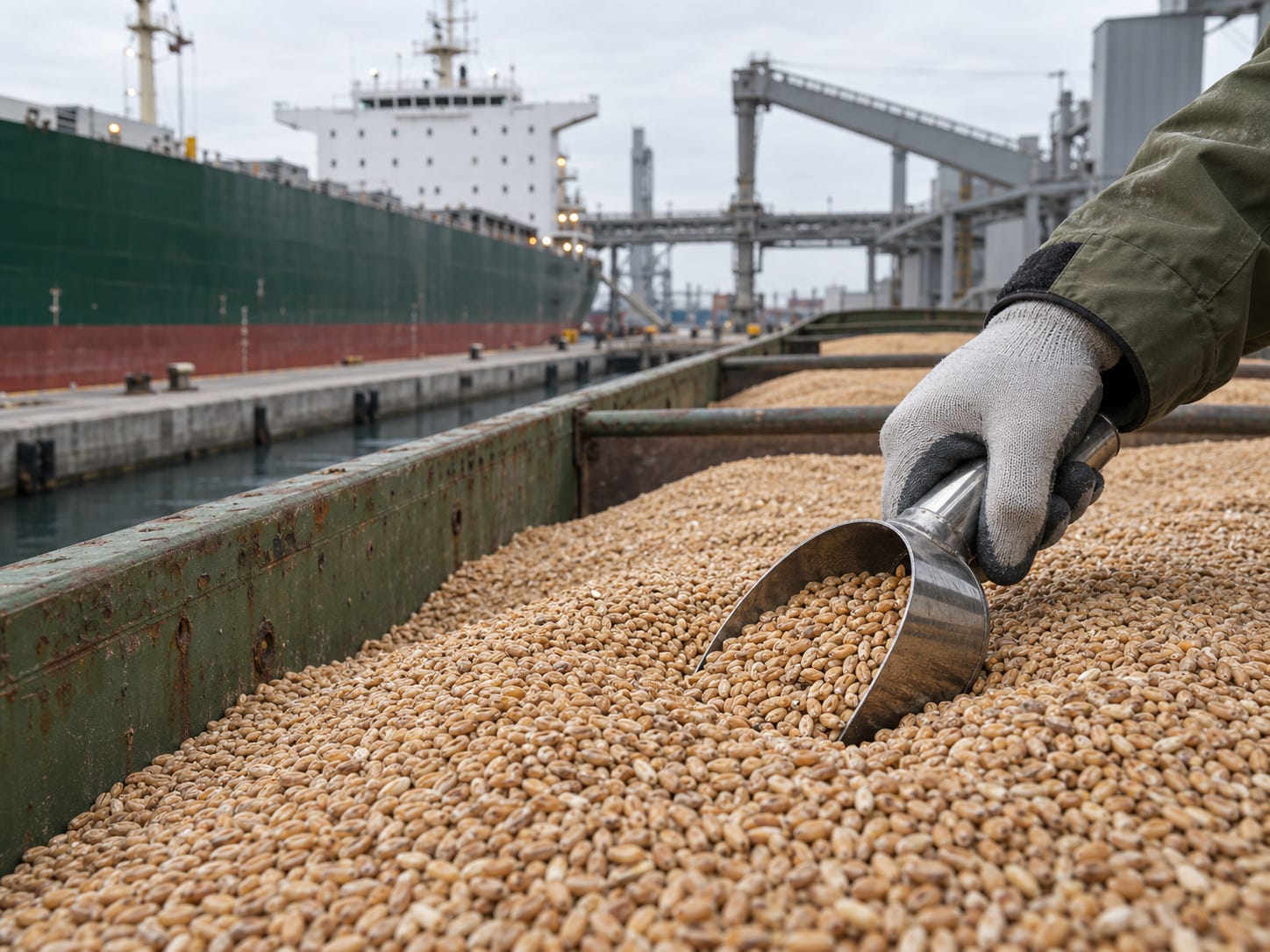
An agreement signed by Latvia, Ukraine and Britain on October 21, 2026, expands access to the Grain Verification Scheme. The system helps investigators establish where suspicious cargoes were grown.
Latvian Agriculture Minister Uldis Augulis said his country’s role as a transit hub carried a responsibility to prevent its transport infrastructure from moving stolen agricultural produce. He warned against traders profiting from Russia’sinvasion by concealing the origin of Ukrainian grain.
A Chemical Fingerprint
Developed by Britain on behalf of the Group of Seven (G7), the scheme responds to a Ukrainian request for help tracing crops taken from territory under Russian occupation.
Scientists analyse stable isotopes and trace elements in grain samples. These create a chemical fingerprint that can be compared with a database covering nearly 3,400 known locations across Ukraine and neighbouring countries. Machine learning helps assess the likely geographical origin.
The findings give investigators a way to test claims made in shipping documents. Establishing theft also requires evidence about ownership and how the cargo was acquired and transported.
According to Ukraine’s Ministry of Agrarian Policy and Food, the checks will cover wheat, maize, barley and sunflower seeds.
Lithuania Is Already Testing Cargoes
Lithuania has established a legal framework for sampling relevant consignments, and its authorities are collecting and analysing samples. Britain’s Department for Environment, Food and Rural Affairs confirmed that work in its October 26 announcement.
Both Lithuania and Ukraine received access to the system in March 2025. Latvia’s participation extends its reach along Baltic trading routes.
The new agreement provides for shared scientific data, improved sampling and laboratory methods, and additional reference samples. It runs until March 31, 2027, with an option to extend cooperation.
Following the Evidence
The three countries plan to coordinate their response when suspicious shipments are identified.
Ukrainian Agriculture Minister Taras Vysotskyi said reliable evidence and joint action were essential to challenging attempts to sell stolen harvests as legitimate exports. For investigators, the grain itself can now provide a starting point for tracing that trade.
Discussion about this post