Klaipėda’s New Grain Check
Lithuania wants laboratory evidence of where grain was grown as it looks for crops taken from occupied Ukrainian territory.

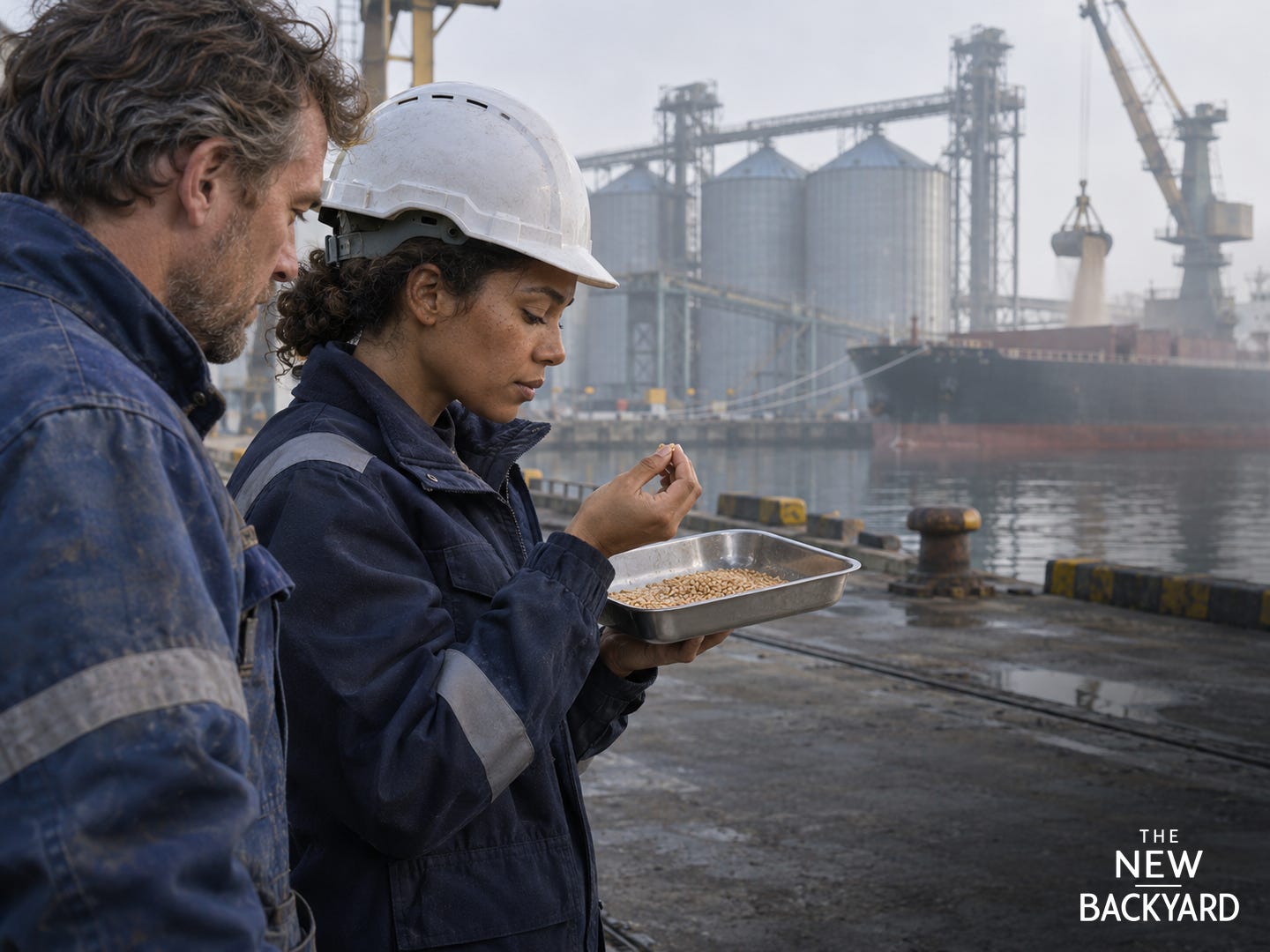
AI-generated photo illustration.
No grain shipments from Russia or Belarus arrived at Klaipėda during the first week of tighter controls, Lithuania’s State Food and Veterinary Service told the Lithuanian news agency ELTA on November 24. Inspectors therefore had no cargo to sample during that period.
The rules took effect on November 16. They require document checks, inspections and laboratory sampling of food-grade shipments from Russia and Belarus that are transferred or temporarily stored in Lithuania en route to another destination. They cover wheat, barley, corn and sunflower seeds. A separate origin-testing requirement for animal feed was already in place.
Cargo waits for a result
Under the new procedure, customs clearance depends on permission from the State Food and Veterinary Service. At Klaipėda, that means the cargo can be held while a laboratory checks its origin. The service says tests can take two months or longer. The operator responsible for the shipment pays the testing costs.
The service says the measure is intended to detect discrepancies between documents and where the crop was actually grown. That includes the risk that grain removed illegally from Russian-occupied areas of Ukraine could be sold with misleading paperwork. When a shipment is declared as Ukrainian in origin, the rules require documents showing that the grain was acquired lawfully.
Kęstutis Mažeika, Lithuania’s agriculture minister, has called for other European Union countries to tighten their controls as well. The first week’s figures establish what reached Klaipėda under the new rules. They leave open how exporters will respond over time and whether shipments that would previously have used the port will go through another route.
Discussion about this post