From Ceuta to Finland’s Closed Border – Putin’s Pressure on Europe
Russia-linked networks are exploiting the migration crisis in Ceuta to inflame divisions across Europe. Along the border I am now following south through Finland, the country has already faced a more

Over the past few days, I have travelled along Russia’s border, beginning in Kirkenes and continuing south through Finland. Since Finland joined NATO in 2023, this territory has become part of the alliance’s direct frontier with Russia.
At Raja-Jooseppi, I reached the first closed Finnish border crossing of my journey. The barriers are down, and the traffic that once moved between Finland and Russia has disappeared.
The migration crisis in Ceuta has given the story behind that closure renewed relevance.
Russia exploits the crisis in Ceuta
Around the turn of July and August, tens of thousands of migrants attempted to cross from Morocco into the Spanish enclave of Ceuta. An estimated 72,000 people entered the territory over several days, although the overwhelming majority were quickly returned.
The crisis immediately became a political flashpoint across Europe. Russia-linked influence networks then seized upon it.
An analysis reported by The Guardian found that accounts with links to the Russian military helped portray the migrant movement as a coordinated “assault” on Europe.
According to the analysis, the accounts reached more than 500,000 people in the days after the mass crossings. During a six-hour period on 1 August, the narratives attracted more than 720,000 views and were reproduced in seven languages.
One of the channels involved was Rybar, a Telegram channel with links to Russian intelligence. Its content was then amplified by other accounts, including some associated with the Kremlin-friendly Pravda network.
Paul Buvarp, a senior researcher at the Norwegian Defence Research Establishment (FFI), describes this as a familiar Russian method.
Russia does not necessarily need to create a conflict. It can find one that already exists and make it worse. Immigration is especially useful because it already divides countries across Europe.
“The common thread is that you start with a debate that is already heated and inflammatory, and the aim is to make it even more so,” Buvarp told Nettavisen.
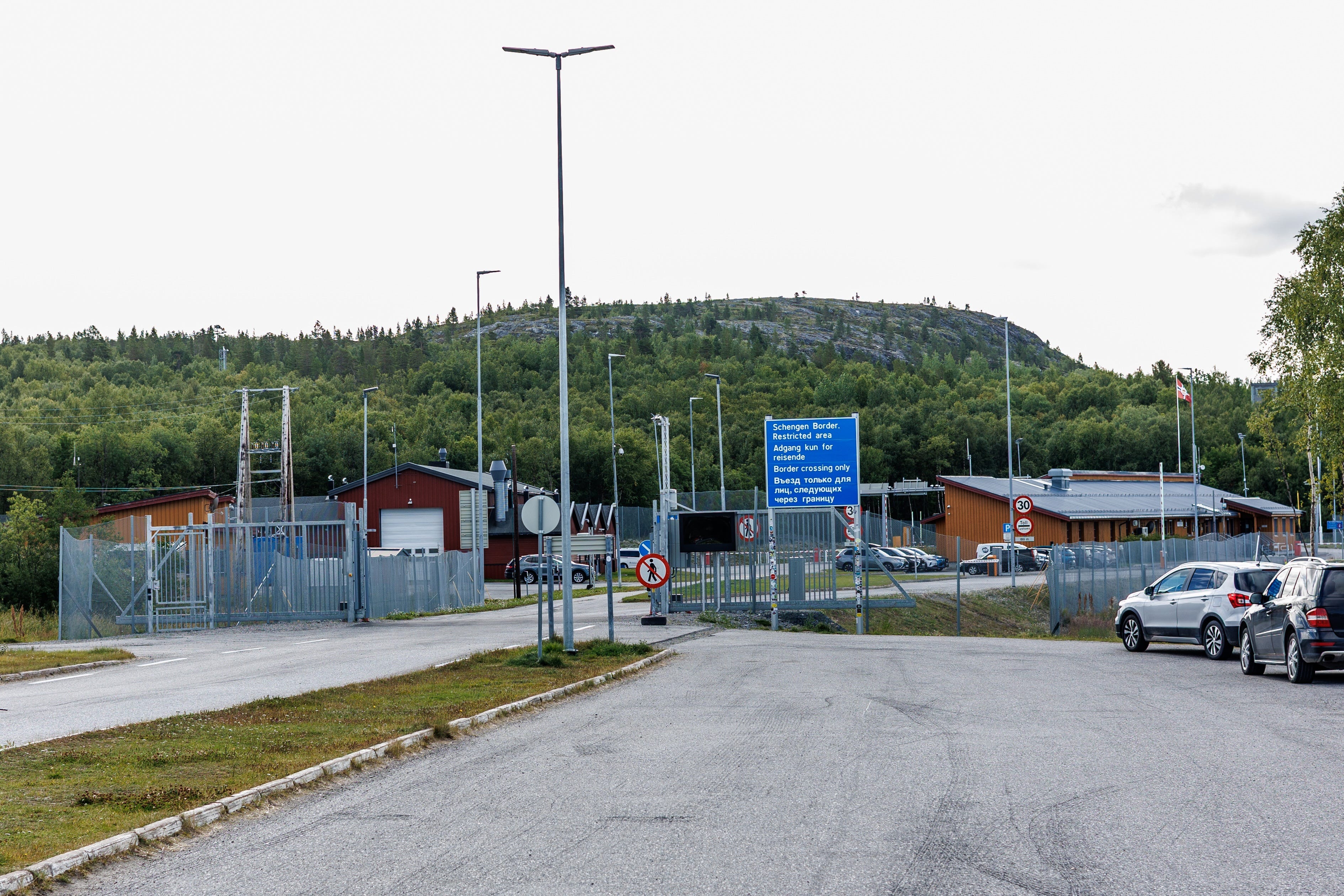
The Storskog border crossing near Kirkenes, Norway, is not closed, but traffic is heavily restricted.
In Finland, the pressure went further
The events in Ceuta must not be confused with what happened along the Finnish-Russian border.
There is no evidence that Russia caused the migrant movement into Ceuta. The documented Russian involvement came afterwards, when influence networks moved to exploit the crisis.
In Finland, the authorities believed the pressure went much further.
In the autumn of 2023, growing numbers of third-country nationals began arriving from Russia at Finnish border crossings without visas. At the same time, Finnish authorities observed a clear change in Russian border procedures.
People who would previously have been prevented from reaching the Finnish frontier were now being allowed through on the Russian side.
Finland described this as instrumentalised migration – the use of human beings as a means of applying political pressure.
Finland begins closing the border
On 18 November 2023, Finland closed the crossings at Vaalimaa, Nuijamaa, Imatra and Niirala. Applications for asylum at the land border were concentrated at Vartius and Salla.
Finnish authorities said there were already indications that foreign authorities or other actors had helped facilitate the movement of people towards Finland.
The arrivals then shifted further north.
On 24 November, Finland also closed Kuusamo, Salla and Vartius. Only Raja-Jooseppi remained open.
By then, around 700 third-country nationals had arrived from Russia without visas since the beginning of August and applied for asylum in Finland. The Finnish government said Russia was permitting cross-border movement that its authorities had previously prevented.
Four days later, the government decided to close the final open crossing.
From 30 November 2023, every road crossing between Finland and Russia was closed. By then, nearly 1,000 peoplehad arrived since August.
When the decision to close Raja-Jooseppi was announced, Prime Minister Petteri Orpo said Russia was enabling the instrumentalisation of people and directing them towards Finland, even in harsh winter conditions.
Interior Minister Mari Rantanen called it a Russian hybrid operation.
A brief attempt to reopen
Finland later tried to reopen Vaalimaa and Niirala.
The attempt lasted only one day.
The crossings opened on 14 December 2023, but asylum seekers again began arriving from Russia that same day. The government responded by closing the two crossings from the evening of 15 December.
According to the Finnish government, the renewed arrivals showed that the Russian authorities were continuing their hybrid operation against Finland.
The road crossings have remained closed ever since.
More than 1,300 third-country nationals arrived from Russia without visas from the beginning of August 2023. Finnish authorities still believe there is a danger that Russia could again use migration to put pressure on the country.
On 4 June 2026, the Finnish government decided that the border crossings would remain closed until further notice.
I encounter the consequences along the road
This is the background to my journey through NATO’s new backyard.
At Raja-Jooseppi, the closure is physical and unmistakable. Later, I met the Finnish border officer Sami and his dog. He continues to patrol and carry out inspections along the border fence.
For him, much of the day-to-day work along the frontier remains as it was. The politicians will decide if and when the border can reopen.
For the people who live in these regions, however, much has changed.
At the Jänkhällä Jytisee motorcycle rally in Saariselkä, I meet riders from Norway, Sweden and Finland. Several tell me about the contact that once existed across the border. People travelled to Russia, had friends and relatives there, and conducted business on both sides.

Read more about this on: www.oteige.no
Had relations between Russia and Europe remained as they once were, there would almost certainly have been Russian motorcyclists here as well.
Now the border is closed.
The same toolbox, different methods
This is where Ceuta and the Finnish border become part of the same broader story.
In Ceuta, a migration crisis erupts. Russia-linked networks seize upon it and spread a picture of a Europe incapable of controlling its own borders.
In Finland, the authorities say Russia went a step further by helping to channel people towards the frontier itself.
The methods are different. The objective may be the same: to apply pressure, deepen existing divisions and undermine trust between people and in public institutions.
Paul Buvarp believes this should be understood as part of a wider conflict between Russia and Europe.
“I would argue that we are engaged in a continuous and ongoing information war with Russia over which stories are told,” he said.
He describes the influence campaign as part of Russian hybrid warfare.
“We must regard this as direct attacks on the stories we tell about ourselves.”
The border has become part of the conflict
Along the road through Finland, this is no longer abstract security policy made in Brussels, Helsinki or Moscow.
It has a physical form.
A border once crossed by tourists, relatives, workers and traders is now shut.
Russia lies on the other side.
On this side, daily life continues.
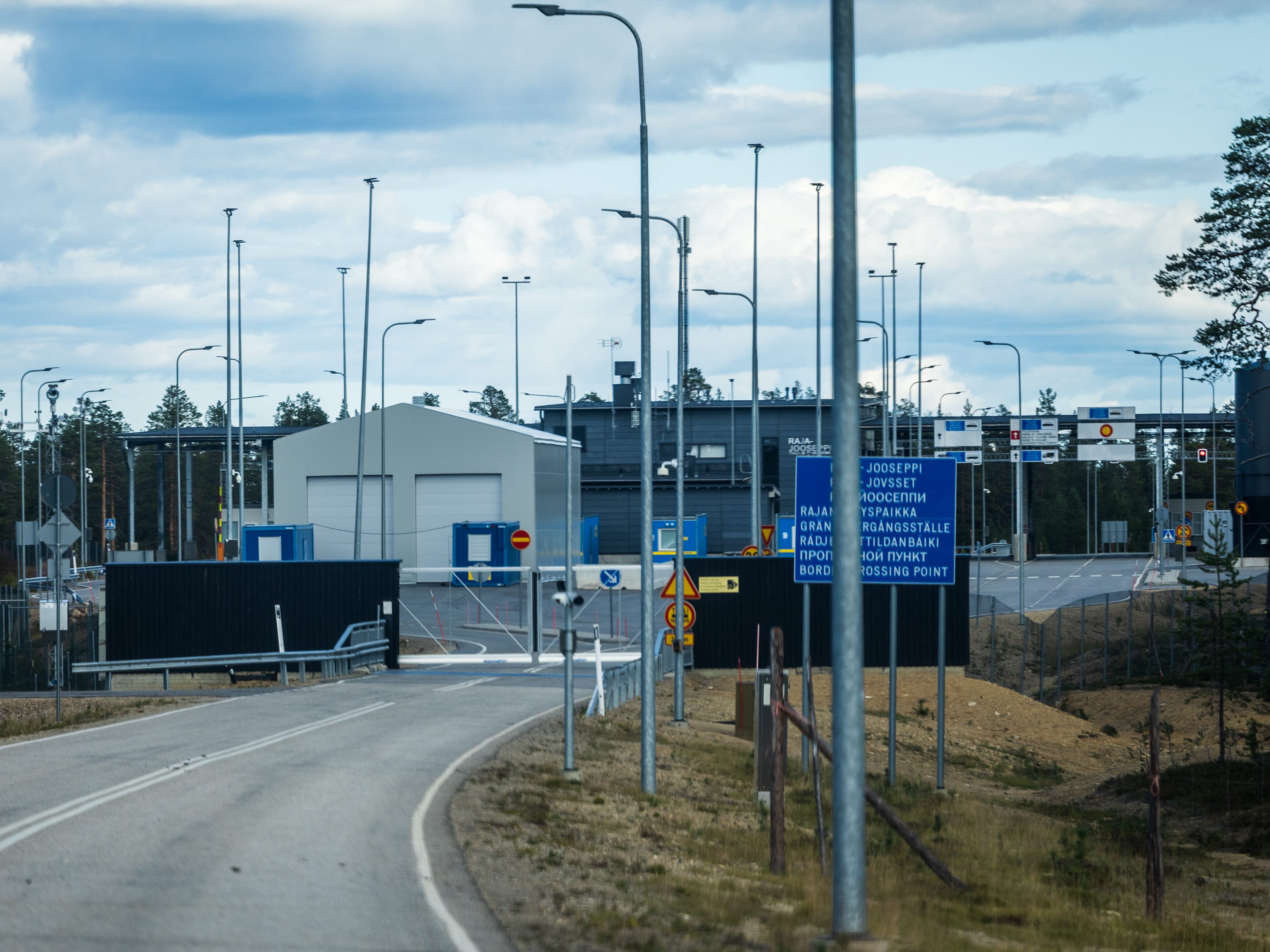
The Raja-Jooseppi border crossing, around 50 kilometres east of Ivalo in Finnish Lapland, is completely closed.
But the story from Ceuta shows that the conflict does not stop at Finland’s eastern frontier. Russia-linked networks can exploit a crisis on the European Union’s southern border while Finland keeps its 1,340-kilometre eastern borderclosed because it fears that human beings may once again be used as an instrument of pressure.
These are two very different events. Together, however, they show how Vladimir Putin’s Russia can turn information, people and existing divisions into tools of pressure against Europe.
Discussion about this post