Foreign Powers Can Still Buy Strategic Property in Norway
Norway’s government is still developing property purchase controls as figures linked to Russian power acquire properties near military bases and critical infrastructure.

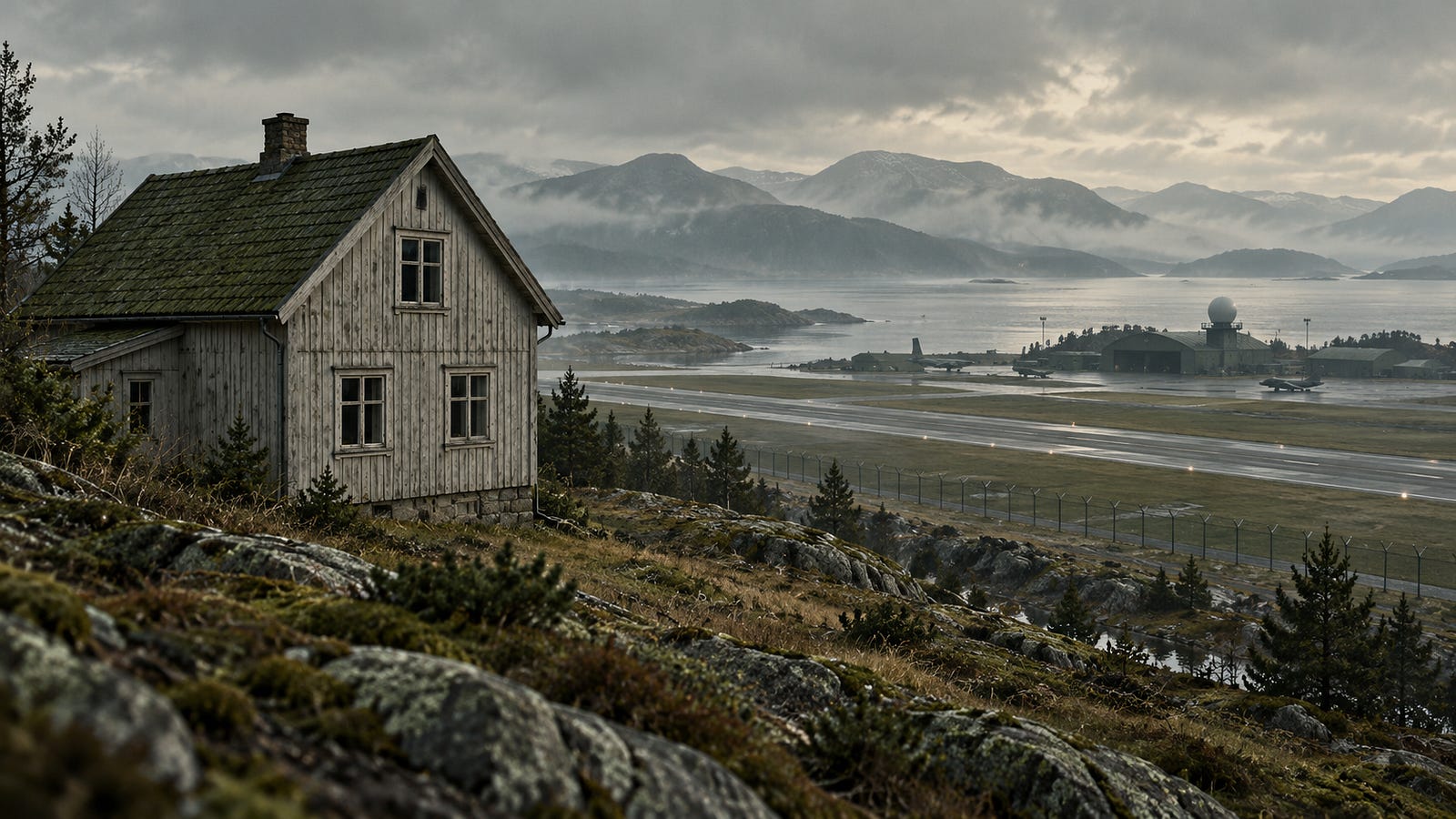
A house on Andøya, an island in northern Norway, and a 22-tonne satellite receiver were central to an operation by the Norwegian Police Security Service (PST) in May. The service suspected that a Norwegian-registered company with an owner in Singapore was acting as a front for a Chinese state actor. The house had already been purchased. According to PST, the receiver was intended to download satellite data that could harm Norwegian security interests. The buyer told the Norwegian newspaper VG that he had been misled.
Five months later, the Ministry of Justice and Public Security is still developing an approval system for certain property purchases. Ownership can give an actor lasting access to a strategic location, with room for personnel, equipment and operations. Norwegian authorities already have powers to intervene in individual cases; the proposed system would make scrutiny more systematic.
Cabins Overlooking a Military Air Base
In Bardufoss, northern Norway, broadcaster TV 2 revealed in April 2024 that people with ties to Russian power circles had acquired cabins overlooking the military air base. The owners identified included Igor Morar, then mayor of Murmansk, and Alexander P. Timofeev, who held a senior position at the Russian icebreaker company Atomflot. A third cabin had belonged to the daughter of regional politician Viktor Saygin before changing hands.
The properties overlooked a major military hub for Norway and NATO, also home to the Norwegian Army headquarters. The investigation documented private property ownership by people with Russian political connections and raised questions about how Norway assesses those seeking a foothold close to sensitive installations.
The strategic importance of location had already emerged in the Bergen Engines case in 2021. The government used the Security Act to block a planned sale to the Russian-controlled Transmashholding Group. The deal covered both technology with military applications and a substantial property strategically located near the northern maritime approach to Bergen and defense installations.
Parliament Called for Action in 2024
On June 12, 2024, Norway’s parliament, the Storting, asked the government to examine a requirement for approval of certain property purchases, including those near important military installations. Lawmakers also requested proposals for mandatory ownership registration and a ban on deeds that leave the buyer’s name blank, a practice that can conceal who has acquired a property. Together, the measures were intended to improve ownership transparency and strengthen scrutiny of transactions.
Pressure came from across the political spectrum. Kari Elisabeth Kaski of the Socialist Left Party called for greater ownership transparency as early as April 2024. That August, Mari Holm Lønseth of the Conservative Partyrequested a timetable for prior approval and asked when parliament could consider the matter. In spring 2026, Arild Hermstad of the Green Party and Himanshu Gulati of the Progress Party questioned the pace of progress after two years of known vulnerabilities.
In documents published this autumn, the Justice Ministry describes parliament’s request for an assessment as having been “followed up” and proposes ending the dedicated reporting requirement. The same text says the government is still working on the design of the approval system. The government thus considers the assessment request addressed, while the purchase controls remain under development.
Funding Ownership Records While Purchase Controls Take Shape
On October 7, the Ministry of Local Government and Regional Development proposed spending NOK 126.2 million over two years to improve property ownership information, including NOK 96.3 million proposed for 2027. The measures would improve land registration and the updating of ownership records, giving authorities a stronger basis for scrutiny.
The Norwegian Mapping Authority and the Norwegian Tax Administration are also preparing a centralized ownership register. A preliminary project is due for completion toward the end of 2026. A register can establish who owns a property; an approval system must determine who may buy, what information buyers must provide and when authorities should block a transaction.
Meanwhile, the Ministry of Trade, Industry and Fisheries is developing an investment screening law. When Abid Raja of the Liberal Party pressed for progress in March, Trade and Industry Minister Cecilie Myrseth said a proposal would go out for public consultation in the first half of 2026. This autumn’s budget proposal moves that timetable to the autumn. The legislation concerns foreign investment and forms part of the broader effort to strengthen economic security.
Finland Is Already Using Its Approval System
In Finland, buyers from outside the European Union (EU) and the European Economic Area (EEA) have been required to obtain permission from the Ministry of Defence since 2020. The country introduced further restrictions on Russian and Belarusian buyers in July 2025, subject to specified exceptions.
On October 7, 2026, the same day Norway announced funding to improve property records, Finland rejected six purchase applications. One rejection concerned risks to national security and security of supply in Kotka, a port city in southeastern Finland. The other five concerned insufficient information from applicants. The decisions remained open to appeal when they were announced.
In Oslo, the government’s account of its progress is now before parliament’s Standing Committee on Scrutiny and Constitutional Affairs, which received the matter on October 13, with Per-Willy Amundsen serving as rapporteur. The committee will examine how the government has followed up parliament’s requests. Among them is the assessment of who should be allowed to buy property close to installations Norway spends billions of kroner protecting.
For now, foreign powers can still acquire strategically located property in Norway, subject to the authorities’ existing powers to intervene in individual cases. Norway also lacks a comprehensive picture of where foreign powers already own such property.
Discussion about this post