Finland’s Power Grid Faces Contract Backlog as Data Center Demand Surges
Finland’s grid operator warns mounting applications may delay grid contracts, exposing tensions between data center expansion and national infrastructure readiness.

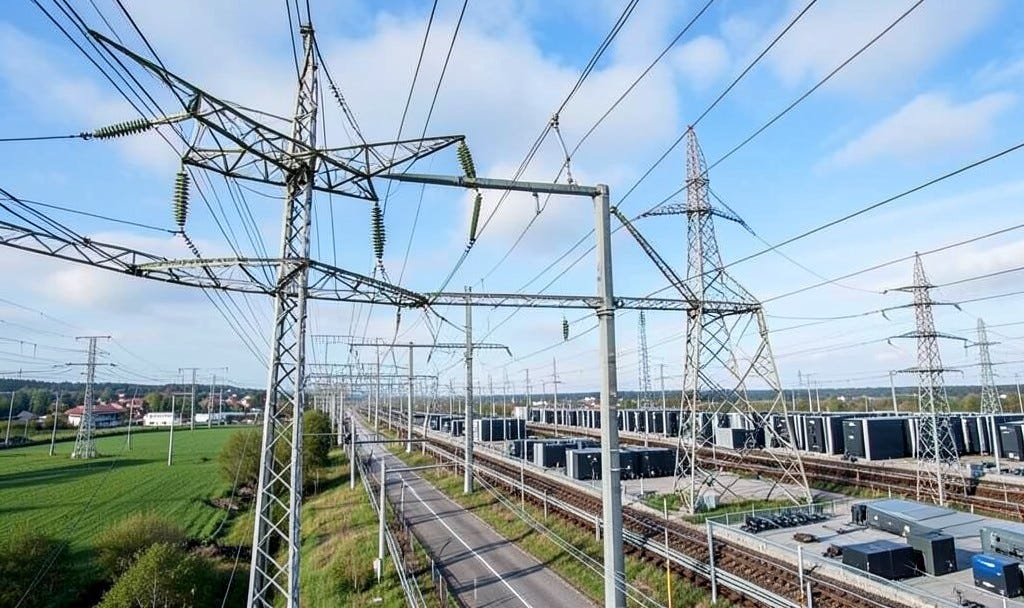
Finland’s national electricity transmission operator, Fingrid, announced on October 23, 2026, that a surge in applications for grid connection agreements is overwhelming its processing capacity.
The company expects many applicants to remain without binding agreements when proposed changes to Finnish electricity legislation take effect on January 1, 2027.
The backlog is driven particularly by developers of data centers and electricity storage facilities, according to Fingrid.
The announcement exposes a growing challenge for Finland as electricity-intensive investments compete for access to essential infrastructure. STT Info
A Rush Ahead of New Rules
In September, Finland’s Ministry of Economic Affairs and Employment published draft legislation proposing a new system for allocating electricity grid connection capacity.
Under the proposal, applications from electricity consumers and storage facilities would be processed in batches using a priority procedure.
Projects that secure binding connection agreements before the legislation takes effect would remain outside the proposed new procedure.
Fingrid reports that applications have increased sharply as developers attempt to secure agreements under existing rules.
The company acknowledges that its limited processing capacity, combined with delays inherent in the current system, means a significant proportion of applicants will probably enter the new procedure.
This is an administrative bottleneck affecting future projects. Fingrid’s announcement does not identify an interruption to existing electricity supplies.
Projects Could Increase Electricity Consumption by 40 Percent
The scale of Finland’s planned electricity demand illustrates the challenge.
By mid-October 2026, data center projects with signed grid connection agreements represented more than five gigawatts of planned ultimate capacity, including projects connected through distribution networks.
Electric boiler projects already operating or under construction represented more than three gigawatts.
Developers of electricity storage facilities had also signed connection agreements representing almost six gigawatts.
These figures describe nominal capacities rather than actual electricity consumption.
Fingrid estimates that if all contracted data center and electric boiler projects were fully realized over approximately five years, Finland’s electricity consumption could increase by as much as 40 percent compared with 2025.
The scenario depends on the projects being completed and operating at their anticipated scale.
Fingrid has not presented this increase as a guaranteed outcome. STT Info
Infrastructure Planning and National Resilience
Electricity transmission is a fundamental component of Finland’s critical national infrastructure.
Hospitals, telecommunications networks, transportation systems and military installations all depend on reliable electricity.
The pressure on connection agreements therefore raises a broader preparedness question: how should a country allocate infrastructure capacity when industrial development, digital investment and essential public services have competing requirements?
That question is particularly relevant to Finland’s Nordic neighbors, which face their own decisions about electricity infrastructure and data-intensive industries.
Fingrid’s announcement establishes a backlog in processing applications. It provides no evidence that defense facilities or other essential services have lost electricity capacity because of the situation.
The company is preparing to move application processing into its Oma Fingrid digital service.
It also plans to publish geographical divisions relevant to generation commitments within weeks and introduce revised grid connection principles in early 2027.
Fingrid has called for rapid progress on the legislation to reduce uncertainty during the transition.
The final prioritization rules will depend on the legislative process.
Discussion about this post