Finland Shut Airspace and Sea Areas as Drones Struck Russia Across the Gulf
HELSINKI — Finland restricted air and maritime traffic near its Russian border early Friday, Oct. 16, 2026, after Russian authorities reported drone attacks across the Gulf of Finland in the Leningrad

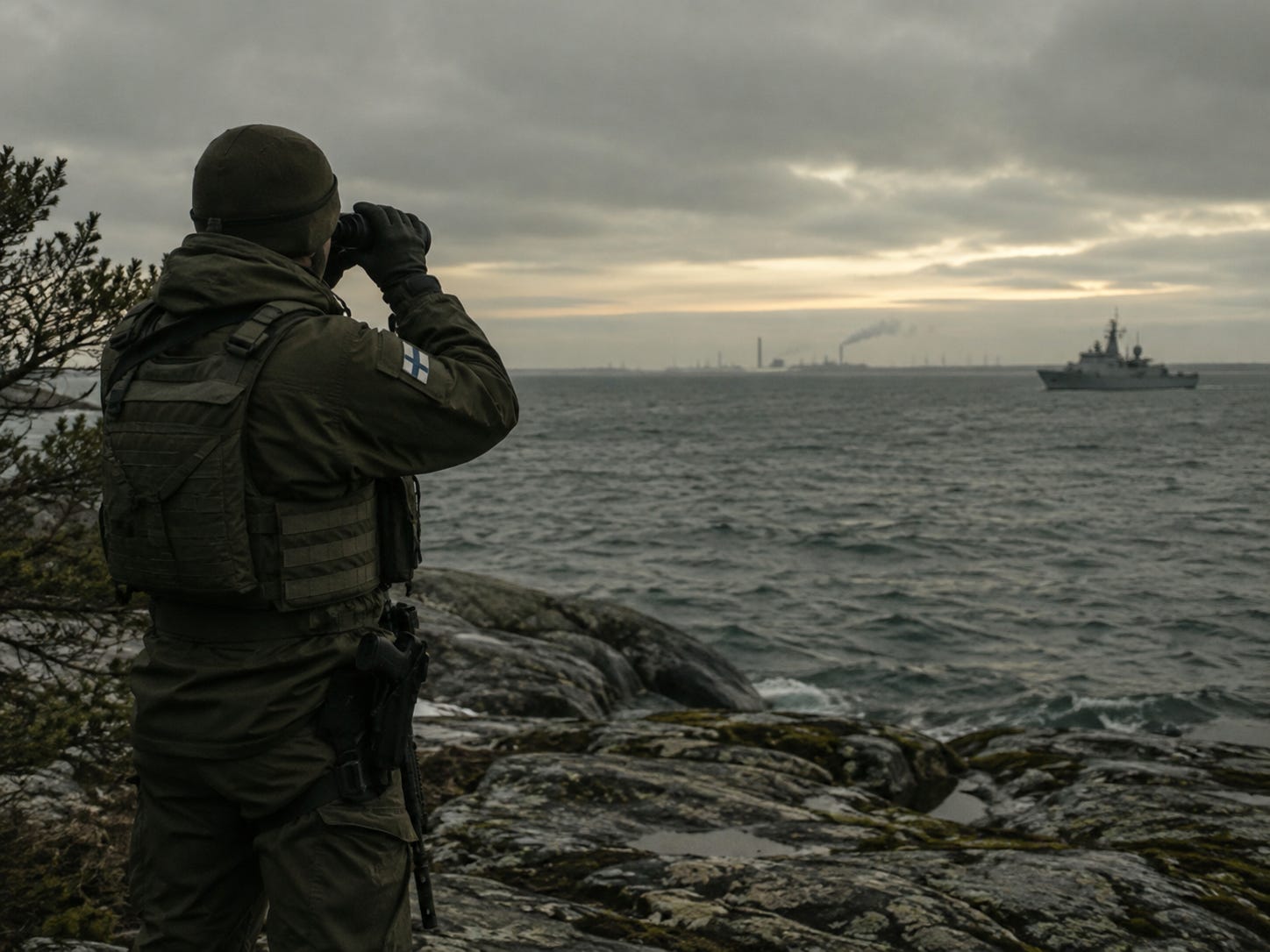
The Finnish Defence Forces imposed flight restrictions over the eastern Gulf of Finland at 5:42 a.m. local time Friday, covering an area from Loviisa east toward the Russian border. Maritime restrictions followed at 5:56 a.m. off Kotka and Hamina, two strategically important ports on Finland’s southern coast.
Both restrictions remained in force until 9 a.m. on Oct. 16. The Finnish military said the measures were intended to protect civilian traffic and give authorities room to respond if drones approached Finnish territory. No drones were detected inside Finnish airspace.
The response nevertheless placed part of Finland’s eastern coast under temporary military restrictions for more than three hours while drone warfare was unfolding just across the border.
Drone attacks reported on the Russian side
At roughly the same time, Russian authorities reported drone activity in the Leningrad region, which surrounds St. Petersburg and stretches along the eastern end of the Gulf of Finland.
Regional governor Alexander Drozdenko said four drones had been shot down during the night and early morning. Russian authorities issued a drone alert at 4:38 a.m. Moscow time Friday, shortly before Finland introduced its own restrictions.
The Russian claims about the number of drones and their destruction have not been independently verified.
The incident also affected Russian aviation. Authorities imposed temporary restrictions on air traffic, including connections involving Kaliningrad, the heavily militarized Russian exclave between Lithuania and Poland.
The timing placed authorities on both sides of the Gulf of Finland on heightened alert during the same morning.
Finland acted before its airspace was crossed
The Finnish response is significant because the military introduced restrictions even though no drone was detected inside Finnish territory.
That reflects the growing security challenges created by long-range drone warfare. Aircraft attacking targets inside Russia can approach NATO territory, cross busy civilian flight corridors or force neighboring countries to prepare for an accidental or deliberate incursion.
For Finland, that risk is particularly sensitive in the eastern Gulf of Finland. Kotka and Hamina are major ports close to Russia, while important transport routes, energy infrastructure and military facilities are concentrated along the southern coast.
Across the gulf lies Estonia, another NATO member with a direct border with Russia. Together, the Finnish and Estonian coastlines form the northern and southern sides of a narrow maritime corridor leading toward St. Petersburg.
The war is moving closer to NATO borders
Ukrainian drone attacks have increasingly reached targets far inside Russia. As their range and frequency have grown, countries bordering Russia have had to deal with the consequences even when the attacks remain inside Russian territory.
For Finland, the issue is particularly important because its eastern frontier stretches for about 1,340 kilometers from the Gulf of Finland to the far north.
Since Finland joined NATO, that border has also become one of the alliance’s longest direct frontiers with Russia.
Friday’s incident therefore carried significance beyond a temporary closure of airspace and sea areas. It showed how quickly military activity inside Russia can trigger security measures on NATO territory.
A strategic stretch of the Gulf
The eastern Gulf of Finland has long been one of Northern Europe’s most sensitive security areas. Russian naval facilities and the approaches to St. Petersburg lie to the east, while Finland and Estonia control the northern and southern shores farther west.
The region also contains busy shipping routes, commercial ports and infrastructure connecting Finland with the rest of the Baltic Sea.
That geography has become more important since Finland and Sweden joined NATO, linking the Nordic countries and the Baltic states more closely within the alliance’s northern defense structure.
A drone operation inside Russia can therefore create consequences well beyond the intended target. Civil aviation, shipping and military readiness across the Gulf may all be affected within minutes.
On Friday morning, Oct. 16, that happened without a confirmed violation of Finnish territory. Between 5:42 a.m. and 9 a.m., Finland restricted activity along part of its eastern coast while Russian authorities dealt with drones on the other side of the Gulf.
The drones stayed outside Finnish airspace. The security consequences crossed the border anyway.
Discussion about this post