Europe Holds Power Over Russian Gas Plans
Russian diesel is heading towards America as peace talks take shape. European governments retain legal power over key energy projects.

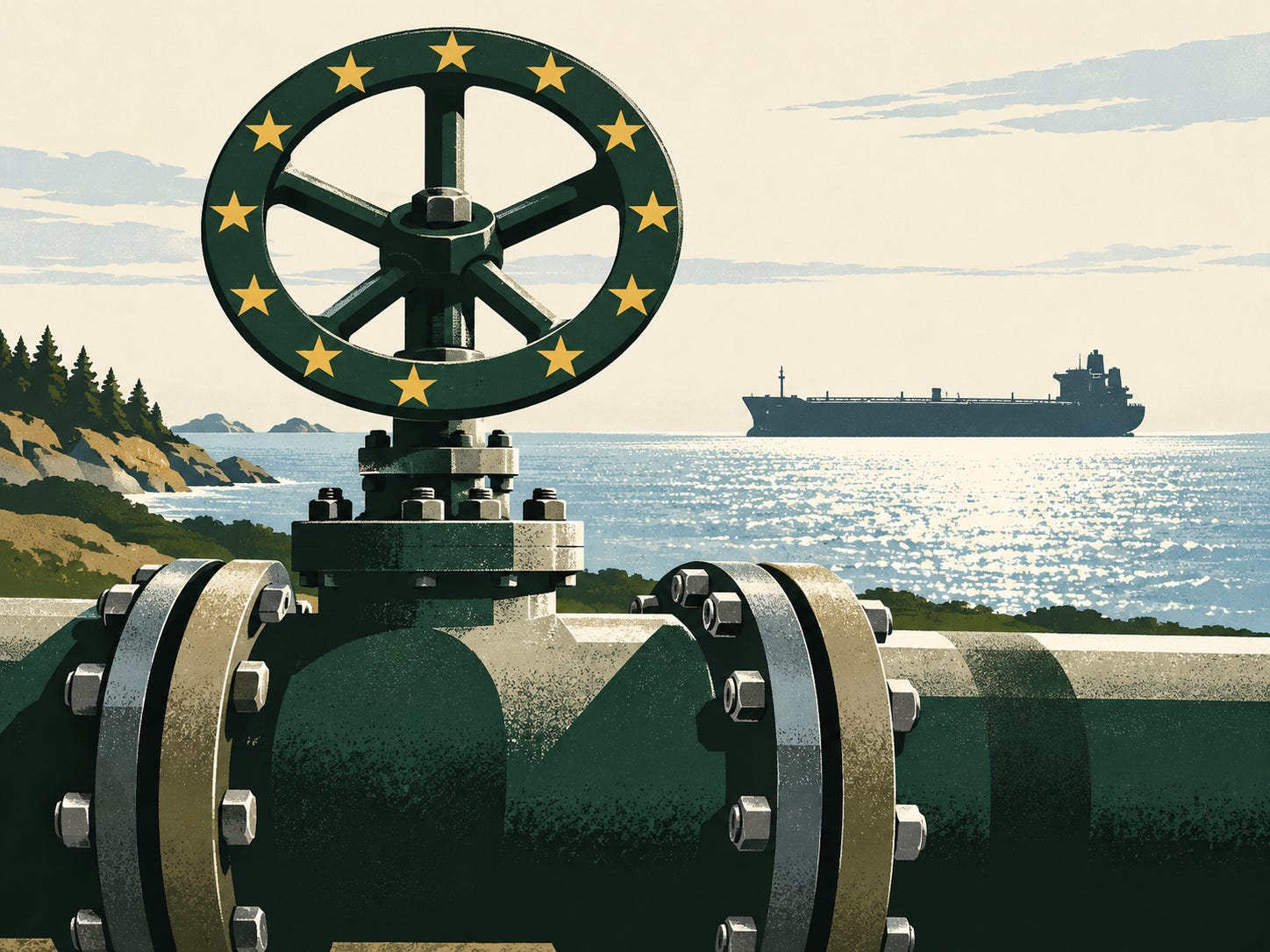
The tanker Agioi Fanendes loaded 40,000 tonnes of Russian diesel at Primorsk on the Baltic Sea on 22 October. The previous day, Russian President Vladimir Putin had met US envoy Steve Witkoff in St Petersburg. Jared Kushner, President Donald Trump’s son-in-law and fellow negotiator, joined remotely.
The meeting opened the way for further talks about Russia’s war against Ukraine. Meanwhile, energy trade between Washington and Moscow is taking physical form. Shipping data reported by Reuters showed the tanker heading towards New York, with arrival expected on 7 November.
That is four days after the US midterm elections, when Republicans will defend their control of Congress.
Trade Moves Ahead of Peace Talks
The first identified cargo represents roughly 13 per cent of the initial 300,000 tonnes announced by Trump. Its loading provides a concrete milestone. Arrival, unloading and payment are subsequent stages requiring separate verification.
Trump has linked the diesel agreement to lower fuel prices. Those prices affect truck drivers, farmers and households, giving the arrangement considerable domestic political value. Any price movement before the election must be assessed against broader market conditions and expectations of future supplies.
The peace process remains at an earlier stage. Ukrainian President Volodymyr Zelenskyy confirmed on 23 October that Ukrainian, American and Russian negotiating teams planned to meet in the first half of November.
The arrangements, venue and decisive questions concerning territory and security remain open. Zelenskyy also called for European participation.
European Governments Control Pipeline Permissions
Europe’s influence extends beyond its place at the negotiating table.
European Commission guidance on Nord Stream and Nord Stream 2, the gas pipelines crossing the Baltic Sea between Russia and Germany, describes a transaction ban targeting the infrastructure itself. It covers completion, operation, use, maintenance and related financing.
Inspections intended to restore the pipelines’ functionality may also fall within the restrictions. Limited exceptions cover necessary safety and environmental work.
European Union member states handle maintenance authorisations within their own exclusive economic zones, subject to EU rules. European authorities therefore have a concrete decision-making role whenever commercial discussions turn into proposed work on the seabed.
The structure of those rules means that American ownership alone leaves these barriers in place. Purchasing a company and securing permission to operate a pipeline are separate matters.
Washington Retains Control Over Sale Proceeds
A similar distinction applies to plans for the overseas business of Russian oil company Lukoil.
On 21 October, the US sanctions authority, the Office of Foreign Assets Control, or OFAC, extended permission for negotiations and conditional contracts until 21 November. Completing a sale requires separate approval.
OFAC says it expects a transaction to sever the business’s ties with Lukoil completely. Under its stated expectations for a future approval, money owed to Lukoil would remain blocked under US jurisdiction until sanctions are lifted.
The extension preserves earlier restrictions. Its timing alongside the Putin meeting warrants scrutiny, while the documents establish separate decisions.
Banks and Ports Face Scrutiny
The political dispute is now reaching financial institutions and transport infrastructure.
Axios reported on 26 October that members of Congress had asked six major banks and several American port authorities to preserve records concerning potential Russian diesel transactions. The lawmakers raised questions about the legal basis and signalled future investigations. The US Treasury maintains that the arrangement is lawful.
Contracts, shipping documents, intermediaries and payments are becoming central points of scrutiny. The actual involvement of each bank and port requires individual verification.
For Ukraine, the coming negotiations concern territory, security and the protection of its people. European governments face a practical test: how to use their authority over energy projects to influence the terms shaping Ukraine’s future.
Discussion about this post