EU Links Arctic Research to Security
The EU is making research cooperation part of its Arctic security policy, with ocean monitoring and climate knowledge among its responses to growing regional pressure.

The European Commission’s College adopted a joint communication on the Arctic on 20 October, presented alongside Kaja Kallas, the EU’s High Representative for Foreign Affairs and Security Policy from Estonia. The document sets out a political framework for cooperation on security, climate, economic development and the people who live in the region. The Commission says the strategy responds to growing geopolitical competition, military activity, new shipping routes and pressure on critical infrastructure.
Research to strengthen knowledge
The strategy proposes an EU Polar Research Hub to bring research, observation and scientific infrastructure into closer coordination. It would build on the existing European Polar Coordination Office, which links research groups and policymakers from Umeå, Sweden.
Horizon Europe already funds Arctic research. In July 2026, the European Commission’s research directorate reported that the programme had contributed €491 million to 116 Arctic projects. The EU cites research into climate change, pollution, biodiversity and the links between oceans and climate.
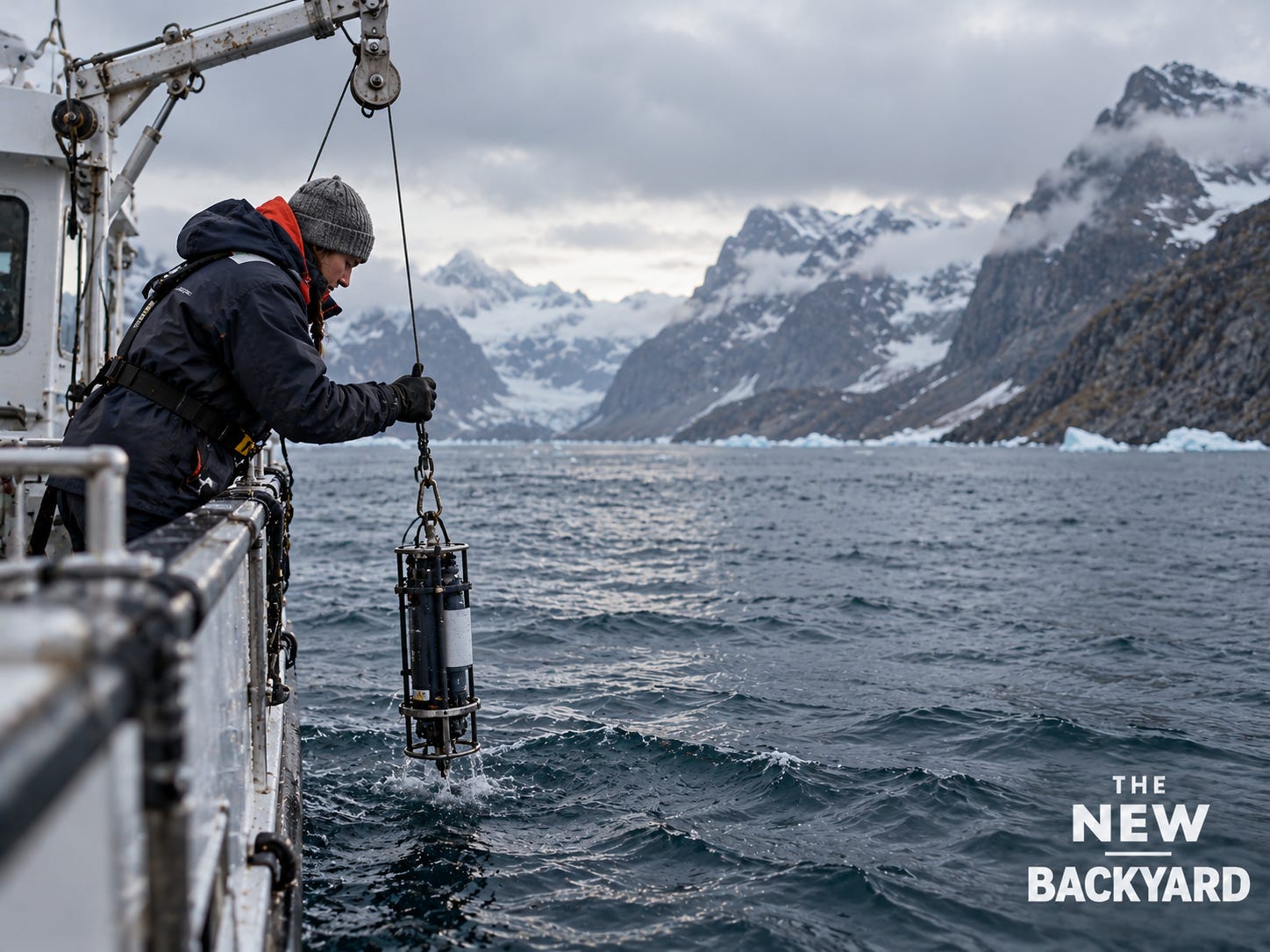
The strategy also points to OceanEye and Destination Earth. OceanEye is intended to collect and share ocean data with EU countries and partners, including Norway and Canada. The aim is to improve climate forecasts, maritime safety and adaptation to climate change. Destination Earth combines data, supercomputing and AI-based modelling to improve Europe’s ability to anticipate extreme weather and its effects, including coastal flooding.
Ocean data in security planning
The EU plans to develop a Maritime Security Hub for sharing information from the seabed to space. Its first step would be an Arctic Cable Hub to monitor and protect undersea cables in the North Atlantic and Arctic, and support repairs. The plans also cover better tracking of shadow fleet vessels, illegal fishing and marine pollution.
A separate Arctic surveillance pilot is planned for 2027 to improve awareness of activity at sea. The strategy thus connects climate research and ocean observation with preparedness and the protection of critical infrastructure.
The EU says more than 500,000 EU citizens live in the Arctic, including Sámi people and Kalaallit in Greenland. The strategy places local communities and Indigenous Peoples at its centre. Norway is identified as a close partner through a regular bilateral Arctic dialogue established in 2026 and its participation in OceanEye.
Discussion about this post