Children on Russia’s Kola Peninsula make camouflage nets for soldiers in Ukraine
At a camp outside Olenegorsk, wartime history meets support for Russia’s war against Ukraine. Participants include children as young as twelve.

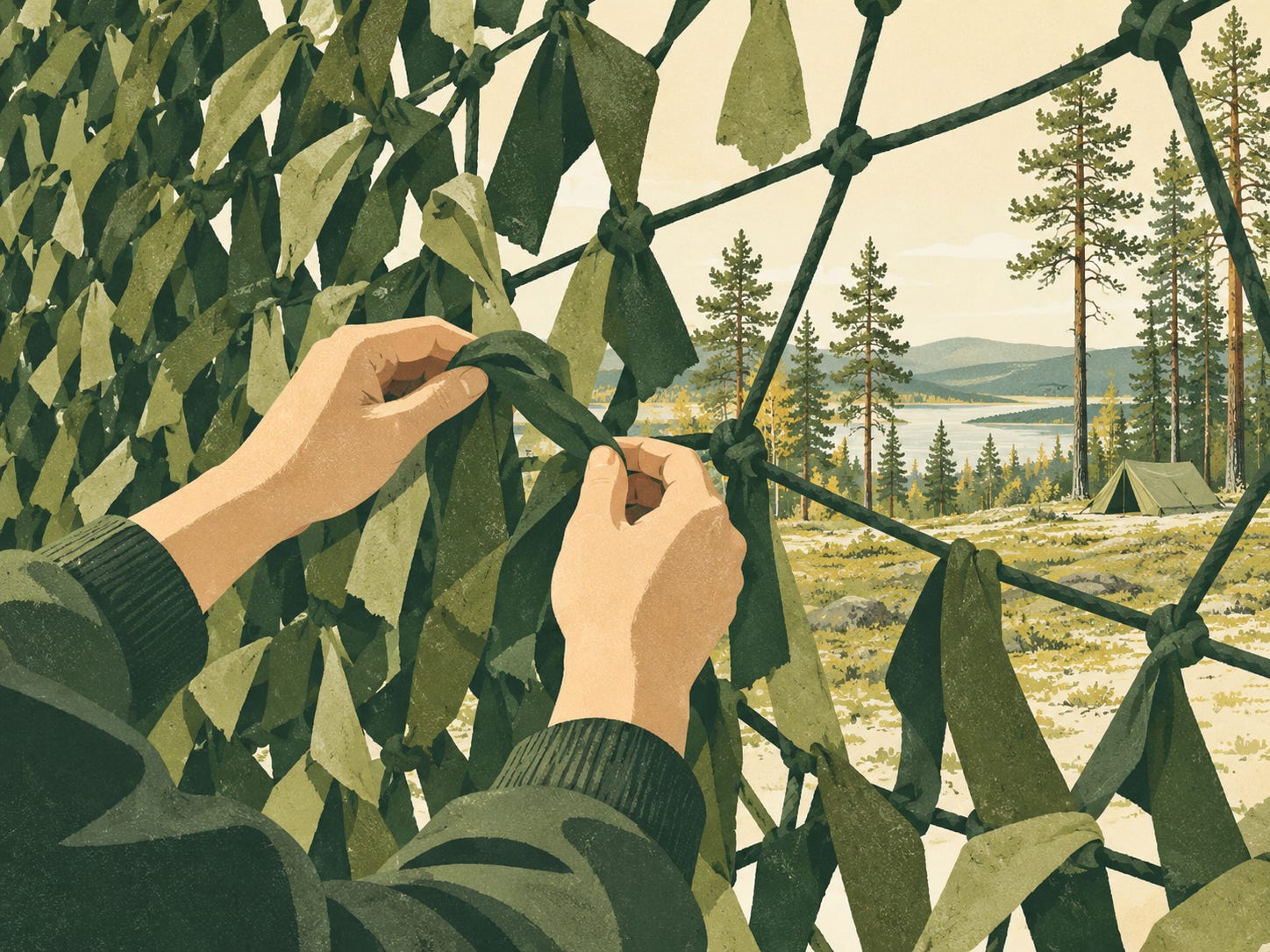
The camouflage nets had a destination before the young participants began tying knots: Russian troops in Ukraine. The workshop formed part of a youth camp beside the Kurenga River, described in a report published by Murmansky Vestnik on Sunday.
The three-day gathering ended on 25 October. More than 200 young people attended, representing 23 teams from across the Murmansk region. They came from military-patriotic clubs, outdoor groups and voluntary organisations. According to the newspaper’s afternoon update, activities included navigation, first aid and teamwork.
The pine forest where the participants slept in tents once housed a Soviet anti-aircraft regiment. This year’s gathering marked the 82nd anniversary of the defeat of German forces in the far north.
Organisers wanted the young people to experience something of the conditions faced by earlier generations. Lessons covered the defence of the Kola Peninsula and the liberation of parts of northern Norway.
The programme also brought them into the present war.
Murmansky Vestnik describes basic military training and discussions about the importance of the “special military operation”, the Russian authorities’ term for their war against Ukraine. Making camouflage nets gave participants a practical role in supporting Russian soldiers.
The regional branch of the Russian Military Historical Society was among the main organisers. The Murmansk region’s youth policy committee supported the camp.
Its connection to the front was already apparent in plans outlined by organiser Tatyana Vyalaya to local outlet SeverPost on 19 October. She described activities teaching participants how to light fires, filter water and build shelters from materials found around them.
Alongside those outdoor skills, the young people were to make survival bracelets, weave nets and prepare packets of dried food. The supplies were scheduled to leave for the front on the camp’s final day.
Discussion about this post