Britain Seeks New Powers to Protect North Sea Cables
Britain proposes tougher penalties and new security powers for undersea infrastructure, with implications for North Sea connections and Nordic partners.

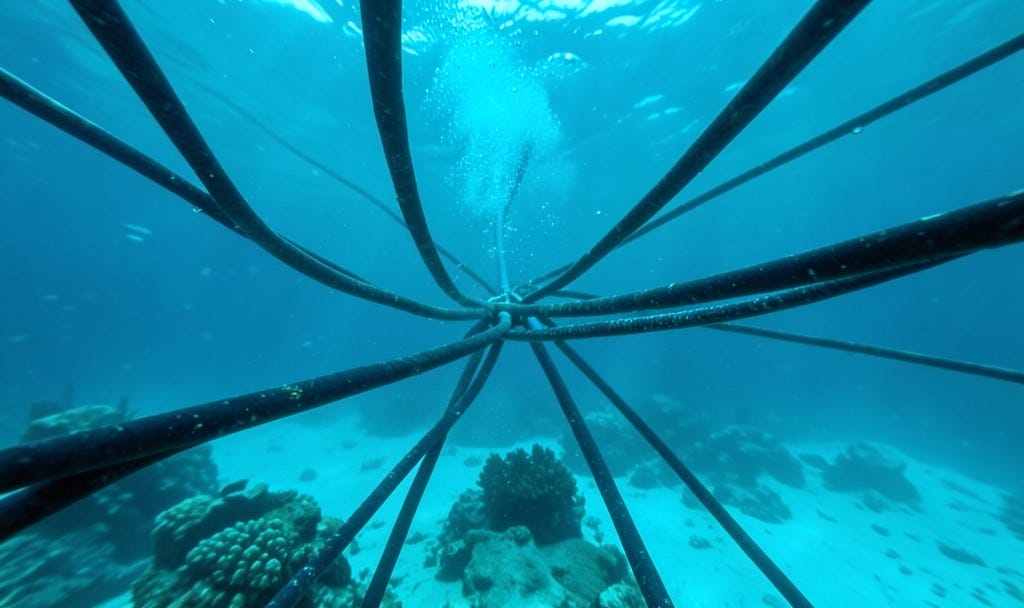
The British government published proposals on October 22, 2026, to strengthen legal protection for undersea telecommunications cables, electricity connections and energy pipelines.
The proposals include prison sentences of up to 14 years for intentional interference with critical infrastructure, stronger obligations for telecommunications operators and new powers allowing government intervention when national security is threatened.
The measures form part of a government White Paper examining how Britain should protect infrastructure that carries energy and digital communications across international waters.
New Penalties for Damage and Interference
Under the proposed legislation, intentional interference with critical undersea infrastructure could carry a maximum prison sentence of 14 years.
Reckless conduct could result in sentences of up to 10 years, while gross negligence could carry penalties of up to two years. Unlimited fines are also proposed.
The criminal framework would cover physical damage as well as certain forms of electronic interference, cyberattacks and preparatory conduct.
The proposals would also introduce enforceable security obligations for companies responsible for undersea telecommunications infrastructure.
Operators would be required to identify risks, prepare for security incidents and restore services following disruption.
The government proposes financial penalties for breaches of these obligations of up to GBP 10 million or 10 percent of qualifying worldwide revenue, whichever is higher.
The measures remain proposals subject to consultation and parliamentary consideration.
The North Sea Connection
Britain’s maritime infrastructure is closely connected to northern Europe.
Undersea electricity connections, pipelines and telecommunications cables form part of the infrastructure supporting economic activity and essential services across the North Sea.
The British government reports that approximately 99 percent of the country’s international data traffic travels through undersea cables.
It also states that subsea pipelines account for approximately 74 percent of Britain’s gas supply.
The proposed legislation is therefore relevant to countries sharing energy and communications connections with Britain, including Norway.
The two countries already cooperate on the protection of critical underwater infrastructure.
Britain also leads the Joint Expeditionary Force, a defense partnership involving all five Nordic countries, Estonia, Latvia, Lithuania and the Netherlands.
Protecting maritime infrastructure has become an important area of cooperation within that framework.
Government Powers Beyond Territorial Waters
One significant proposal concerns incidents occurring beyond Britain’s territorial sea.
The government is considering criminal jurisdiction over certain activities outside its territorial waters when they affect infrastructure connected to Britain and are likely to cause significant consequences inside the country.
The White Paper acknowledges that the legal framework for such jurisdiction requires careful consideration under international law.
British authorities also propose powers to direct telecommunications infrastructure providers to take protective measures in exceptional national security circumstances.
Any action beyond British territorial waters would have to comply with international law and, where necessary, involve cooperation with other countries.
Undersea Sensors Raise New Security Questions
The government also wants tighter oversight of sensing technology installed on fiber-optic cables.
These systems can detect acoustic activity and other changes in the surrounding marine environment.
Such capabilities may improve infrastructure monitoring while also producing information about sensitive military movements.
The proposed framework would allow authorities to assess deployments, impose security conditions and restrict installations presenting unacceptable national security risks.
The 12-week public consultation runs until January 14, 2027.
The resulting legislation could establish new responsibilities for companies operating infrastructure that connects Britain with its European neighbors.
Discussion about this post