As the EU targets Putin’s arms industry, Russian fish keeps entering Europe on Norwegian ships
Three Norwegian ships carried Russian fish from Murmansk to the Netherlands this spring. Import records identify Russian suppliers, a Danish importer and a Dutch representative.

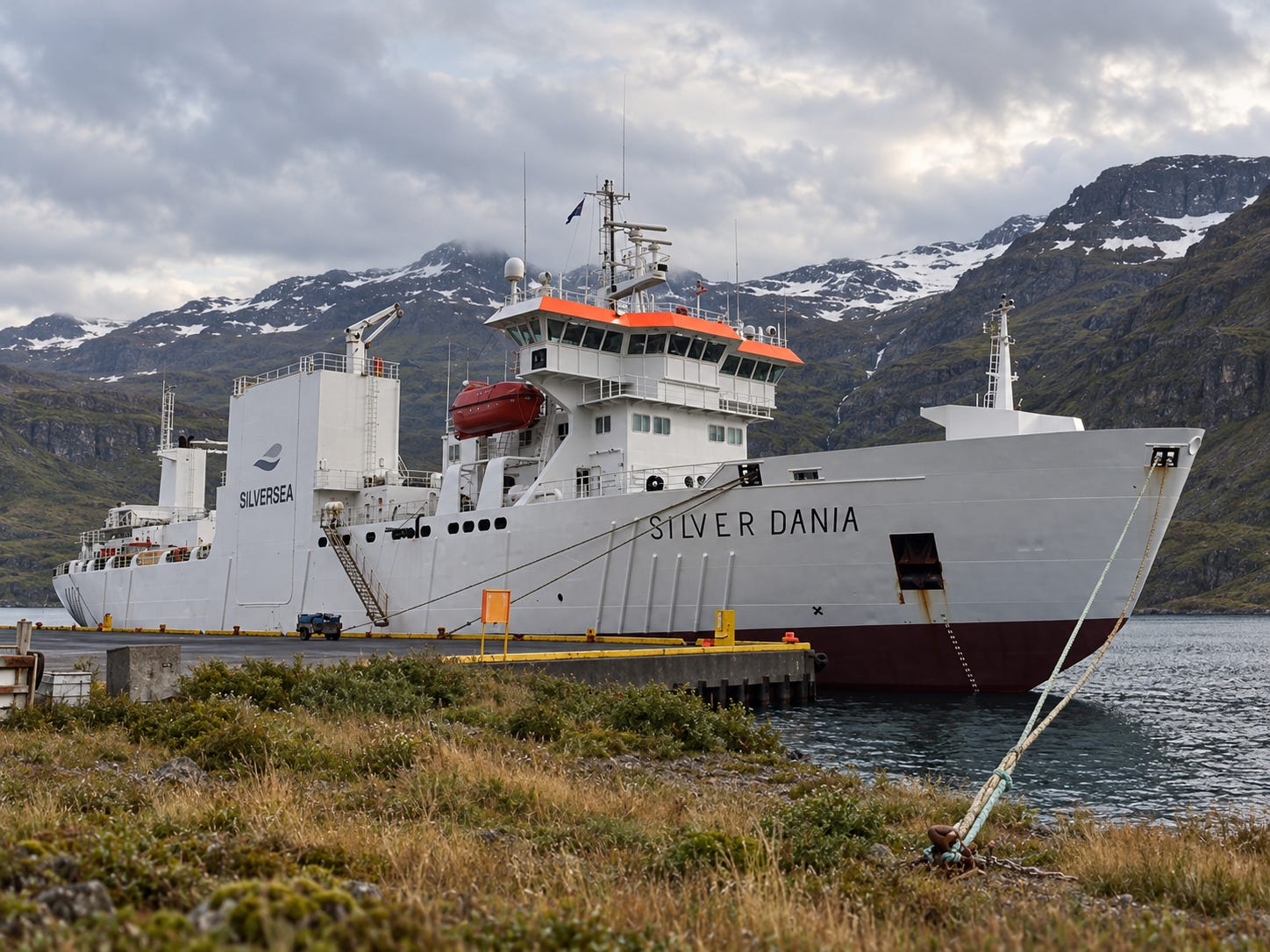
SILVER DANIA carried nearly 646 tonnes of Russian fish from Murmansk to Velsen, a Dutch port near Amsterdam. Two other Norwegian-registered refrigerated cargo ships, SILVER BIRD and SILVER CRYSTAL, carried further consignments along the same route. Three import declarations from April and May 2026, reviewed by The New Backyard, record a combined 1,156,044 kilograms.
The paperwork follows the fish from named Russian suppliers and fishing vessels to a Danish importer and its representative in the Netherlands. It provides a detailed record of the consignments. Establishing the suppliers’ current beneficial ownership, control and payment beneficiaries requires additional information.
Three ships, one European import chain
The largest consignment travelled aboard SILVER DANIA. Virma supplied more than 444 tonnes, Soglasie nearly 90 tonnes and Rybotorgovaya set’ nearly 79 tonnes. Together, these three suppliers accounted for around 613 tonnes, almost 95 percent of the ship’s documented cargo.
The remaining suppliers listed for that shipment were Snabmorservise, Arkhangelsk Trawl Fleet and Melkart Fish. The declaration identifies the fishing vessels as BAIGA, DISTINKT, SANKT-PETERBURG and NORVEZHSKOE MORE, providing another set of names against which the cargo’s origin can be checked.
SILVER BIRD carried around 349 tonnes supplied by LLC Murman, Melkart Fish and Barentsbioresource, with fish caught by ORVAR, TOR and VARIANT. SILVER CRYSTAL carried a further 161 tonnes from Snabmorservise and Melkart Fish, identifying KOKSHAYSK, DISTINKT and VARIANT as the fishing vessels.
All three declarations identify Sirena Group A/S, a Danish company, as the importer. Daalimpex Velsen B.V. appears as the importer’s representative in the Netherlands. These entries establish the commercial parties recorded in the import documents; each company’s precise responsibilities depend on its role in the transaction and the applicable rules.
Historical connections leave present ownership questions open
Russian investigative outlet Chronicles has reported that Virma, Soglasie and Rybotorgovaya set’, together with Barents Group and Azimut, were brought together through the closed-end investment fund Dal, managed by Svinin & Partners. Its reporting also describes historical connections between this group of companies and Russian senator Igor Zubarev, whom the European Union sanctioned in 2022.
Those historical connections require a clear distinction from present-day ownership. Whether Zubarev currently holds a beneficial interest, exercises control or receives an economic benefit from the transactions discussed here remains unverified. Establishing such a connection would require current evidence concerning fund holdings, control arrangements and payments.
EU asset-freezing rules can extend to entities owned or controlled by sanctioned persons and prohibit making funds or economic resources available to their benefit. Applying those rules to a particular transaction requires examining the relevant parties and arrangements. A supplier’s historical connections alone leave that assessment unresolved.
An Uzbek seller appears in the Russian supply chain
Melkart Fish LLC, registered in Tashkent, Uzbekistan, appears in the documentation for all three consignments. The records identify Russian fishing vessels and shipments from Murmansk, placing the company’s commercial role alongside the cargo’s physical journey.
One transfer document records 27,128.693 kilograms of frozen haddock from VARIANT. It names Melkart Fish as the seller, New Atlantic Fish Ltd as the buyer and the MurmanStroy warehouse in Murmansk as the delivery point. The document therefore records an Uzbek company participating in a transaction involving fish delivered in Russia.
Norebo’s sanctions are a separate, documented decision
The EU listed Russian fishing companies Norebo JSC and Murman SeaFood on May 20, 2025, under its sanctions framework addressing Russia’s destabilizing activities. Norway implemented the listings on July 10, 2025.
The EU’s published reasons linked the companies to Russian state-sponsored surveillance and intelligence activity involving critical infrastructure. Norwegian authorities described the EU’s grounds as concerning critical underwater infrastructure in Norwegian and allied waters, and activity that could facilitate future sabotage. These are the authorities’ stated grounds for the listings.
Norebo disputes the allegations. In a response dated Oct. 2, published by The Barents Observer, the company’s lawyer, Michael Lewis, denied that its vessels conduct espionage or facilitate sabotage and said the company was challenging the sanctions.
The three spring 2026 declarations examined in this article identify the suppliers described above. Any assertion that Norebo participated in those particular consignments would require additional evidence. The sanctions decision and the documented shipments concern distinct factual questions.
The shipping company says it follows the rules
Tormod Bo Fossmark, a central figure in the Norwegian shipping group, has previously told Norwegian fisheries newspaper Fiskeribladet that the company transports legally traded fish and complies with the authorities’ sanctions rules. That statement is the company’s previously published position.
The documentation examined here records cargoes, vessels and commercial parties. Determining whether an individual transaction complies with sanctions requires assessing the applicable restrictions alongside the parties’ ownership, control and financial interests.
Vessel movements provide a different kind of evidence
AIS vessel-tracking information placed SILVER DANIA at Velsen on Oct. 12. Earlier tracking recorded its departure from Murmansk on Sept. 1 and arrival in the Netherlands on Sept. 7, followed by further port calls.
Those positions document the ship’s movements. The quantified cargo findings in this article come from the separate April and May import declarations. Establishing the cargo carried on later voyages requires corresponding shipment records.
Dutch officials are examining questions submitted by TNB
On Oct. 5, The New Backyard submitted questions to Dutch authorities about beneficial ownership, sanctions screening and the documented fish imports. The inquiry asked which authority checks ownership and control, what information importers must obtain and whether a sanctions-compliance assessment had been made for the specified SILVER DANIA shipment.
Dutch Customs spokesperson Oscar van Elferen replied on Oct. 7 that colleagues needed to examine several matters before providing a complete answer. On Oct. 8, Foreign Ministry spokesperson Merel Heupers confirmed that the ministry was examining the questions together with the Dutch Customs Administration.
These replies acknowledge a press inquiry and describe work toward answering it. A substantive response on the specified transaction and the application of sanctions was still awaited when this article was first published on Oct. 13.
The inquiry also asks how customs and catch-certificate checks relate to sanctions screening, and what information establishes who ultimately owns, controls or receives payments from a supplier operating through an investment fund.
Clarification, Oct. 17, 2026: This article has been revised to describe the Dutch correspondence explicitly as responses to a press inquiry, distinguish historical connections from unresolved current ownership questions, and include Norebo’s published denial. It also distinguishes the documented spring consignments from later vessel movements.
Discussion about this post