Arctic flashpoints: NATO strengthens its northern posture amid growing Russian activity

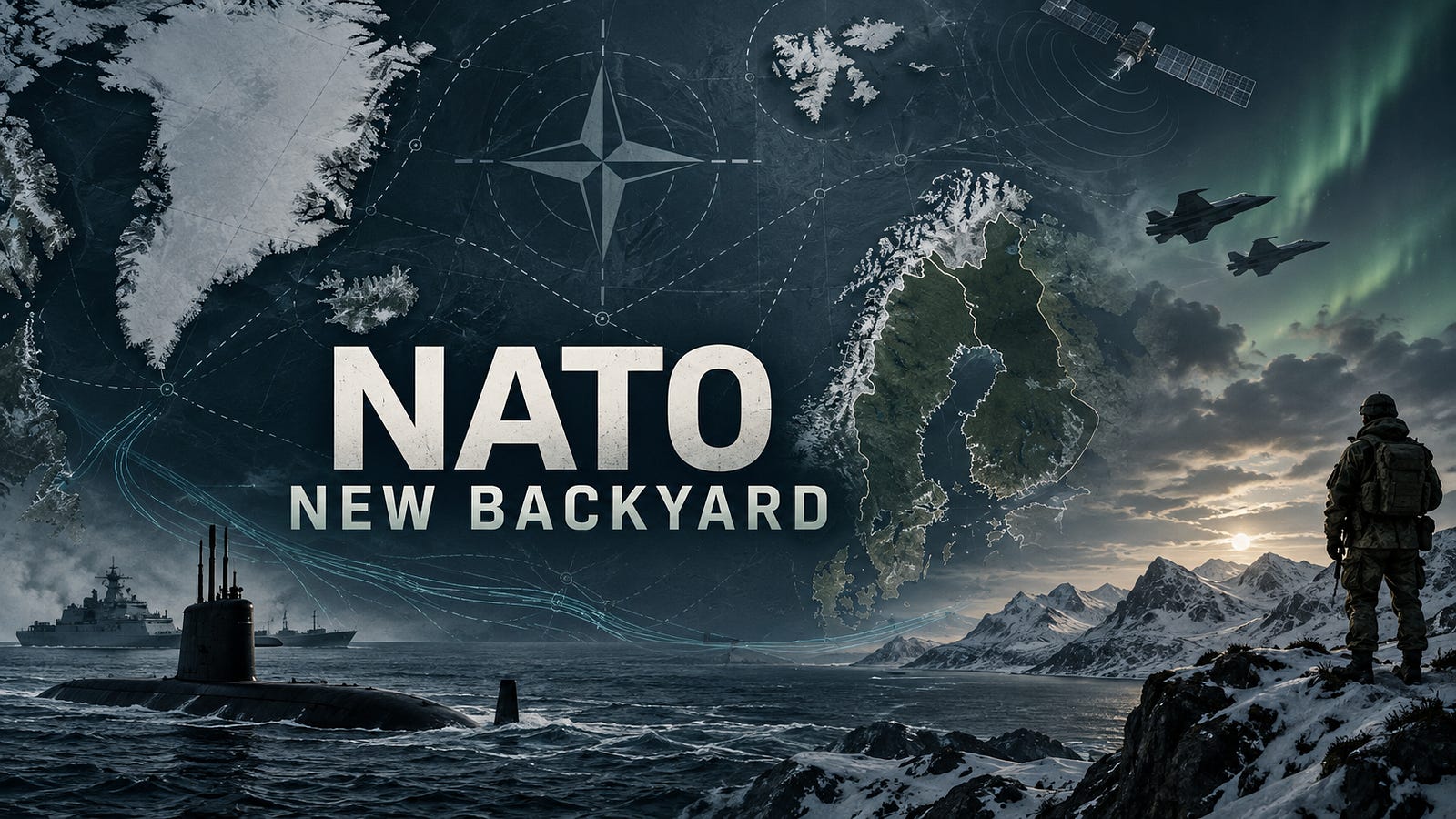
From the waters around Svalbard to Greenland, Finland and the North Atlantic, NATO members are building a more integrated Arctic defence system. Russia is maintaining substantial military activity in the region while publicly warning that the alliance is turning the Arctic into a zone of confrontation. The immediate danger is not an imminent invasion, but the growing risk of miscalculation.
Reported cable activity near Svalbard
The most serious recent allegation concerns a reported Russian operation near Svalbard earlier this year.
Reuters reported on 10 September that Western officials said Russian deep-sea vessels linked to the Main Directorate of Deep-Sea Research, known as GUGI, had simulated the deployment of technology that could interfere with or disable undersea fibre-optic cables.
According to Western officials, British, Norwegian and US forces tracked the vessels and disrupted the operation. No cable was damaged, and the account has not been independently verified through publicly available evidence.
The episode nevertheless highlights the strategic importance of the two fibre-optic cables connecting Svalbard with mainland Norway. The cables carry communications and data from SvalSat, one of the world’s largest satellite ground stations.
A vessel operating near critical infrastructure may be conducting routine activity, surveillance or training. It could also be preparing for sabotage. Establishing intent is often difficult, which makes such incidents particularly sensitive.
NATO coordinates its northern posture
NATO announced Arctic Sentry in February as a multi-domain activity intended to strengthen the alliance’s posture in the Arctic and the High North. The initiative coordinates allied activities across a region stretching from Norway and Finland to Greenland, Iceland, Canada and the North Atlantic.
Arctic Sentry is not a single national military operation. It is an umbrella framework for coordinating exercises, surveillance and defence activities under NATO’s wider command structure.
NATO Secretary General Mark Rutte said the alliance needed to respond to increased Russian military activity and the region’s growing strategic importance. NATO has also pointed to China’s expanding interest in Arctic resources, sea routes and critical technology.
Greenland becomes a central theatre
More than 400 troops from 11 NATO countries took part in the Arctic Shield exercise in southern Greenland and around Kangerlussuaq this month. The training included operations in difficult Arctic terrain, maritime activity, air support and rescue missions.
The United States, Denmark and Greenland also signed an agreement on 22 September to expand the framework for US military activity in Greenland. The agreement supports modernisation and expansion at Pituffik Space Base and allows additional defence areas to be established.
It also supports a stronger NATO role in Arctic security and restricts the establishment of persistent military installations by non-NATO countries. The agreement does not transfer sovereignty over Greenland to the United States. Sovereignty remains with the Kingdom of Denmark, within which Greenland has extensive self-government.
The agreement must also pass the required parliamentary procedures before it enters into force.
The deal followed months of political tension after President Donald Trump demanded a greater US role in Greenland. Danish and Greenlandic officials have emphasised that the agreement is intended to strengthen security while respecting Greenlandic and Danish sovereignty.
Finland begins F-35 transition
Finland’s first two F-35A fighter aircraft arrived at the Lapland Air Wing in Rovaniemi on 18 September. Finland has ordered 64 aircraft, with the transition to the new fighter fleet expected to be completed around 2030.
The arrival begins Finland’s transition to a new fighter fleet. Once operational, the aircraft are expected to strengthen Finland’s contribution to NATO air defence in the north.
The change is also important for regional cooperation. Finland, Sweden and Norway are working to make their air forces more interoperable, allowing allied aircraft, personnel and support systems to operate more easily across national borders.
That capability is still being developed. The arrival of the first aircraft does not mean that Finland’s full F-35 force is already operational.
Joint activity around Jan Mayen
Norwegian, British and US forces conducted Operation Atlantic City on and around Jan Mayen from 26 August to 4 September.
The Norwegian-led activity was designed to develop and test allied expeditionary capabilities in the High North. It included training in a remote Arctic environment and cooperation between land, air and maritime forces.
Jan Mayen’s location gives it value for surveillance and military operations in the Norwegian Sea and Greenland Sea. Its importance lies mainly in monitoring and situational awareness across the North Atlantic approaches, rather than control of a single maritime route.
Britain has also announced plans to increase the number of British troops deployed in Norway over the coming years, citing the growing importance of the High North.
Russia maintains its Arctic posture
Russia continues to maintain major military infrastructure on and around the Kola Peninsula, home to key elements of the Northern Fleet and Russia’s strategic forces.
Russian strategic bombers have operated over international waters near northern Norway, while the Northern Fleet has conducted exercises in the Russian Arctic. Each activity must be assessed separately: military aircraft in international airspace or naval exercises are not automatically hybrid attacks or violations of Norwegian territory.
Russian officials have nevertheless repeatedly described NATO exercises and deployments as the militarisation of the Arctic and as a threat to Russian security. The Kremlin’s message is that Russia is responding defensively to Western pressure.
NATO countries describe their own expansion differently: as deterrence and protection against Russian military activity, espionage and possible attacks on critical infrastructure.
The North Atlantic connection
The Arctic cannot be separated from the North Atlantic. Britain, Norway, the United States, Iceland, Denmark, Canada and other allies view the region as a connected security space.
The area includes the maritime approaches between Norway, Iceland, Greenland and the United Kingdom, often referred to as the GIUK gap. These waters are important for submarine movements, maritime surveillance and the reinforcement of Europe from North America.
Undersea cables, satellite ground stations, ports, airfields and supply routes are therefore part of the same strategic picture. Disruption in one area could affect communications and military mobility across a much wider region.
A growing grey zone
The emerging contest is not limited to conventional military deployments. The reported activity near undersea infrastructure around Svalbard, increased surveillance in the North Atlantic, cyber operations and recurring air and maritime incidents have made the northern security environment more difficult to interpret.
Some activity takes place openly as military exercises or surveillance. Other incidents remain harder to classify because the actor, purpose or intended effect may be unclear.
None of this necessarily constitutes an act of war. It does, however, create a more crowded and ambiguous operating environment in which military forces, intelligence activity and critical civilian infrastructure increasingly operate in the same space.
There is no public evidence of an imminent Russian attack on a NATO country in the Arctic. Nor is there evidence that every incident is part of one coordinated Russian campaign.
NATO is developing a more integrated northern posture. Russia is maintaining and modernising its Arctic military capabilities while portraying NATO’s actions as offensive. The United States is expanding its military role in Greenland, while the Nordic countries are connecting their air, land and maritime forces more closely.
Discussion about this post