123 Children Were Killed. The US Responds With More AI
After the school strike in Iran, the US is expanding its use of AI to check targets, while countries continue debating the limits of machines’ role in warfare.

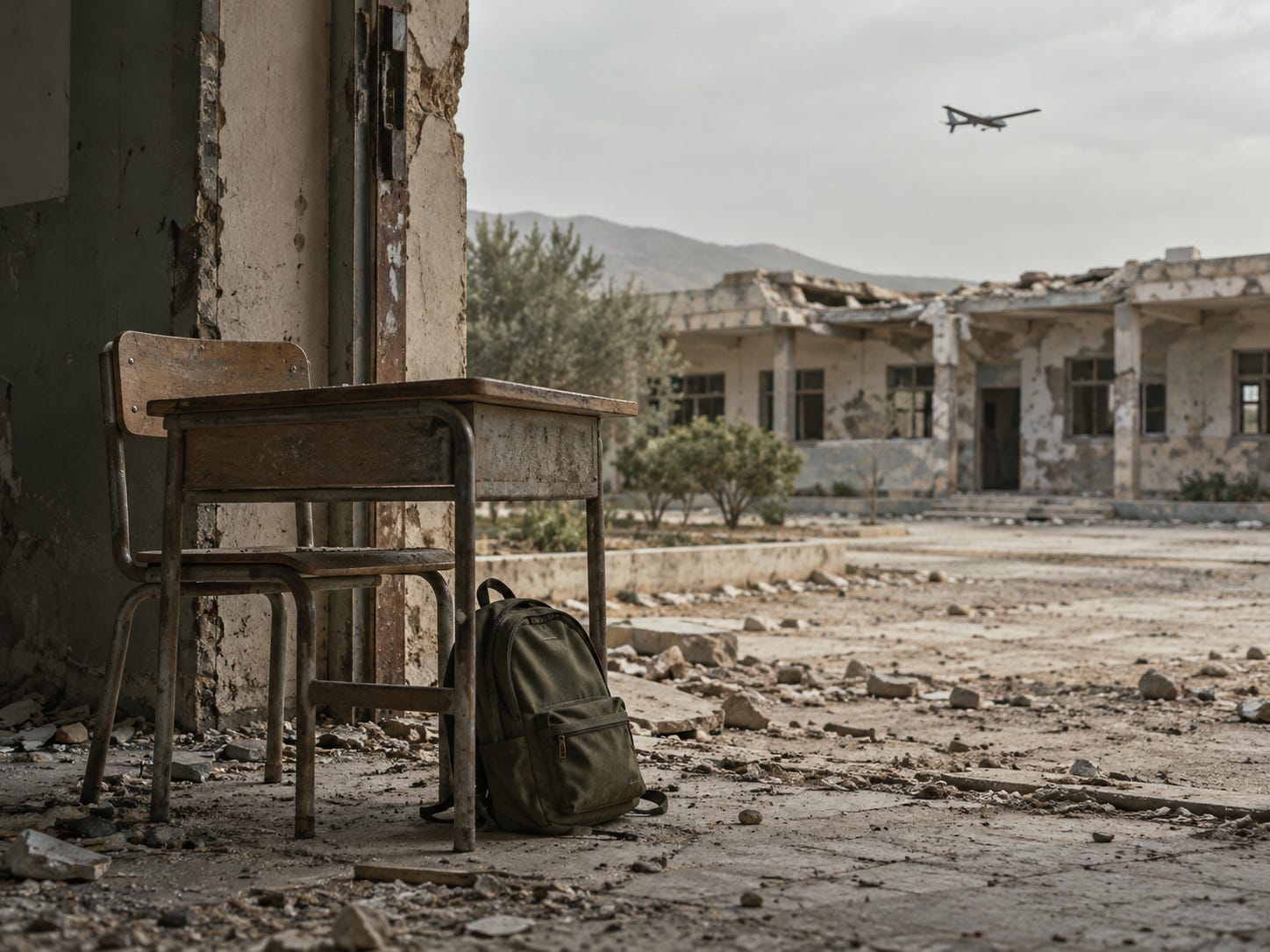
MINAB/WASHINGTON: When missiles struck Shajarah Tayyebeh primary school in the Iranian city of Minab on 28 February, at least 123 children were killed, according to Bloomberg. Sources involved in the US investigation described a combination of outdated intelligence, inadequate checks and excessive trust in artificial intelligence.
Since the attack, US Central Command, which oversees American military operations in the Middle East, has changed its procedures for checking targets. Part of its response is to give AI a greater role in reviewing intelligence, Bloomberg reported on 27 September. Its findings were based on interviews with US officials and others familiar with the work.
The school was still listed as a military site
According to Bloomberg’s investigation, the school had previously been part of a military compound. Changes to the site had been recorded, but the information never reached the central database used to develop targets.
Some operators reportedly expected Maven Smart System, developed by Palantir, to detect gaps in the intelligence. Palantir says government authorities are responsible for the underlying data and rejects claims that faults in its software have been established.
New data sources and improvements to Maven are now intended to help the military identify conflicting information and determine how buildings are being used. The Pentagon’s AI chief, Cameron Stanley, told Bloomberg that faster decision-making had outpaced intelligence work and other processes. He stressed that people must still check the accuracy and currency of the information. When the report was published, the findings of the US investigation had yet to be released.
A new command will accelerate development
The broader US military push is also continuing. Defence Secretary Pete Hegseth announced plans on 30 September for a new Autonomous Warfare Command to accelerate the development and deployment of autonomous and semi-autonomous systems across the armed services.
According to Air & Space Forces Magazine, which cited Hegseth’s memorandum, the aim is to establish the command by 1 October 2027, working with Congress. Its remit will include drones, robotics and military control systems.
These developments make the distinction between decision support and autonomous attacks crucial. AI can process intelligence for people who select targets. Once activated, autonomous weapons can select and attack targets without further human decisions. The International Committee of the Red Cross, or ICRC, warns that this can undermine human control over who is struck.
Binding rules remain on hold
On 5 September, the 128 states parties to the Convention on Certain Conventional Weapons agreed on a non-binding text as a basis for further work. The next steps will be considered in Geneva on 16–20 November.
UN Secretary-General António Guterres and ICRC President Mirjana Spoljaric are urging countries to use the conference to begin negotiations on binding rules. The ICRC wants a ban on unpredictable autonomous weapons and systems designed or used to target people. Other autonomous weapons would be subject to strict restrictions, including measures to protect civilians.
Discussion about this post